

Is your lawn looking tired or patchy after winter? If you want your grass to grow thick and healthy this spring, knowing the best time to dethatch is key.
Dethatching at the right moment can breathe new life into your lawn by removing dead grass and debris that block water and nutrients. But do it too early or too late, and you might do more harm than good. You’ll discover exactly when to dethatch in spring to give your lawn the fresh start it deserves.
Keep reading to unlock the secret to a lush, green yard this season!
Why Dethatching Matters
Thatch is a layer of dead grass and roots on your lawn’s surface. It can stop water and nutrients from reaching the soil.
Dethatching removes this layer and helps your lawn stay healthy and green. It is best done in spring for good growth.
Effects Of Thatch On Lawn Health
Too much thatch can cause many problems for your lawn. It blocks water, air, and nutrients from the soil. This weakens grass roots and slows growth.
- Prevents water from reaching roots
- Blocks air circulation in the soil
- Harbors pests and diseases
- Keeps soil too wet or too dry
- Leads to patchy or yellow grass
Signs Your Lawn Needs Dethatching
Knowing when to dethatch is key. Look for these signs in your lawn to decide if dethatching is needed.
| Sign | Description |
| Spongy Feel | Lawn feels soft or bouncy underfoot due to thick thatch. |
| Water Runoff | Water pools or runs off instead of soaking in. |
| Grass Thinness | Grass looks thin or patchy despite watering. |
| Increased Pests | More insects or diseases appear on the lawn. |
| Weed Growth | Weeds grow easily in the thatch layer. |
Ideal Spring Conditions
Spring is the best season to dethatch your lawn. The right conditions help grass recover fast. Knowing when to dethatch can save your lawn.
This guide covers soil temperature, moisture, and grass growth stage for dethatching in spring.
Soil Temperature And Moisture
Dethatching works best when soil temperature is warm but not hot. Moisture levels must be just right to avoid damaging roots.
| Soil Temperature | Ideal Range |
| Minimum | 50°F (10°C) |
| Maximum | 65°F (18°C) |
| Soil Moisture | Moderate, moist but not soggy |
Check soil with a thermometer. Avoid dethatching if soil is too wet or dry.
Grass Growth Stage
Dethatch when grass starts growing actively in spring. This helps grass heal quickly after dethatching.
- Grass should be green and growing
- Avoid dethatching during dormancy
- Best to dethatch before grass gets too tall
Timing dethatching with growth stage prevents stress on your lawn.
Choosing The Right Timing
Dethatching helps keep your lawn healthy by removing dead grass and debris. Doing it at the right time in spring is very important.
Picking the best moment for dethatching can protect your lawn from damage and help it grow strong.
Early Vs. Late Spring Dethatching
Early spring dethatching can clear the lawn before new grass grows. This gives grass space to spread and get nutrients.
Late spring dethatching may help if your lawn had a tough winter. It removes buildup after the grass starts growing well.
- Early spring is best if soil is dry and grass is just waking up.
- Late spring works if you missed early dethatching or if the lawn is thick.
- Both times need careful watering after dethatching.
Avoiding Stress Periods
Your lawn can get stressed from drought, heat, or cold. Avoid dethatching during these times to keep grass healthy.
Choose a calm weather period with moderate temperature and moist soil. This helps grass recover faster.
- Do not dethatch during drought or very dry soil.
- Avoid dethatching in very hot or freezing weather.
- Water the lawn before and after dethatching to reduce stress.
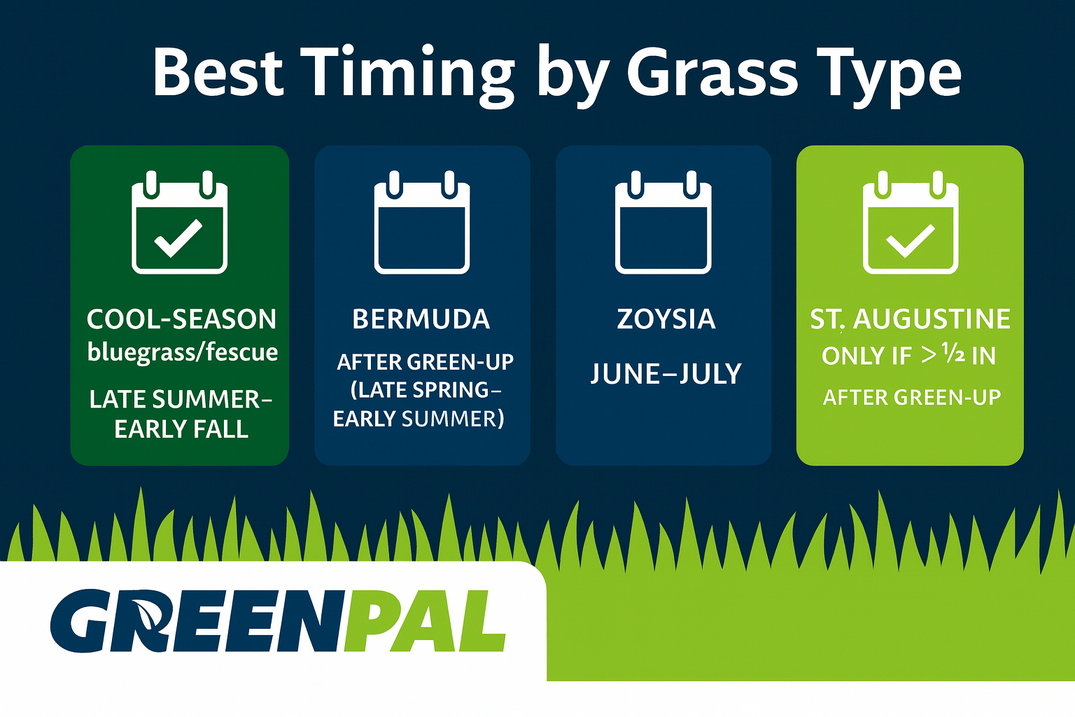
Credit: www.yourgreenpal.com
Tools And Techniques
Dethatching is a key step to keep your lawn healthy in spring. It removes dead grass and debris that block water and nutrients.
Choosing the right tools and methods helps you dethatch efficiently. Learn about manual and power dethatchers and safety tips.
Manual Vs. Power Dethatchers
Manual dethatchers are hand tools with sharp blades. They work well on small lawns and light thatch. You push or rake them across the grass to remove debris.
Power dethatchers use engines or electric motors. They are faster and better for large areas or thick thatch. These machines have rotating blades or tines to pull up the thatch.
| Tool Type | Best For | Pros | Cons |
| Manual Dethatcher | Small lawns, light thatch | Low cost, quiet, easy to store | Labor intensive, slower |
| Power Dethatcher | Large lawns, heavy thatch | Quick, efficient, less effort | Expensive, noisy, needs maintenance |
Safety Tips For Dethatching
Dethatching can cause injuries if you are not careful. Follow safety steps to protect yourself and your lawn.
- Wear gloves to protect your hands from sharp blades.
- Use eye protection to keep debris out of your eyes.
- Check the area for rocks or sticks before starting.
- Keep children and pets away from the work area.
- Read the user manual before using power dethatchers.
- Turn off power tools before cleaning or adjusting them.
- Work slowly to avoid damaging grass roots.
Post-dethatching Care
After dethatching your lawn in spring, taking care of it helps the grass grow strong. Proper care reduces stress on grass and speeds up recovery.
Focus on watering, fertilizing, and overseeding to restore a healthy lawn after dethatching.
Watering And Fertilizing
Water the lawn deeply right after dethatching. This helps the soil settle and roots get moisture. Keep the soil moist but not soggy for the next two weeks.
Apply a balanced fertilizer to support grass growth. Choose one with nitrogen, phosphorus, and potassium. Avoid over-fertilizing to prevent burning the new grass.
- Water early in the morning to reduce evaporation
- Water about 1 inch per week, split into two sessions
- Use a slow-release fertilizer for steady feeding
- Follow the fertilizer package instructions carefully
Overseeding For Recovery
Overseeding adds new grass seed to bare or thin spots after dethatching. It helps fill in patches and improves lawn density.
Spread seed evenly over the lawn. Lightly rake to help seeds contact the soil. Keep the soil moist until seeds sprout and grow strong.
- Choose grass seed suitable for your region and lawn type
- Use a spreader for even seed distribution
- Water gently but often to keep seeds moist
- Avoid heavy foot traffic on seeded areas

Credit: www.jclandscapingllc.com
Common Mistakes To Avoid
Dethatching is important for lawn health in spring. Avoid common mistakes to keep your grass healthy.
Understanding the best practices prevents damage and promotes lush growth. Let’s explore key mistakes to avoid.
Dethatching Too Often
Dethatching too often can harm your lawn. It stresses the grass and hinders growth.
A healthy lawn only needs dethatching once a year. Overdoing it leads to weak grass and poor recovery.
- Weakens grass roots
- Reduces lawn density
- Increases vulnerability to weeds
Ignoring Lawn Type Differences
Different lawns have different needs. Ignoring these differences can cause damage.
Cool-season and warm-season grasses require different care. Know your lawn type before dethatching.
| Cool-Season Grasses | Best dethatched in early spring |
| Warm-Season Grasses | Best dethatched in late spring |

Credit: lawnlove.com
Frequently Asked Questions
When Is The Best Time To Dethatch In Spring?
The best time to dethatch is early spring, just as grass starts growing. This helps remove dead material and promotes healthy growth.
How Do I Know If My Lawn Needs Dethatching?
Look for spongy, thick layers of dead grass or moss. If water pools on the lawn, dethatching is needed.
Can Dethatching Harm My Lawn If Done Too Early?
Dethatching too early can stress grass roots. Wait until soil warms and grass growth begins to avoid damage.
What Tools Work Best For Dethatching In Spring?
A dethatching rake or power dethatcher works best. Choose based on lawn size and dethatch layer thickness.
Conclusion
Spring is the perfect time to dethatch your lawn. Removing thatch helps grass grow strong and healthy. It lets water, air, and nutrients reach the roots better. Choose a dry day with mild weather for best results. Avoid dethatching too early or late in spring.
Regular lawn care keeps your yard green and beautiful. Take action now, and enjoy a lush lawn all season. Simple steps make a big difference in lawn health. Your grass will thank you with thick, vibrant growth.

