
Is your lawn looking a bit tired and patchy? Have you noticed that spongy layer building up on top of your grass?
That’s thatch—a pesky problem that can choke your lawn and block essential nutrients from reaching the roots. But don’t worry, you don’t need harsh chemicals or expensive treatments to tackle it. By learning how to dethatch your lawn naturally, you can rejuvenate your grass and boost its health.
Imagine stepping out and feeling the lush, green carpet you’ve always dreamed of. Let’s dive into simple, natural methods that will transform your lawn and make it the envy of the neighborhood. Stick around to discover how you can easily achieve this with tools you might already have at home!
What Is Lawn Thatch
Lawn thatch is a layer of dead grass, roots, and other organic material. It builds up between the soil and green grass blades.
Too much thatch stops water, air, and nutrients from reaching the soil. This can harm your lawn’s health.
How Thatch Forms
Thatch forms when grass grows faster than it decomposes. Dead stems and roots do not break down quickly.
Heavy watering and over-fertilizing can speed up thatch buildup. Some grass types also produce more thatch.
- Rapid grass growth adds dead material
- Slow decomposition causes buildup
- Overwatering keeps soil too wet
- Too much fertilizer encourages growth
- Grass types like Kentucky bluegrass create more thatch
Why Thatch Can Harm Lawns
Thatch blocks water and nutrients from reaching roots. It traps moisture and causes diseases.
It also stops air from getting to the soil. Roots can become weak and the lawn turns yellow.
- Blocks water and nutrients
- Traps moisture that causes fungus
- Reduces air flow to roots
- Weakens grass roots
- Leads to yellow, unhealthy grass
Signs Your Lawn Needs Dethatching
Dethatching is important for a healthy lawn. Thatch is a layer of dead grass and roots that build up on the soil.
Too much thatch stops water, air, and nutrients from reaching grass roots. Watch for these signs your lawn needs dethatching.
Spongy Or Soft Lawn Surface
If your lawn feels soft or spongy underfoot, thatch may be too thick. This layer traps moisture and makes the soil squishy.
Step on your grass and press down. If it springs back slowly or feels like a sponge, it is a good sign to dethatch.
Grass Growth Is Thin Or Patchy
Thatch blocks sunlight and nutrients from reaching roots. Your grass may grow thin or have bare spots.
If your lawn looks patchy or weak, dethatching can help improve new grass growth.
Water Pools On The Lawn
When thatch is thick, water cannot soak into the soil. Water may pool or run off your lawn.
Check after rain or watering. Puddles or dry spots mean dethatching is needed to improve water flow.
Increased Pest Or Disease Problems
Thatch creates a warm, damp layer that insects and fungi like. You may see more pests or disease signs.
If your lawn gets sick more often, dethatching can reduce pests and keep grass healthier.
Difficulty Penetrating The Soil
Try pushing a screwdriver or a soil probe into the ground. If it is hard to penetrate, thatch is likely thick.
Thick thatch forms a barrier above soil. Dethatching breaks this barrier so roots can grow well.
Benefits Of Natural Dethatching
Dethatching means removing dead grass and roots from your lawn. Doing this naturally keeps your yard healthy without harsh chemicals.
Natural dethatching helps your lawn breathe and grow better. It also saves money and protects the environment.
Improves Soil Health
Natural dethatching lets air, water, and nutrients reach the soil. This helps grass roots grow strong and healthy.
Good soil health means your lawn can fight pests and diseases better. It also holds moisture well, reducing water needs.
Safe For People And Pets
Using natural methods means no chemicals or harmful tools. This keeps your family and pets safe while caring for the lawn.
You avoid skin irritation and breathing problems linked to chemical use. The lawn stays natural and healthy for everyone.
Eco-friendly Lawn Care
Natural dethatching protects the environment. It prevents pollution of soil and water from chemicals.
It also supports beneficial insects and microorganisms that help your lawn thrive.
Cost-effective And Easy
You do not need expensive tools or products for natural dethatching. Simple rakes or lawn combs work well.
This method saves money and allows regular lawn care without special equipment or chemicals.
Tools For Natural Dethatching
Dethatching removes dead grass and debris from your lawn. It helps air, water, and nutrients reach the soil.
You can dethatch naturally using simple tools. These tools work without chemicals or heavy machines.
Rake With Stiff Tines
A rake with stiff metal tines helps pull up thatch by hand. It is good for small lawns or light thatch build-up.
Use strong, steady strokes to loosen the dead grass and debris. Rake in one direction to avoid damaging new growth.
Garden Fork
A garden fork can loosen thatch by poking holes in the soil and lifting dead material. It also improves soil aeration.
Push the fork into the lawn about 3-4 inches deep. Pull back gently to lift thatch without harming healthy grass roots.
Lawn Scarifier
A manual lawn scarifier has blades that cut through thatch and pull it out. It is good for medium-sized lawns with moderate thatch.
Push the scarifier slowly across your lawn. This breaks up thick layers of thatch and helps it dry out for easy removal.
Compost Or Mulch Collector
After dethatching, use a collector to gather debris easily. It saves time and keeps your lawn tidy.
Some collectors fit on rakes or scarifiers. Others are separate tools that pick up dead grass and leaves.
Garden Hose With Spray Nozzle
A garden hose helps clean the lawn after dethatching. Water removes small debris and refreshes the grass.
Use a gentle spray to avoid washing away soil. Watering also helps grass recover and grow stronger.
Step-by-step Natural Dethatching Methods
Dethatching helps your lawn breathe and grow healthy. Thatch is a layer of dead grass and roots.
Too much thatch blocks water and nutrients from reaching the soil. Natural dethatching removes this layer gently.
Using A Rake
A garden rake is a simple tool to remove thatch by hand. It works best on small lawns or thin thatch layers.
Rake the lawn by pulling the thatch up and away from the grass. Do this on dry grass for easier removal.
- Use a sturdy metal rake with sharp tines
- Rake in one direction to lift the thatch
- Collect and compost the removed debris
- Water the lawn after raking to help recovery
Applying Aeration Techniques
Aeration creates holes in the soil to reduce thatch buildup. It lets air, water, and nutrients reach grass roots.
You can aerate using a manual or mechanical tool. Focus on compacted or heavy soil areas for best results.
- Use a spike or plug aerator tool
- Make holes about 2-3 inches deep
- Aerate in multiple directions for full coverage
- Water the lawn after aeration
Introducing Earthworms
Earthworms naturally break down thatch and improve soil. They create tunnels that let air and water into the soil.
To attract earthworms, keep the soil moist and add organic matter like compost or mulch. Avoid chemical pesticides.
- Keep soil moist but not waterlogged
- Add compost or leaf mulch regularly
- Reduce use of harmful chemicals
- Encourage earthworm activity for healthy soil
Topdressing With Compost
Topdressing adds a thin layer of compost on the lawn surface. It helps break down thatch and improves soil health.
Spread compost evenly and lightly rake it into the grass. This feeds soil microbes that digest thatch naturally.
- Choose fine, well-rotted compost
- Spread a thin layer, about ¼ inch thick
- Rake gently to mix compost with grass
- Water the lawn after topdressing
Credit: dengarden.com
Best Time To Dethatch Your Lawn
Dethatching removes dead grass and debris from your lawn. This helps the grass grow better. Choosing the right time is important for healthy results.
The best time to dethatch depends on your grass type and weather. Doing it at the wrong time can harm your lawn.
Cool-season Lawns
Cool-season grasses grow best in spring and fall. These times are also ideal for dethatching. The soil is moist, and grass can recover quickly.
Warm-season Lawns
Warm-season grasses thrive in summer. Dethatching should happen in late spring to early summer. This timing supports strong regrowth during the warm months.
- Water pools on the surface after rain
- Grass feels spongy or soft underfoot
- Brown patches appear in the lawn
- Grass blades are thin and weak
Factors Affecting Dethatching Time
| Factor | Effect on Timing |
| Grass Type | Cool-season vs warm-season grass affects dethatch months |
| Weather | Avoid dethatching during drought or extreme heat |
| Soil Moisture | Best done when soil is moist but not wet |
| Lawn Health | Weaker lawns need gentler dethatching and more recovery time |
Aftercare Tips For A Healthy Lawn
Proper aftercare keeps your lawn green and strong after dethatching. Follow simple steps to help grass grow well.
Watering, feeding, and mowing are key to a healthy lawn. Each step supports new grass and soil health.
Watering Practices
Water your lawn deeply but not too often. This helps roots grow deep and stay healthy.
- Water early in the morning to reduce evaporation.
- Give about one inch of water each week.
- Avoid watering late at night to prevent fungus.
- Use a sprinkler to water evenly across the lawn.
Fertilizing Naturally
Use natural fertilizers to feed your lawn without chemicals. This keeps soil healthy and safe for pets.
| Natural Fertilizer | Benefits |
| Compost | Improves soil structure and adds nutrients |
| Manure | Rich in nitrogen for green growth |
| Bone meal | Good source of phosphorus for roots |
| Seaweed extract | Boosts plant growth and stress tolerance |
Mowing Tips
Keep your mower blades sharp and mow at the right height to protect grass.
Follow these mowing tips:
- Never cut more than one-third of the grass blade length at once.
- Set mower height between 2.5 and 3 inches for most grass types.
- Leave grass clippings on the lawn to add nutrients back into the soil.
- Change mowing direction each time to avoid soil compaction.
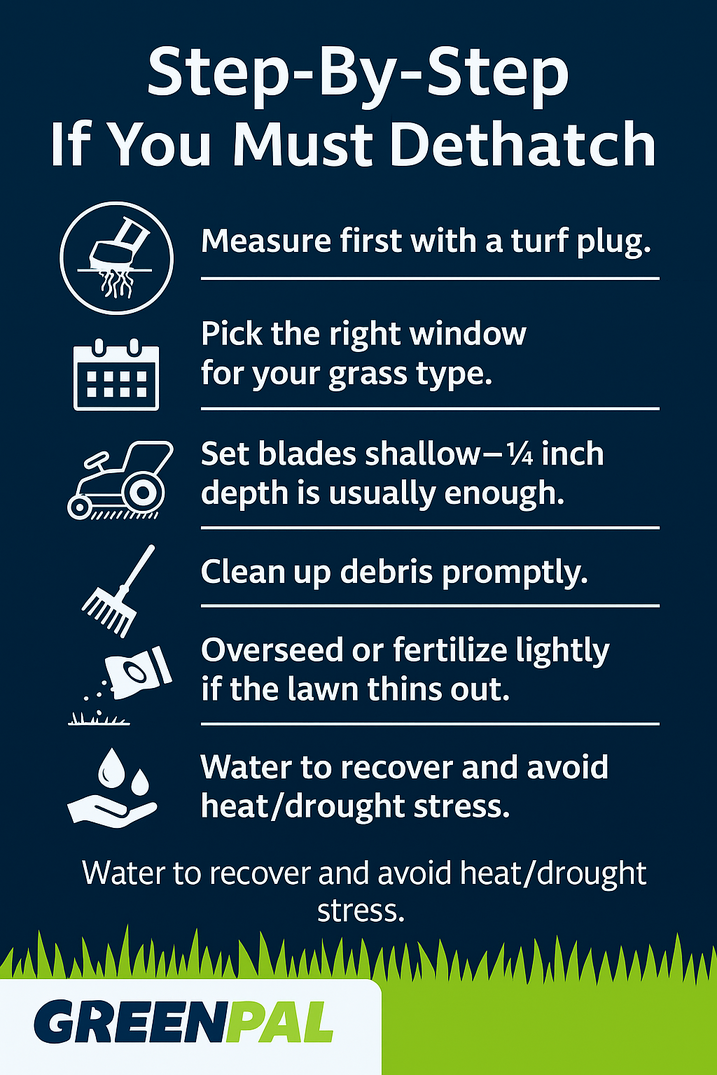
Credit: www.yourgreenpal.com
Common Mistakes To Avoid
Dethatching your lawn naturally can keep it healthy and green. Avoiding common mistakes helps the process work well.
Learn what to watch out for to protect your grass and soil during dethatching.
Dethatching Too Often
Dethatching your lawn too often can harm the grass roots. It takes time for grass to recover between dethatching sessions.
Try to dethatch only once a year or when the thatch layer is thicker than half an inch.
Using The Wrong Tools
Using sharp or heavy tools can damage your lawn. Choose gentle tools like a rake or a dethatching rake designed for lawns.
Tools that are too harsh can pull out healthy grass along with the thatch.
Dethatching When Lawn Is Wet
Dethatching a wet lawn can cause soil compaction and damage grass roots. Wait until the lawn is dry before starting.
Dry conditions help tools work better and make cleanup easier.
Ignoring Lawn Health After Dethatching
Not caring for your lawn after dethatching can slow recovery. Water and feed the grass to help it grow strong again.
Skipping this step may leave your lawn weak and vulnerable to weeds.
Removing Too Much Thatch
Removing all thatch can expose roots and dry out the lawn. Leave a thin layer to protect the grass.
Only remove the thick, dead material that blocks air and water.
Not Testing Soil First
Failing to test soil health can lead to dethatching at the wrong time. Check soil to know when dethatching is needed.
Soil tests guide you on watering, feeding, and dethatching schedules.

Credit: covingtonnaturals.com
Frequently Asked Questions
What Is Lawn Dethatching And Why Is It Important?
Lawn dethatching removes thick layers of dead grass and debris. It improves air, water, and nutrient flow to grass roots. This boosts lawn health, growth, and prevents disease.
How Can I Dethatch My Lawn Naturally?
Use a garden rake or dethatching rake manually. Aerate the soil to break up thatch. Apply natural microbes or compost tea to speed decomposition. Avoid harsh chemicals for eco-friendly results.
When Is The Best Time To Dethatch A Lawn?
Early spring or early fall is ideal for dethatching. Grass is actively growing then, so it recovers quickly. Avoid hot summer months to reduce stress on the lawn.
How Often Should I Dethatch My Lawn Naturally?
Dethatch once every 1-3 years depending on thatch buildup. Lawns with thick thatch need more frequent dethatching. Over-dethatching can damage grass roots, so monitor your lawn carefully.
Conclusion
Dethatching your lawn naturally keeps it healthy and green. Use simple tools like rakes or garden forks. Removing thatch lets water and air reach the roots. This helps grass grow stronger and thicker. Avoid harsh chemicals to protect the soil and plants.
Regular dethatching prevents lawn problems over time. It takes only a little effort and care. Try these natural steps for a fresh, thriving lawn. Your garden will thank you for it.
