
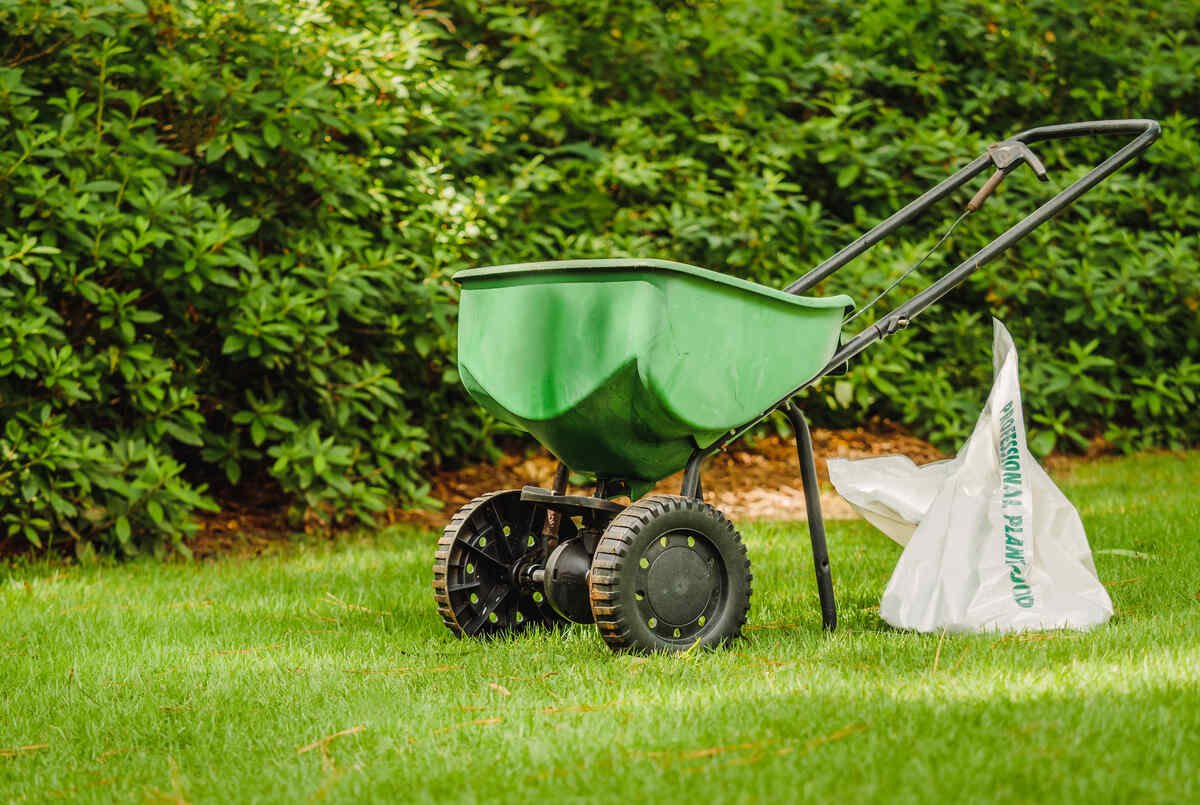
Do you dream of a lush, green lawn that’s the envy of your neighborhood? Maintaining such beauty can be a challenge, especially when pesky weeds start to invade.
The good news? You can tackle this issue head-on with a simple tool: a spreader. Applying weed and feed with a spreader is not only efficient but also ensures an even distribution, helping your lawn thrive. In this guide, you’ll discover step-by-step how to effectively use a spreader to transform your lawn into a vibrant masterpiece.
Stick around, and soon, you’ll be enjoying the lush, weed-free lawn you’ve always wanted.

Credit: www.amazon.ca
Choosing The Right Weed And Feed
Applying weed and feed helps keep your lawn healthy and free of weeds. Picking the right product is important for good results.
Different products work best for different grass types and seasons. Knowing what to choose saves time and effort.
Types Of Weed And Feed Products
Weed and feed products come in granules, liquids, and pellets. Each type has its own way of working on your lawn.
- Granules spread evenly with a spreader and release nutrients slowly.
- Liquid products spray directly and work faster but need more care.
- Pellets are easy to handle and offer balanced feeding and weed control.
Selecting Based On Grass Type
Different grasses need different care. Choose a weed and feed product that matches your grass type.
- Cool-season grasses like fescue and bluegrass do well with products made for cooler weather.
- Warm-season grasses like Bermuda and St. Augustine need formulas designed for heat tolerance.
- Check the label to make sure the product is safe for your grass type.
Seasonal Considerations
Season affects how weed and feed works. Use products made for the current season to get best results.
- Spring products focus on weed control and early lawn feeding.
- Summer formulas help lawns survive heat and drought.
- Fall weed and feed prepares grass for winter and controls late weeds.

Credit: www.fitfitgarden.co.uk
Picking The Best Spreader
Choosing the right spreader helps you apply weed and feed evenly. The spreader affects how much product you use and its coverage.
Knowing the types and features of spreaders makes your lawn care easier and more effective.
Drop Vs. Broadcast Spreaders
Drop spreaders drop fertilizer in a narrow path below the unit. They give precise control and reduce waste near flower beds or sidewalks.
Broadcast spreaders throw fertilizer out to the sides in a wide pattern. They cover large areas faster but need careful use to avoid uneven application.
Spreader Size And Capacity
Spreader size affects how much product you can hold and how long you can work without refilling. Larger spreaders suit big lawns, while smaller ones fit small yards.
- Small spreaders hold about 5 to 10 pounds of material.
- Medium spreaders hold 10 to 20 pounds.
- Large spreaders hold over 20 pounds.
- Choose size based on your lawn area and storage space.
Calibration Importance
Calibrating your spreader ensures you apply the right amount of weed and feed. Too much can harm grass; too little may not control weeds.
| Calibration Step | Description |
|---|---|
| Check Settings | Match spreader settings to product instructions. |
| Test Spread | Spread product on a small area and measure coverage. |
| Adjust Rate | Change settings if coverage is too heavy or light. |
| Repeat | Repeat test until distribution is even and correct. |
Preparing Your Lawn
Applying weed and feed with a spreader works best on a well-prepared lawn. Proper preparation helps the product reach the soil and grass roots.
Follow these steps to get your lawn ready before using a spreader for weed and feed.
Mowing Tips Before Application
Mow your lawn a day before applying weed and feed. Keep the grass at a medium height for best results.
Cutting the grass too short can stress it. Avoid mowing right before spreading the product.
Moisture And Soil Conditions
Make sure the soil is slightly moist but not wet. Water the lawn lightly a day before application if the soil is dry.
Wet soil can cause the product to clump and spread unevenly. Avoid applying right after heavy rain.
Clearing Debris
Remove leaves, sticks, and other debris from your lawn. Debris blocks the spreader and stops the product from reaching the grass.
Raking the lawn helps the weed and feed reach the soil surface better.
Credit: www.ritchiefeed.com
Setting Up The Spreader
Using a spreader helps apply weed and feed evenly across your lawn. Proper setup of the spreader ensures good coverage and avoids waste.
Follow these steps to prepare your spreader before applying the product for best results.
Adjusting The Flow Rate
Set the flow rate on your spreader to match the weed and feed product instructions. The flow rate controls how much product is released per square foot.
- Check the product label for the recommended spreader setting.
- Locate the flow rate control on the spreader.
- Adjust the dial or lever to the correct number.
- Test the setting by releasing a small amount onto a hard surface.
- Change the setting if the flow seems too high or low.
Filling The Spreader Safely
Fill the spreader carefully to avoid spills and dust exposure. Wear gloves and a mask if possible.
- Place the spreader on a flat surface outdoors.
- Open the hopper lid fully.
- Use a scoop or measuring cup to add the weed and feed.
- Do not overfill; leave space to prevent spilling.
- Close the lid tightly after filling.
Test Spreading On A Small Area
Test your spreader on a small patch of lawn before full application. This helps confirm even distribution and the correct flow rate.
| Test Area | What to Check | Action if Needed |
|---|---|---|
| 5×5 feet section | Uniform coverage of granules | Adjust spreader settings if patchy |
| Along a straight line | No clumps or gaps | Change walking speed or flow rate |
| Edges of test area | Even spread without spillover | Modify spreader opening size |
Applying Weed And Feed
Applying weed and feed helps keep your lawn green and free of weeds. Using a spreader ensures the product covers your lawn evenly.
Follow simple steps for the best results. Proper application protects your grass and kills unwanted weeds.
Walking Patterns For Even Coverage
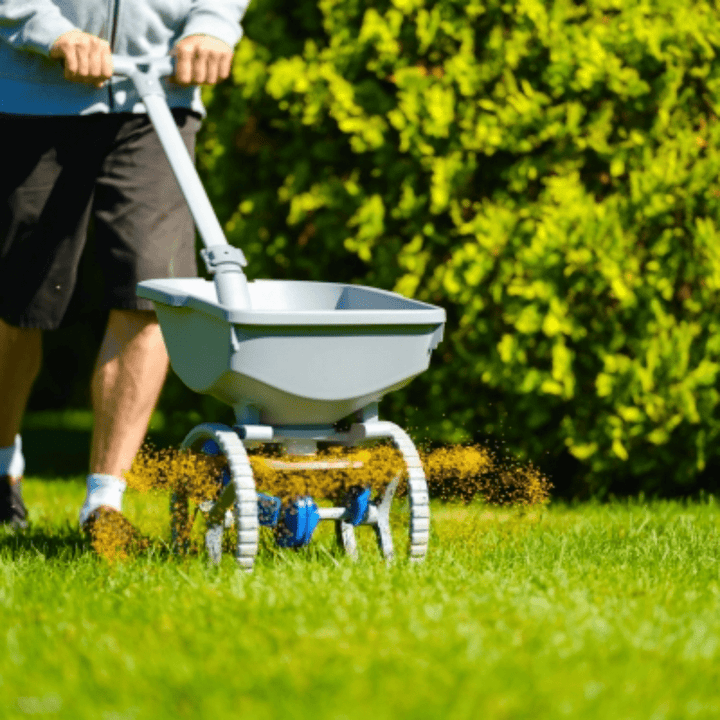
Use straight lines when walking with the spreader. This helps spread the weed and feed evenly across your lawn.
Walk at a steady pace to avoid uneven patches. Overlap your rows slightly to cover every part of the grass.
- Start at one edge of the lawn
- Walk in straight lines back and forth
- Overlap each pass by about 20%
- Keep a steady walking speed
Avoiding Overlap And Missed Spots
Overlap too much and you may damage your grass. Miss spots and weeds will grow back quickly.
Check your work by looking for areas that are too thick or thin. Adjust your walking pattern if needed.
- Do not stop or change speed suddenly
- Use flags or markers for large lawns
- Walk at a consistent pace
- Double-check areas near edges and corners
Timing And Weather Conditions
Apply weed and feed when the grass is dry. Wet grass can cause the product to clump or wash away.
Choose a calm day with no rain forecast for at least 24 hours. This gives the product time to work well.
- Apply in the morning or late afternoon
- Avoid windy days to reduce drift
- Keep off the lawn until product dries
- Check weather forecast before applying
Post-application Care
Taking care of your lawn after applying weed and feed is very important. Proper care helps your lawn grow healthy and strong.
This guide will explain what to do after spreading the product on your lawn. Follow these steps for the best results.
Watering Guidelines
Water your lawn soon after applying weed and feed. This helps the product soak into the soil. Use a light watering to avoid washing it away.
Do not overwater your lawn for the next few days. Too much water can reduce the product’s effectiveness.
- Water lightly right after application
- Keep soil moist but not soaked
- Wait 24 to 48 hours before heavy watering
Avoiding Traffic On Lawn
Keep people and pets off the lawn after applying weed and feed. Walking on the lawn can disturb the product and reduce its effects.
Avoid mowing the lawn for at least three days. This gives time for the product to work fully and protect your grass.
- Stay off the lawn for 24 to 48 hours
- Do not allow pets to play on treated areas
- Wait to mow the lawn for three days
Monitoring Lawn Health
Check your lawn regularly after treatment. Look for signs that weeds are dying and grass is growing well.
If you see dead weeds, remove them carefully. Keep watching for any new weeds and treat them as needed.
- Inspect lawn weekly for weed control
- Remove dead weeds by hand
- Apply follow-up treatments if needed
Common Mistakes To Avoid
Applying weed and feed with a spreader helps keep your lawn healthy. Using the right technique prevents damage and waste.
Learn about common mistakes to avoid for the best results when using your spreader.
Over-application Risks
Putting too much weed and feed on your lawn can harm plants and soil. It may burn grass or kill helpful insects.
Too much fertilizer can also cause runoff, polluting nearby water sources.
- Burned grass patches
- Soil nutrient imbalance
- Water pollution risks
- Wasted product and money
Ignoring Spread Rate Instructions
Each product has a spread rate on its label. Ignoring this can cause uneven application or damage.
Follow the instructions to set your spreader correctly for even coverage and safe use.
- Check the product label for rates
- Adjust spreader settings as directed
- Test on a small area first
- Refill spreader carefully to avoid spills
Applying During Extreme Weather
Applying weed and feed during very hot, cold, or rainy weather can reduce its effectiveness.
Wait for mild, dry conditions to help the product work well and avoid lawn damage.
- Avoid application on windy days
- Don’t apply if heavy rain is expected
- Skip very hot or dry days to prevent burning
- Apply in calm, dry weather for best results
Maintaining A Healthy Lawn Year-round
A healthy lawn makes your home look great all year. Using weed and feed with a spreader helps keep grass strong and weeds away.
It is important to apply weed and feed correctly. This helps your lawn stay green and free of weeds every season.
Regular Feeding Schedule
Feed your lawn regularly to give it the nutrients it needs. A good schedule helps grass grow thick and healthy.
Apply weed and feed every 6 to 8 weeks during the growing season. Avoid feeding when the grass is dry or stressed.
- Spring: Apply to support new growth
- Early summer: Use to control weeds
- Late summer: Feed to strengthen roots
- Fall: Prepare lawn for winter
Weed Prevention Tips
Applying weed and feed helps stop weeds from growing. Spread it evenly to cover your lawn completely.
Keep your lawn thick to block weeds. Remove any visible weeds before applying for better results.
- Water lawn lightly after applying
- Do not mow for 2 days after feeding
- Avoid spreading on windy days
- Use a spreader for even application
Lawn Care Best Practices
Good lawn care supports your feeding efforts. Mow regularly and keep grass at the right height.
Water deeply but less often. This helps grass grow strong roots and stay healthy through dry times.
- Set mower blades to 2.5 to 3 inches
- Water early in the morning
- Remove grass clippings if too thick
- Check soil pH and adjust if needed
Frequently Asked Questions
How Do I Prepare My Spreader For Weed And Feed?
Clean your spreader before use to avoid clogs. Adjust the settings to match the product’s instructions. Test the spreader on a small area for even distribution.
When Is The Best Time To Apply Weed And Feed?
Apply weed and feed in early spring or fall. Choose a dry day with no rain forecast. This helps the product absorb into the soil and grass effectively.
How Much Weed And Feed Should I Use Per Square Foot?
Follow the product label for exact coverage rates. Typically, use about 2 to 4 pounds per 1,000 square feet. Avoid over-application to prevent lawn damage.
Can I Use A Spreader On Uneven Lawn Surfaces?
Yes, but apply slowly and evenly. Walk at a steady pace to ensure uniform coverage. Adjust spreader settings if needed for slopes or rough areas.
Conclusion
Applying weed and feed with a spreader is simple and effective. Start by setting the spreader correctly for even coverage. Walk steadily to avoid missed spots or overlaps. Water the lawn after applying to help the product work well. Regular care keeps your grass healthy and green.
Follow these steps each season to control weeds and nourish your lawn. Your yard will look better and grow stronger over time. Easy to do, and worth the effort.
