
Are you ready to make your gardening tasks easier and more efficient? Transporting mulch with a wheelbarrow might seem simple, but doing it the right way can save you time, effort, and even prevent injury.
Whether you’re spreading mulch around your flower beds or preparing a larger area, mastering this skill can change the way you work in your garden. In this guide, you’ll discover practical tips and tricks that will help you move mulch smoothly and safely.
Keep reading, and soon you’ll handle your mulch like a pro!
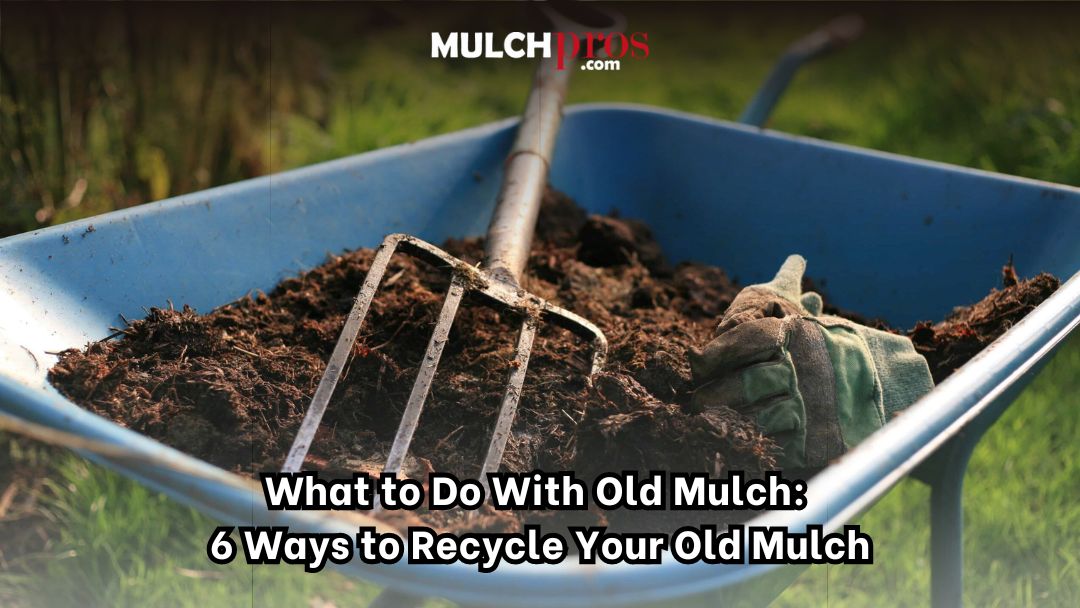
Credit: mulchpros.com
Choosing The Right Wheelbarrow
Transporting mulch with a wheelbarrow is easier when you pick the right one. The right wheelbarrow helps carry the mulch without much effort.
Think about the types, size, and material of the wheelbarrow before buying. These features affect how well the wheelbarrow works for your mulch.
Types Of Wheelbarrows
There are different wheelbarrow types for various tasks. Each type has its strengths and weaknesses for moving mulch.
Single-wheel wheelbarrows offer better control on rough ground. Two-wheel wheelbarrows are more stable on flat surfaces.
- Single-wheel: easier to steer, good for uneven terrain
- Two-wheel: more balanced, less chance of tipping
- Flat-free tire: no worries about punctures
Capacity And Size
Choose a wheelbarrow size that fits your strength and the mulch amount. Too big means heavy loads. Too small means many trips.
Most wheelbarrows hold between 4 and 8 cubic feet. Pick a size that feels easy to push when full.
- Smaller (4-5 cubic feet): light loads, easy to handle
- Medium (6-7 cubic feet): good balance for most jobs
- Larger (8+ cubic feet): fewer trips but heavier loads
Wheelbarrow Material
Wheelbarrows come in different materials. The material affects weight, strength, and how long it lasts.
Steel wheelbarrows are strong but heavy. Plastic wheelbarrows are lighter but may break more easily.
- Steel: durable and strong, good for heavy mulch
- Plastic: lightweight and rust-proof, best for light mulch
- Aluminum: light and rust-resistant, balance of strength and weight
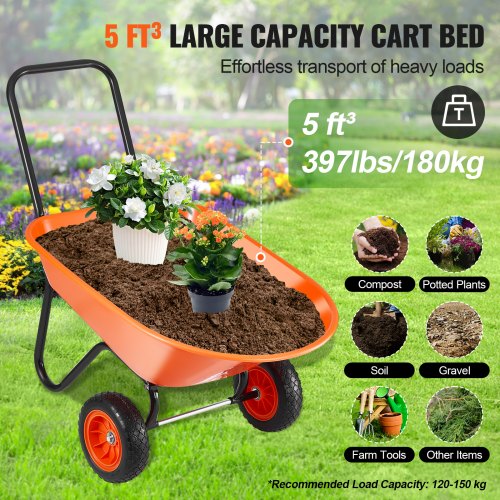
Credit: www.vevor.ca
Preparing Mulch For Transport
Transporting mulch with a wheelbarrow is easier with proper preparation. Getting the mulch ready helps avoid spills and saves time.
Focus on moisture, chunk size, and whether the mulch is bagged or loose. These factors affect how you load and move it.
Moisture Content
Check the mulch moisture before loading. Dry mulch is light and easy to carry but can blow away. Wet mulch is heavier and sticks together well.
For wheelbarrow transport, mulch should be damp but not dripping. This keeps it in place during movement.
Chunk Size
Smaller mulch pieces fit better in a wheelbarrow and reduce the chance of dropping large chunks. Large chunks can get stuck or unbalance the load.
- Break large clumps before loading.
- Remove sticks or stones mixed in the mulch.
- Keep pieces uniform in size for easy handling.
Bagged Vs Loose Mulch
| Type | Loading Ease | Transport Stability | Cleanup |
| Bagged Mulch | Easy to load and carry | Stable, no spillage | Less mess after unloading |
| Loose Mulch | Needs shoveling or scooping | Can spill if overloaded | May require more cleanup |
Bagged mulch is neat and simple for wheelbarrow transport. Loose mulch needs careful loading to avoid spills.
Loading The Wheelbarrow
Loading mulch into a wheelbarrow is the first step to moving it easily. Doing it right saves time and effort.
Use simple techniques to load mulch safely and balance the weight. This keeps you steady while moving.
Proper Loading Techniques
Start by placing the wheelbarrow on flat ground. Use a shovel or pitchfork to scoop the mulch.
Put the mulch near the center of the wheelbarrow. Avoid dumping all the mulch in one spot.
- Scoop mulch carefully to avoid spills
- Drop small amounts evenly across the bed
- Pack mulch lightly, do not compress too much
Balancing The Load
Keep the mulch balanced to make pushing easier. Uneven weight can tip the wheelbarrow forward or sideways.
Place mulch so the heaviest part is above the wheel. This helps reduce strain on your arms and back.
- Center the load over the wheel
- Distribute mulch evenly from side to side
- Check balance before lifting the handles
Avoiding Overloading
Do not fill the wheelbarrow too full. Overloading makes it hard to push and control.
Keep the load light enough to move safely. Heavy loads can cause accidents or injuries.
- Limit mulch to a manageable amount
- Use multiple trips for large jobs
- Stop and adjust if the wheelbarrow feels unstable
Transporting Safely And Efficiently
Moving mulch with a wheelbarrow can be easy if you plan well. Safety and efficiency go hand in hand. Follow simple tips to avoid accidents and save time.
Knowing the right paths and how to handle the load makes a big difference. Take breaks to keep your energy up and avoid injury.
Best Routes And Terrain
Choose flat and firm ground to push the wheelbarrow. Avoid steep hills or loose soil that can cause tipping. Clear the path of rocks and debris before starting.
- Pick the shortest route with smooth surfaces
- Use paved or packed dirt paths
- Avoid wet or slippery areas
- Steer clear of uneven or rocky ground
Handling Tips
Load the wheelbarrow evenly to keep balance. Do not overload it to prevent strain and spills. Hold the handles firmly and keep your back straight while pushing.
| Tip | Reason |
| Distribute mulch evenly | Prevents tipping over |
| Do not overload | Makes pushing easier and safer |
| Hold handles tight | Better control of wheelbarrow |
| Keep back straight | Reduces risk of back injury |
Pacing And Rest
Move at a steady pace to keep control. Take breaks to avoid getting tired. Drink water and rest muscles often for better endurance.
- Push slowly to avoid spills
- Stop every 10-15 minutes for rest
- Drink water during breaks
- Stretch your back and arms before restarting
Unloading And Spreading Mulch
Transporting mulch with a wheelbarrow is simple but requires care. Unloading and spreading mulch correctly helps your garden look neat. It also supports plant health by protecting the soil.
Using the right methods makes the job easier and faster. This guide covers unloading mulch, spreading it evenly, and cleaning your wheelbarrow after use.
Effective Unloading Methods
Unload mulch close to the area where you want to spread it. This reduces the need to move it again.
- Stop the wheelbarrow on flat ground to keep it steady.
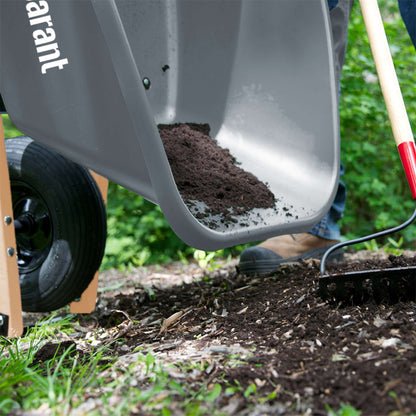
- Tip the wheelbarrow slowly to pour mulch out.
- Use a garden fork or shovel to help spread mulch if it clumps.
- Unload small amounts at a time to avoid spills.
Spreading Tips
Spread mulch evenly around plants and trees. Avoid piling mulch against stems or trunks.
| Tip | Reason |
| Keep mulch 2-4 inches thick | Prevents weed growth and retains moisture |
| Leave space near plant base | Stops rot and pest problems |
| Use a rake or gloved hands | Distributes mulch smoothly |
| Fill low spots first | Ensures even coverage |
Cleaning The Wheelbarrow
Clean the wheelbarrow after spreading mulch to keep it in good shape. Dried mulch can stick and cause rust.
- Remove leftover mulch with a shovel.
- Rinse the wheelbarrow with a hose.
- Scrub with a brush if needed.
- Dry the wheelbarrow to prevent rust.
Maintaining Your Wheelbarrow
Taking care of your wheelbarrow helps it last longer. A well-maintained wheelbarrow makes moving mulch easier.
Regular maintenance prevents damage and keeps the wheelbarrow working smoothly.
Regular Cleaning
Clean your wheelbarrow after each use. Dirt and mulch can build up and cause rust or damage.
Use a hose to wash off mud and debris. Dry it well to stop rust from forming.
- Remove leftover mulch and soil
- Wash with water and mild soap if needed
- Dry the wheelbarrow before storage
Tire And Wheel Care
Check the tire pressure often. Properly inflated tires make it easier to move heavy loads.
Look for cracks or damage on the tire. Fix or replace damaged tires quickly to avoid accidents.
- Pump air into tires to the recommended level
- Remove debris from the wheel area
- Lubricate the wheel axle for smooth movement
Storage Tips
Store your wheelbarrow in a dry place. Protect it from rain and sun to prevent rust and fading.
Keep it off the ground by hanging or using a stand. This stops moisture from damaging the frame and tire.
- Find a covered spot like a garage or shed
- Hang the wheelbarrow or place it on blocks
- Cover it with a tarp if needed
Credit: www.lawnsite.com
Frequently Asked Questions
How Much Mulch Can A Wheelbarrow Carry?
A typical wheelbarrow holds about 3 to 6 cubic feet of mulch. Overloading it can cause spills and strain your back. For easy transport, fill it halfway and make multiple trips if needed.
What Is The Best Way To Load Mulch Into A Wheelbarrow?
Use a shovel to scoop mulch carefully into the wheelbarrow. Distribute the load evenly to maintain balance. Avoid piling mulch too high to prevent falling during transport.
How To Prevent Mulch From Spilling During Transport?
Keep the wheelbarrow balanced and avoid overfilling. Move slowly over uneven ground and steer clear of sharp turns. Using a tarp or liner can also help contain loose mulch.
Can A Wheelbarrow Handle Wet Mulch?
Wet mulch is heavier and harder to transport. Make sure your wheelbarrow is sturdy and don’t overload it. Take shorter trips to avoid straining yourself and the equipment.
Conclusion
Transporting mulch with a wheelbarrow is easy with practice. Start small to get the hang of it. Balance your load to avoid spills. Secure the mulch to prevent it from falling. Use the right type of wheelbarrow for your needs.
A sturdy one makes the task easier. Keep the path clear of obstacles. This ensures smooth movement. Take breaks if needed. Safety comes first. With these tips, moving mulch becomes simple and efficient. Enjoy a tidy garden with less effort.
