
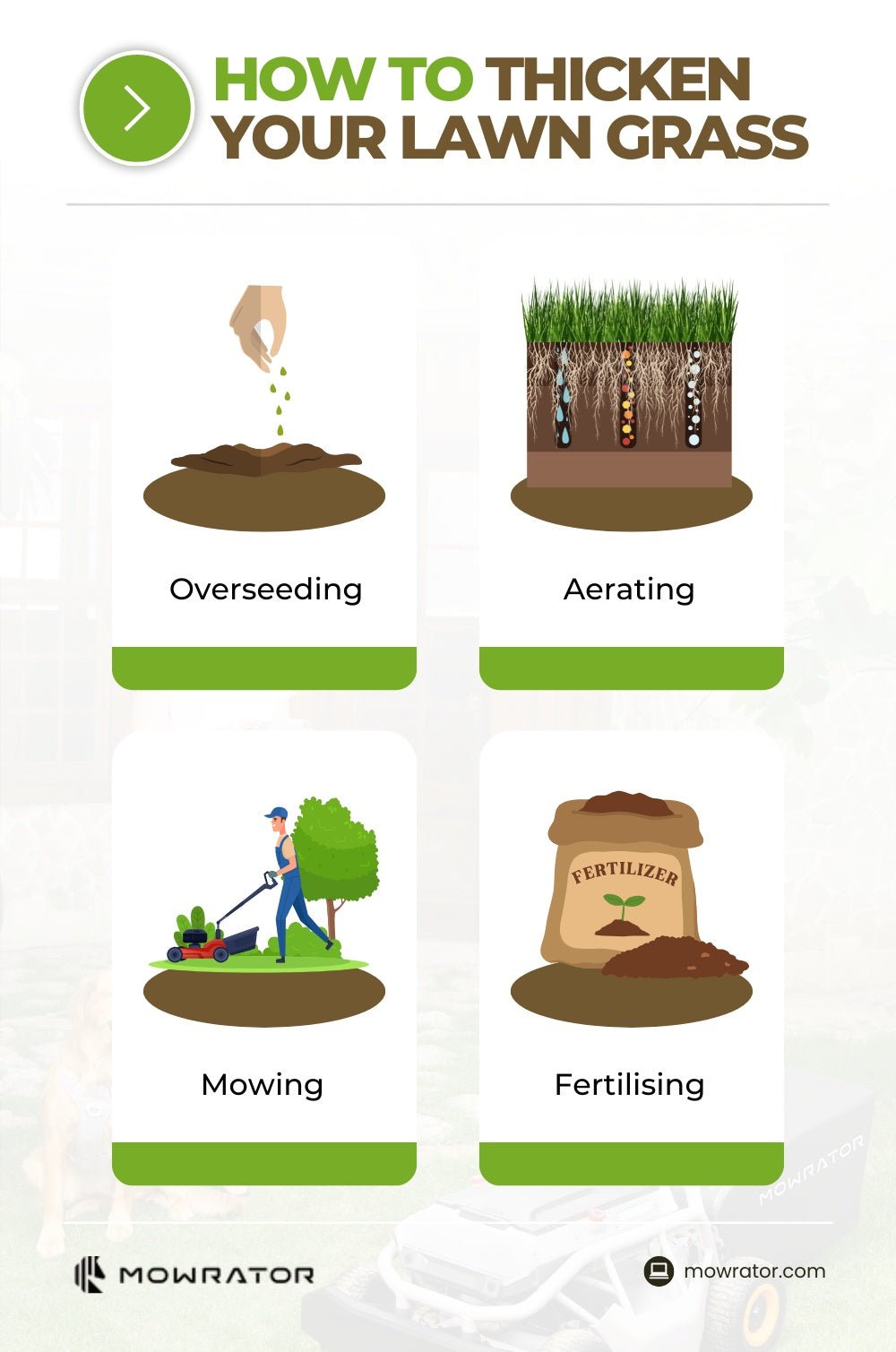
Are you tired of seeing patchy, thin grass in your yard? You might be wondering if spreading fertilizer is the secret to getting a thicker, lusher lawn.
The idea sounds simple—feed your grass, and it will grow strong and full. But does it really work that way? You’ll discover the truth behind fertilizer and grass thickness. You’ll learn what really helps your lawn thrive and what might be wasting your time and money.
Keep reading to find out how to get the thick, green grass you’ve always wanted.
How Fertilizer Affects Grass Growth
Fertilizer helps grass grow thicker and greener. It gives grass the food it needs to stay healthy.
Without enough nutrients, grass can look thin and weak. Fertilizer supports strong roots and leaves.
Role Of Nutrients In Grass Health
Grass needs nutrients like nitrogen, phosphorus, and potassium. These help grass grow tall and stay green.
Nitrogen makes leaves grow thick and green. Phosphorus helps roots grow deep. Potassium keeps grass strong against disease.
- Nitrogen (N): Builds leaf growth and color
- Phosphorus (P): Supports strong roots
- Potassium (K): Improves disease resistance
Types Of Fertilizers For Lawns
There are two main types of lawn fertilizers: slow-release and quick-release. Each works differently to feed your grass.
Slow-release fertilizers provide nutrients over time. Quick-release fertilizers work fast but for a short time.
- Slow-release: Feeds grass steadily over weeks
- Quick-release: Gives fast nutrient boost
- Organic: Made from natural materials
- Synthetic: Made from chemical compounds
Choosing The Right Fertilizer
Applying the right fertilizer helps grass grow thick and healthy. Picking the right type depends on your lawn’s needs and your gardening goals. Understanding fertilizer types guides your choice.
This guide explains slow-release and quick-release fertilizers. It also covers organic and synthetic options for lawn care.
Slow-release Vs. Quick-release Fertilizers
Slow-release fertilizers release nutrients over time. They feed grass steadily and reduce the risk of burning. Quick-release fertilizers give nutrients fast. They show quick results but need careful use.
- Slow-release helps grass grow evenly.
- Quick-release boosts growth quickly.
- Slow-release needs fewer applications.
- Quick-release works well for fast repair.
- Slow-release is safer for new grass.
Organic Vs. Synthetic Options
Organic fertilizers come from natural materials. They improve soil health and release nutrients slowly. Synthetic fertilizers are man-made. They deliver nutrients quickly and are easy to measure.
| Type | Source | Release Speed | Soil Impact |
| Organic | Natural materials like compost | Slow | Improves soil health |
| Synthetic | Man-made chemicals | Fast | May harm soil over time |
Proper Fertilizer Application Techniques
Spreading fertilizer correctly helps grass grow thick and healthy. Applying fertilizer the right way gives nutrients evenly across the lawn.
Using good methods can prevent burn spots and waste. Timing and spreading technique both matter for best results.
Correct Spreading Methods
Choose the right spreader for your lawn size and shape. Handheld spreaders work for small areas, while broadcast spreaders suit larger lawns.
- Calibrate your spreader before use to avoid over or under applying fertilizer.
- Walk at a steady pace to distribute fertilizer evenly.
- Overlap each pass slightly to prevent bare spots.
- Avoid spreading fertilizer on sidewalks or driveways to reduce runoff.
- Water the lawn lightly after spreading to help nutrients soak into the soil.
Optimal Timing For Fertilizing
Fertilize when grass is actively growing to get the best thickening effect. Early spring and early fall are good times for most grasses.
| Season | Best Time to Fertilize | Reason |
|---|---|---|
| Spring | March to May | Grass starts growing after winter dormancy |
| Summer | Not recommended | Heat stress can harm grass after fertilizing |
| Fall | September to November | Grass rebuilds roots before winter |
| Winter | Not recommended | Grass is dormant and won’t absorb nutrients |

Credit: www.reddit.com
Common Mistakes To Avoid
Spreading fertilizer on your lawn can help grass grow thick and healthy. But some mistakes can harm your lawn instead. It is important to know what to avoid.
This guide covers two common mistakes: overfertilizing risks and ignoring soil conditions. Avoiding these will keep your grass strong.
Overfertilizing Risks
Using too much fertilizer may seem like a good idea. But it can damage your grass and soil. Overfertilizing can cause burnt grass and poor root growth.
- Burns grass blades and leaves brown patches
- Leaches nutrients away from roots
- Pollutes nearby water sources
- Increases weed and pest problems
- Wastes money on excess fertilizer
Ignoring Soil Conditions
Good soil is the base for thick grass. Ignoring soil type and health can stop fertilizer from working. Different soils need different care.
| Soil Type | Effect on Fertilizer | Tip |
| Sandy | Drains quickly, loses nutrients | Apply fertilizer in smaller doses |
| Clay | Holds water, may cause root rot | Check drainage before fertilizing |
| Loamy | Balanced and nutrient-rich | Use standard fertilizer amounts |
| Acidic | Limits nutrient uptake | Test pH and add lime if needed |
Additional Tips For Thicker Grass
Spreading fertilizer can help grass grow thicker by providing nutrients. To improve results, follow other good lawn care practices. These tips help your grass become healthy and dense.
Watering, mowing, and soil care all play important roles. Each step supports the fertilizer and encourages strong grass roots and blades.
Watering Practices
Water grass deeply but less often. This encourages roots to grow deeper into the soil. Shallow watering causes weak roots and thin grass.
Water early in the morning to reduce evaporation. Avoid watering in the evening to prevent fungus growth.
- Water 1 to 1.5 inches weekly
- Use a rain gauge to measure water
- Water before 10 a.m. for best results
Mowing Strategies
Keep mower blades sharp to avoid tearing grass. Cut no more than one-third of the grass height at once. Cutting too short stresses the grass and thins the lawn.
Leave grass clippings on the lawn. They add nutrients back into the soil and help retain moisture.
- Set mower height to 2.5 to 3 inches
- Mow regularly, about once a week
- Change mowing patterns to prevent soil compaction
Soil Aeration Benefits
Aerating the soil lets air, water, and nutrients reach grass roots better. This improves root growth and helps grass grow thicker.
Use a lawn aerator to remove small plugs of soil. Aerate your lawn once or twice a year, especially in compacted areas.
- Helps reduce soil compaction
- Improves water absorption
- Increases fertilizer effectiveness

Credit: lawnsynergy.com
Signs Of A Healthy, Thick Lawn
A thick lawn looks full and lush. It shows good care and proper growth.
Knowing the signs helps you keep your grass healthy and green.
Color And Density Indicators
A healthy lawn has a rich green color. It should look even and dense.
- Grass blades are bright green, not yellow or brown.
- The lawn feels thick when you walk on it.
- There are no bare or thin patches.
- Grass blades grow upright and close together.
Resistance To Weeds And Pests
A strong lawn resists weeds and pests well. Less damage means better growth.
| Sign | What It Means |
| Few or no weeds | Grass competes well for sunlight and nutrients |
| Minimal pest damage | Grass is healthy and can repair itself |
| Even growth pattern | Grass is not stressed by insects or diseases |

Credit: www.reddit.com
Frequently Asked Questions
Does Fertilizer Make Grass Thicker?
Yes, fertilizer provides essential nutrients that promote grass growth. It enhances root development and boosts overall grass health. This results in a thicker, more vibrant lawn. Regular application can significantly improve grass density over time. Always follow recommended guidelines for the best results.
How Often Should I Apply Fertilizer?
Apply fertilizer every 6 to 8 weeks during the growing season. This timing ensures consistent nutrient supply for optimal grass growth. Over-fertilizing can harm the grass, so it’s crucial to follow product instructions. Adjust frequency based on grass type and local climate conditions.
What Type Of Fertilizer Thickens Grass Best?
A balanced, slow-release fertilizer with nitrogen, phosphorus, and potassium thickens grass effectively. Nitrogen encourages leafy growth, phosphorus supports root development, and potassium strengthens overall grass health. Choose a formulation suitable for your grass type for optimal results.
Can Over-fertilization Harm My Lawn?
Yes, over-fertilization can damage your lawn. Excess nutrients can burn grass and lead to nutrient runoff. This weakens the grass and promotes disease. Always adhere to recommended application rates and timing to maintain healthy grass.
Conclusion
Spreading fertilizer helps grass grow thicker and healthier. It gives grass the nutrients it needs. But too much fertilizer can harm your lawn. Water your grass well after applying fertilizer. Regular care, like mowing and watering, also matters. Thick grass needs time and patience to develop.
Follow a good lawn care routine for best results. A healthy lawn looks green and feels soft. Fertilizer is a useful tool, not a quick fix. Keep your lawn healthy step by step.
