
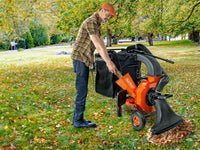
Are you tired of raking leaves every fall? What if there was an easier way to gather those stubborn leaves into neat piles without breaking a sweat?
You might have heard about leaf vacuums and wondered, “Can leaf vacuum blow leaves into piles? ” If you want a simple, effective method to tidy up your yard faster, this question is key. Keep reading, and you’ll discover how a leaf vacuum works, its surprising abilities, and whether it can be the game-changer your yard maintenance needs.

Credit: www.vevor.com
How Leaf Vacuums Work
Leaf vacuums use suction and blowing to gather leaves efficiently. They help clean yards by collecting scattered leaves into piles or bags. Understanding their functions can help you use them better.
These machines combine air movement and collection systems. They either suck leaves into a bag or blow them into piles for easy removal. Let’s look at how they work in detail.
Suction And Blowing Functions
Leaf vacuums have two main functions: suction and blowing. The suction pulls leaves into the vacuum. The blowing function pushes leaves into piles for easy gathering.
- Suction:A powerful fan creates a vacuum to suck leaves through a tube.
- Blowing:The machine pushes air out to move leaves into piles.
- Collection:Leaves sucked in are shredded and stored in a bag or container.
Some vacuums switch between blowing and suction. This makes moving leaves easier without changing tools.
Different Types Of Leaf Vacuums
Leaf vacuums come in different types. Each type suits different yard sizes and tasks. Here is a simple table comparing common types.
| Type | Power Source | Best Use | Portability |
|---|---|---|---|
| Handheld | Electric or Gas | Small yards and patios | High |
| Backpack | Gas | Medium to large yards | Medium |
| Walk-behind | Gas | Large yards and parks | Low |

Credit: thewoodlandgardener.com
Using Leaf Vacuums To Blow Leaves
Leaf vacuums are tools that can suck up leaves and debris. They often have a blower feature to move leaves into piles.
Blowing leaves into piles makes cleanup easier. Many leaf vacuums allow you to switch between vacuum and blower modes.
Switching Between Vacuum And Blower Modes
Leaf vacuums usually have a switch or button to change modes. This lets you use the machine to vacuum or blow leaves.
Check your machine’s manual to find the exact switch location. Make sure the vacuum bag is empty before switching to blower mode.
- Turn off the machine before switching modes
- Remove the vacuum bag if needed
- Set the switch to blower mode
- Restart the machine and begin blowing leaves
Best Techniques For Pile Formation
Blow leaves slowly to control where the pile forms. Use short bursts to move leaves without scattering them.
Work in one direction to gather leaves in a neat pile. Avoid blowing leaves into windy areas where they scatter again.
- Start blowing leaves from the outer edges
- Move leaves toward a central spot
- Use gentle bursts to avoid leaf scattering
- Create piles near compost bins or bags
Advantages Of Blowing Leaves Into Piles
Blowing leaves into piles is a common yard cleanup method. It helps gather scattered leaves quickly.
This method saves time and effort compared to raking. It makes yard maintenance easier for many people.
Efficiency In Yard Cleanup
Using a leaf blower moves leaves fast and covers large areas. It reduces the time spent on cleanup tasks.
- Blowers reach tight spots hard to rake
- Leaves gather quickly into neat piles
- It lowers physical strain on your back and arms
- Works well on wet or dry leaves
Easier Collection And Disposal
Leaves in piles are simpler to collect and remove. You can bag or compost them faster than loose leaves.
| Method | Ease of Collection | Disposal Options |
| Loose Leaves | Hard to gather | Limited options |
| Blown into Piles | Easy to scoop | Bagging, composting, or mulching |
Limitations And Challenges
Leaf vacuums can help clear yards by blowing leaves into piles. They save time but have some limits and challenges. Understanding these can help you use them better.
Several factors affect how well a leaf vacuum works. These include leaf size, moisture, noise, and environmental impact. Knowing these issues helps set the right expectations.
Leaf Size And Moisture Impact
Leaf vacuums work best with dry and small to medium-sized leaves. Wet or large leaves often cause problems like clogging. This reduces the machine’s efficiency and may cause damage.
- Wet leaves stick together and block the vacuum tube.
- Large leaves can get stuck in the machine’s fan.
- Clogged vacuums need frequent stops to clear debris.
- Heavy, damp leaves are harder to blow into neat piles.
Noise And Environmental Considerations
Leaf vacuums produce noise that can disturb neighbors and wildlife. They often run on gas, which creates emissions harmful to the environment. These factors limit when and where you can use them.
| Challenge | Impact | Possible Solution |
| Noise Level | Disturbs neighbors and pets | Use during daytime and wear ear protection |
| Air Pollution | Emits harmful gases | Choose electric or battery-powered models |
| Wildlife Disturbance | Scares birds and small animals | Avoid use near natural habitats |
Alternative Tools For Leaf Piling
Leaves can cover your yard quickly in autumn. Using the right tools helps gather them into neat piles for easy cleanup.
This guide compares rakes and leaf blowers. It also shows how combining tools can improve your leaf piling.
Rakes Vs. Leaf Blowers
Rakes are simple and quiet. They work well on small areas and wet leaves. Leaf blowers are faster and cover large spaces. They can blow leaves into piles but may scatter them if not used carefully.
- Rakes:Good for precision and quiet work.
- Leaf Blowers:Fast for big yards and dry leaves.
- Rakes:Require more effort and time.
- Leaf Blowers:Can be noisy and use gas or electricity.
Combining Tools For Best Results
Using both rakes and leaf blowers can make leaf piling easier. Start with a leaf blower to gather leaves. Then use a rake to shape the piles neatly and pick up leftover leaves.
| Task | Best Tool | Reason |
| Gathering leaves from large areas | Leaf Blower | Fast and covers wide space |
| Shaping leaf piles | Rake | More control and precision |
| Collecting wet or stuck leaves | Rake | Better grip on leaves |
| Final cleanup | Rake | Removes small leaf bits |

Credit: www.gettyimages.no
Maintenance Tips For Leaf Vacuums
Leaf vacuums help keep your yard tidy by blowing leaves into piles. To ensure they work well, regular maintenance is essential. Follow these tips to keep your leaf vacuum in top condition.
Cleaning And Storage
Cleaning your leaf vacuum after each use helps prevent clogs and malfunctions. Make sure to remove any debris from the vacuum parts.
Store the vacuum in a dry place to avoid rust and damage. Cover it with a cloth to keep it dust-free.
- Empty the bag or container regularly
- Check for stuck leaves in the nozzle
- Wipe surfaces with a damp cloth
- Use a cover for dust protection
Ensuring Optimal Performance
Maintaining optimal performance requires regular checks. Inspect the motor and blades for wear and tear.
Keep the air filter clean to ensure the vacuum runs smoothly. Replace any worn parts promptly.
- Inspect blades for sharpness
- Check the motor for unusual sounds
- Clean or replace the air filter
- Tighten loose screws and bolts
Frequently Asked Questions
Can Leaf Vacuums Blow Leaves Into Piles Effectively?
Yes, many leaf vacuums have a blower function that can gather leaves into piles quickly. This feature helps in efficient yard cleanup.
How Does A Leaf Vacuum Create Leaf Piles?
Leaf vacuums use a powerful air blower to push leaves into piles. This makes collecting and bagging leaves easier and faster.
Are All Leaf Vacuums Equipped With A Blower Feature?
Not all leaf vacuums have a blower mode. Check product details to ensure it includes a blowing function for making leaf piles.
Can Leaf Vacuums Replace Traditional Raking?
Leaf vacuums with blowers can reduce raking time by gathering leaves efficiently. However, some spots may still require manual raking.
Conclusion
Leaf vacuums can blow leaves into neat piles with ease. They save time and effort in yard cleanup. Using the right settings helps control leaf movement better. Some models combine vacuum and blower functions for flexibility. Regular maintenance keeps these tools working well longer.
Consider your yard size and leaf volume before choosing one. A leaf vacuum makes outdoor chores simpler and faster. Clean yards look tidy and inviting. Try one to see how it fits your needs.
