
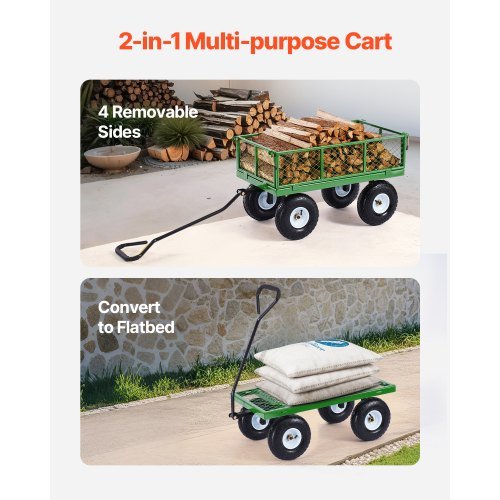
When it comes to gardening, the right tools can make all the difference. If you’ve ever lugged a heavy load across your garden, you know how essential a reliable garden cart is.
But with so many options, how do you choose? Imagine maneuvering effortlessly through your garden, saving time and energy. That’s where the debate between 4-wheel and 2-wheel garden carts comes in. Which one truly meets your needs? This decision could revolutionize your gardening experience.
Dive into this article to discover which cart will become your trusty gardening companion, making your chores easier and more efficient. Your perfect garden awaits.
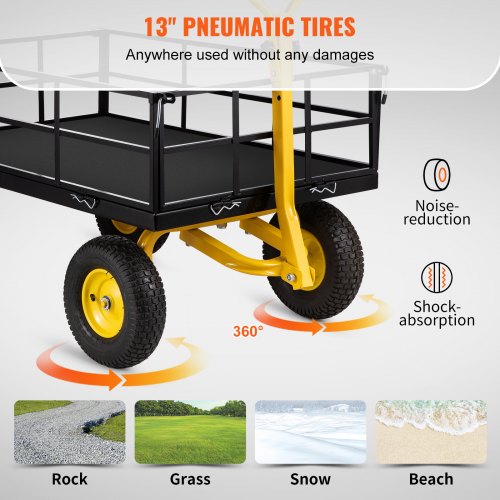
Credit: www.vevor.ca
Design And Structure
Garden carts come in different designs to help you carry tools and plants. Two popular types are 4-wheel and 2-wheel garden carts.
Each has a unique design and structure that suits different gardening needs and tasks.
Frame And Build Quality
4-wheel carts usually have a strong, rectangular frame. This makes them stable and good for heavy loads.
2-wheel carts have a simpler frame with a handle for easy lifting and pushing. They are lighter but less stable on uneven ground.
- 4-wheel carts often use steel or heavy-duty plastic frames
- 2-wheel carts have lighter frames, sometimes made of aluminum
- 4-wheel carts provide better balance due to their frame design
Wheel Configuration
4-wheel carts have four wheels placed at each corner. This setup offers stability and easy movement on flat surfaces.
2-wheel carts have two large wheels on one side. They need to be tilted to move, which can be harder on rough terrain.
- 4-wheel carts roll smoothly and stay balanced
- 2-wheel carts are easier to maneuver in tight spaces
- 4-wheel carts can be pushed or pulled without tipping
Load Capacity
4-wheel garden carts usually hold more weight. Their design spreads the load evenly across all wheels.
2-wheel carts carry lighter loads. The weight rests on two wheels and the user’s strength when lifting.
| Cart Type | Typical Load Capacity |
|---|---|
| 4-Wheel Garden Cart | Up to 500 lbs (227 kg) |
| 2-Wheel Garden Cart | Up to 300 lbs (136 kg) |
Maneuverability
Maneuverability is a key factor when choosing a garden cart. It affects how easily you can move the cart around your yard or garden.
Four-wheel and two-wheel garden carts differ in how they handle turns, ease of use, and terrain.
Turning Radius
Two-wheel garden carts usually have a smaller turning radius. They can pivot around the wheels, making tight turns easier.
Four-wheel carts need more space to turn because the front wheels have limited steering. This makes them better for straight paths.
Ease Of Handling
Two-wheel carts require you to lift and steer the front end. This can be harder with heavy loads but offers more control on narrow paths.
Four-wheel carts are easier to push and pull without lifting. They provide stability and can carry heavier loads with less effort.
- Two-wheel carts need more strength to lift and turn.
- Four-wheel carts glide smoothly on flat surfaces.
- Two-wheel carts offer better control on tight spaces.
- Four-wheel carts are better for carrying heavy or bulky items.
Terrain Adaptability
| Terrain Type | 2-Wheel Garden Cart | 4-Wheel Garden Cart |
|---|---|---|
| Flat surfaces | Good maneuverability | Very stable and easy to push |
| Uneven ground | Better at handling bumps | May get stuck or tip if not careful |
| Grass and soft soil | Easier to steer with effort | Needs more power to push |
| Narrow paths | Excellent turning and control | Limited turning space |
Storage And Space
Choosing between a 4-wheel garden cart and a 2-wheel garden cart depends on how much storage space you need. Both have different designs that affect their cargo volume and ease of storage.
Understanding these differences helps you pick the right cart for your garden tasks and storage area.
Cargo Volume
4-wheel garden carts usually offer larger cargo volume than 2-wheel carts. Their wider base and stable frame can carry more soil, plants, or tools. A 2-wheel cart has less volume but is lighter and easier to maneuver in tight spaces.
- 4-wheel carts hold more weight and volume
- 2-wheel carts are smaller with less storage space
- 4-wheel carts suit bigger loads and longer trips
- 2-wheel carts work well for small jobs and narrow paths
Stacking And Storage Options
Storing garden carts depends on their design and how they stack or fold. 2-wheel carts often fold or collapse to save space. 4-wheel carts may not fold but some models stack for storage.
| Type | Folding | Stacking | Space Needed |
| 4-Wheel Garden Cart | No | Yes (some models) | Medium to Large |
| 2-Wheel Garden Cart | Yes (many models) | No | Small to Medium |
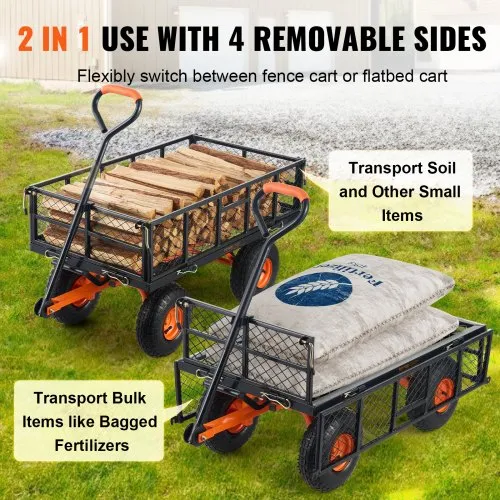
Credit: www.vevor.ca
Durability And Maintenance
Choosing between a 4-wheel garden cart and a 2-wheel garden cart depends on how long they last and how much care they need. Both types have different strengths in durability and maintenance.
Understanding these differences helps you pick the right cart for your gardening work and upkeep ability.
Material Longevity
4-wheel garden carts often use stronger frames and thicker materials. This design supports heavier loads and rough use.
2-wheel carts usually have lighter frames. They work well for smaller loads and smoother paths.
- 4-wheel carts: Steel or heavy-duty plastic frames last longer.
- 2-wheel carts: Lightweight metals or plastic may wear faster.
- 4-wheel carts handle uneven ground better without damage.
- 2-wheel carts can suffer from wheel wear on rough surfaces.
Maintenance Requirements
4-wheel garden carts need regular checks on all wheels and axles. This keeps them rolling smoothly and avoids rust.
2-wheel carts require less maintenance but need careful handling to prevent wheel damage. Cleaning and lubrication help them last.
- 4-wheel carts: Inspect wheels often and grease axles.
- 2-wheel carts: Clean wheels and avoid overloading.
- Both carts: Store in dry places to prevent rust.
- Check for loose bolts or cracks regularly on both types.
Cost And Value
Choosing between a 4-wheel garden cart and a 2-wheel garden cart depends on cost and value. Both types help with gardening tasks but differ in price and usefulness.
Understanding the initial cost and long-term value can help you pick the best cart for your needs.
Initial Investment
4-wheel garden carts usually cost more upfront than 2-wheel carts. They have a bigger frame and more parts, which adds to the price.
2-wheel carts are simpler and lighter, so they tend to be cheaper to buy. This can fit smaller budgets better.
- 4-wheel carts: higher price, larger size
- 2-wheel carts: lower price, lighter design
- Price difference depends on brand and features
Long-term Value
4-wheel carts offer good long-term value for heavy work. They hold more weight and stay stable on uneven ground.
2-wheel carts work well for light tasks and small gardens. They are easier to store and move around.
- 4-wheel carts: durable, good for heavy loads
- 2-wheel carts: easy to handle, best for light work
- Choose based on your garden size and task needs
Best Use Cases
Garden carts help carry tools, plants, and soil easily. Choosing the right type depends on your garden tasks.
4-wheel and 2-wheel carts serve different purposes. Knowing their ideal tasks makes work simpler and safer.
Ideal Tasks For 4-wheel Carts
4-wheel garden carts offer stability and balance. They are great for carrying heavy or bulky items over flat ground.
- Transporting heavy bags of soil or mulch
- Moving large plants or pots
- Carrying tools and supplies around the garden
- Hauling rocks, bricks, or other construction materials
- Using on smooth surfaces like driveways or patios
Ideal Tasks For 2-wheel Carts
2-wheel garden carts are easier to steer on uneven or rough ground. They work well for tasks that need more control and maneuvering.
| Task | Why 2-Wheel Cart Is Best |
| Navigating narrow garden paths | Smaller turning radius and better control |
| Carrying moderate loads up slopes | Better balance when tilted |
| Transporting plants on uneven terrain | Handles bumps without tipping easily |
| Moving tools in tight spaces | Easier to push and pull in small areas |
| Working in raised beds or small gardens | Compact size fits better |
Safety Features
Choosing the right garden cart depends on safety features. This guide compares 4-wheel and 2-wheel carts. Safety is key when moving heavy loads around your garden.
We look at stability and braking to help you understand which cart fits your needs. Each type has unique safety benefits and challenges.
Stability Factors
Four-wheel carts have a wider base that keeps them steady. They resist tipping even on uneven ground. Two-wheel carts rely on the user to balance them, which can be harder with heavy loads.
- Four-wheel carts stay upright without extra effort.
- Two-wheel carts need careful handling to avoid tipping.
- Four wheels spread weight evenly, reducing ground pressure.
- Two-wheel carts can tip if weight shifts too much to one side.
Braking And Control
| Feature | 4-Wheel Garden Cart | 2-Wheel Garden Cart |
| Braking System | Often includes built-in brakes or wheel locks | Rarely has brakes; relies on user control |
| Ease of Control | Stable and easy to steer on flat surfaces | Requires skill to balance and control on slopes |
| Stopping Safety | Can stop quickly with brake or lock | Stopping depends on user strength and terrain |
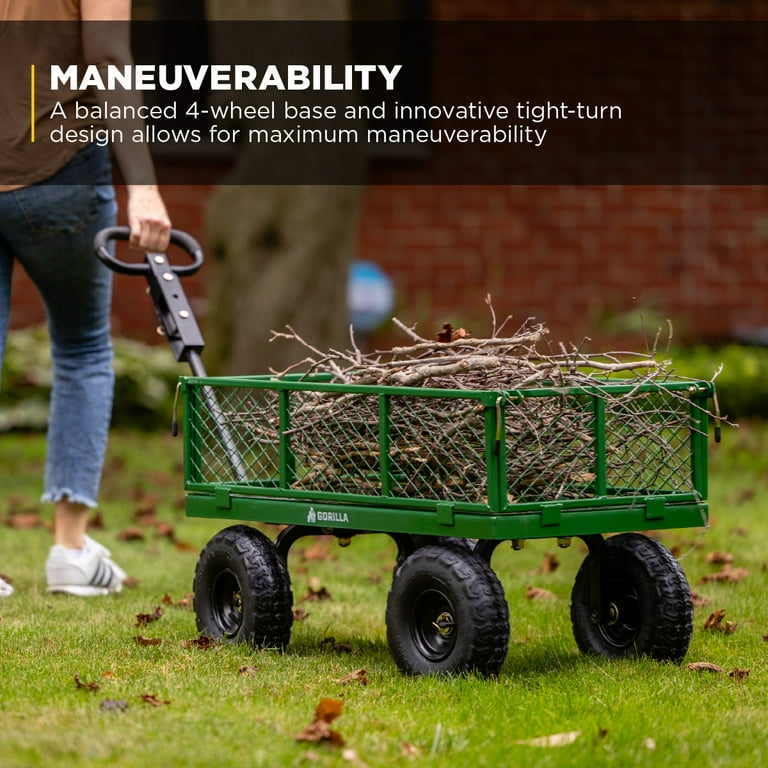
Credit: www.walmart.com
Frequently Asked Questions
What Are The Main Differences Between 4-wheel And 2-wheel Garden Carts?
4-wheel carts offer better stability and balance than 2-wheel carts. Two-wheel carts are easier to maneuver in tight spaces. The choice depends on your garden size and load type.
Which Cart Is Better For Heavy Garden Loads?
4-wheel garden carts are better for heavy loads. They distribute weight evenly and reduce strain on the user. Two-wheel carts may tip over with heavy or uneven loads.
Are 2-wheel Garden Carts Easier To Maneuver?
Yes, 2-wheel carts are more maneuverable in narrow or crowded areas. They require less effort to turn but need more balance from the user.
Can 4-wheel Carts Handle Rough Terrain Effectively?
4-wheel carts handle uneven terrain better due to their stability. However, their larger size might make them less agile on very rough surfaces.
Conclusion
Choosing between a 4-wheel and 2-wheel garden cart depends on your needs. Four wheels give more balance and hold heavier loads. Two wheels make it easier to steer in tight spaces. Think about your garden size and what you move most.
Both carts help carry tools and plants. Pick the one that feels right for your work. Either way, your gardening tasks will get easier and faster. Simple, practical tools make gardening more enjoyable.

