
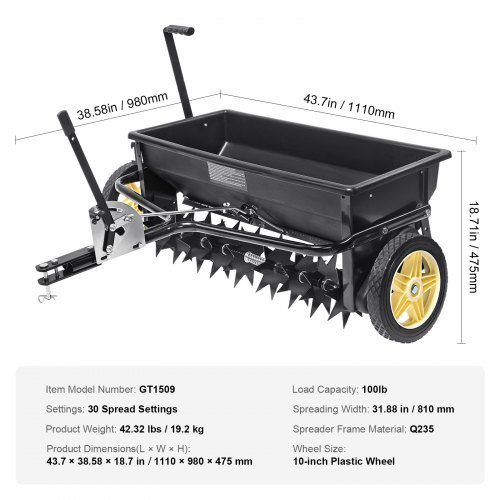
Choosing the right spreader size for your yard can make all the difference in how easy and effective your lawn care becomes. You might be wondering, “What size spreader do I need for my yard?” The answer depends on a few simple factors that can save you time, effort, and money.
Keep reading, and you’ll discover how to pick the perfect spreader that matches your yard’s size and your needs—so your lawn looks its best with less hassle. Don’t settle for guesswork when a few smart tips can make your yard care smoother and more efficient.
Choosing The Right Spreader
Picking the right spreader helps you cover your yard evenly. It saves time and reduces waste.
Different spreaders work best for different yard sizes and materials. Understanding these options is key.
Types Of Spreaders
There are three main types of spreaders: drop, broadcast, and handheld. Each works differently for yard care.
- Drop spreadersdrop material directly below the spreader. They give precise coverage.
- Broadcast spreadersthrow material out in a wide pattern. They cover large areas fast.
- Handheld spreadersare small and light. They suit small yards or spot treatments.
Factors Affecting Spreader Size
Yard size and terrain affect what spreader size you need. Larger yards need bigger spreaders.
| Factor | Impact on Spreader Size |
| Yard Size | Bigger yards need larger capacity spreaders |
| Terrain | Uneven ground may need smaller, easy-to-control spreaders |
| Storage Space | Smaller spreaders fit better in tight storage areas |
| Physical Strength | Lighter spreaders are easier for some users |
Material To Spread Considerations
Different materials need different spreader types and sizes. Weight and granule size matter.
| Material | Recommended Spreader Type | Notes |
|---|---|---|
| Grass Seed | Broadcast or drop spreader | Fine particles spread evenly with care |
| Fertilizer | Drop or broadcast spreader | Choose size based on yard area |
| Salt or Ice Melt | Handheld or broadcast spreader | Use smaller spreader for control |
| Mulch or Compost | Drop spreader | Heavier material needs sturdy spreader |
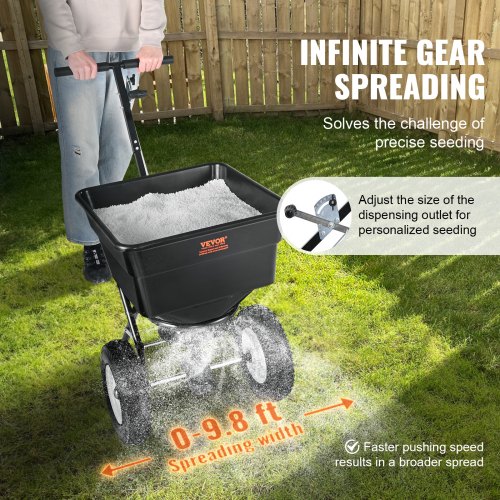
Credit: www.vevor.ca
Calculating Yard Size
Knowing your yard size helps you pick the right spreader. It saves time and avoids waste. You can spread fertilizer, seeds, or other materials evenly.
Accurate calculation is simple with a few easy steps. Use tools like a tape measure or a smartphone app. Let’s break down how to measure your yard.
Measuring Your Lawn
Start by measuring the length and width of your lawn. Use a tape measure or a measuring wheel for large areas. If your yard is not a perfect rectangle, divide it into smaller shapes and measure each one.
- Measure straight edges first
- Break irregular shapes into squares or rectangles
- Note each measurement separately
- Add all areas together for total size
Estimating Coverage Area
After measuring, calculate the total square footage. Multiply length by width for each section. Add these numbers to get the full coverage area. This tells you how much material your spreader needs to hold.
| Shape | Formula | Example (feet) | Area (sq ft) |
| Rectangle | Length × Width | 30 × 20 | 600 |
| Square | Side × Side | 15 × 15 | 225 |
| Circle | π × Radius² | Radius 10 | 314 |
Adjusting For Obstacles
Your yard may have trees, flower beds, or paths. These areas do not need spreading. Subtract their size from the total yard size to get accurate coverage. This helps prevent waste and keeps your spreader size correct.
- Measure obstacle length and width
- Calculate obstacle area
- Subtract obstacle area from total yard area
- Use adjusted area for spreader size
Spreader Capacities Explained
Choosing the right spreader size helps you cover your yard efficiently. Different spreaders hold different amounts of material.
Picking the right size saves time and effort. It also prevents waste by applying the right amount of fertilizer or seed.
Small Spreaders
Small spreaders usually hold less than 5 gallons of material. They are best for tiny yards or spot treatments.
These spreaders are light and easy to carry. They work well on small lawns or garden patches.
- Capacity: under 5 gallons
- Ideal for yards under 1,000 sq ft
- Lightweight and easy to use
Medium Spreaders
Medium spreaders hold 5 to 10 gallons of material. They suit medium-sized lawns between 1,000 and 5,000 sq ft.
These spreaders balance capacity and portability. They reduce refill trips while still being easy to push.
- Capacity: 5 to 10 gallons
- Ideal for yards 1,000 to 5,000 sq ft
- Good balance of size and weight
Large Spreaders
Large spreaders hold more than 10 gallons of material. They are designed for big yards or commercial use.
These spreaders cover large areas quickly. They need more strength to push or pull due to their size.
- Capacity: over 10 gallons
- Ideal for yards larger than 5,000 sq ft
- Best for heavy-duty spreading jobs
Credit: www.homehardware.ca
Matching Spreader To Yard Size
Choosing the right spreader size helps you work faster and avoid waste. A spreader that fits your yard makes spreading seed or fertilizer easier.
Consider your yard size before buying. This guide shows what spreader works best for small, medium, and large yards.
Small Yards
Small yards need smaller spreaders. They are easier to handle and save you from over-applying products.
- Push spreaders with a 5 to 10-pound capacity work well.
- Handheld spreaders are good for very tight spaces.
- Choose spreaders with adjustable settings for control.
Medium Yards
Medium yards require a bigger spreader than small yards. This helps cover more ground quickly without too much effort.
| Spreader Type | Capacity | Best Use |
|---|---|---|
| Push Spreader | 10 to 20 pounds | Most medium yards |
| Broadcast Spreader | 15 to 25 pounds | Even coverage on lawns |
| Drop Spreader | 10 to 15 pounds | Precise spreading near flower beds |
Large Yards
Large yards need spreaders with high capacity. This cuts down trips to refill and saves time.
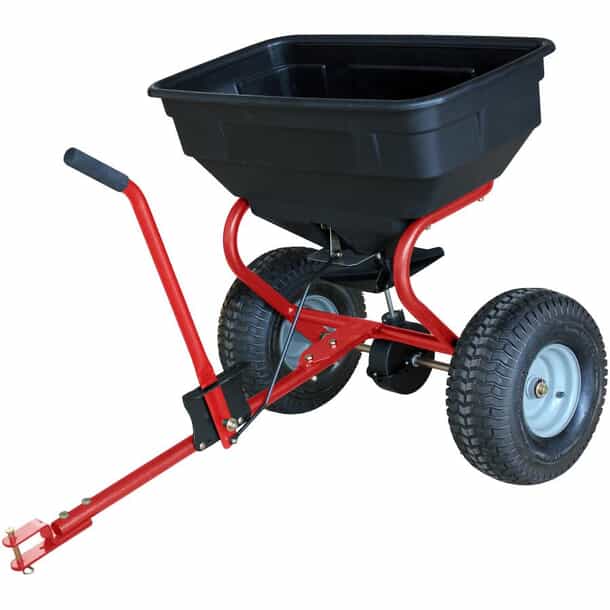
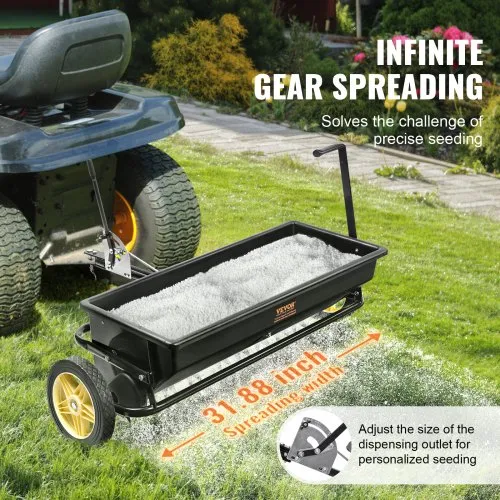
- Tow-behind spreaders with 50+ pound capacity are ideal.
- Choose models with wide spread widths for faster coverage.
- Look for durable wheels for rough or uneven ground.
Tips For Even Coverage
Using the right spreader size helps cover your yard evenly. A good technique makes your work easier and results better.
Follow simple tips to keep your spreader moving at the right speed and pattern. Adjust settings and maintain your spreader for best results.
Walking Speed And Pattern
Walking at a steady speed helps spread material evenly. Moving too fast or too slow can cause uneven coverage.
- Keep your pace slow and steady.
- Overlap each pass slightly to avoid gaps.
- Use a straight line pattern for large yards.
- Try a crisscross pattern for smaller or irregular areas.
Spreader Settings
Correct spreader settings depend on the material and yard size. Wrong settings waste material or cause clumps.
| Material Type | Recommended Setting | Notes |
|---|---|---|
| Fertilizer | 3-5 | Check product label for exact rates |
| Grass Seed | 2-4 | Adjust for seed size and spreader type |
| Ice Melt | 6-8 | Use wider setting for faster coverage |
Maintenance And Calibration
Keep your spreader clean and calibrated for even spreading. Dirt or broken parts cause problems.
- Check for clogged holes or rust before use.
- Calibrate your spreader by weighing material output.
- Adjust settings if the spread is too light or too heavy.
- Lubricate moving parts regularly.
Credit: www.vevor.ca
Common Mistakes To Avoid
Choosing the right spreader size for your yard is important. Many people make mistakes that cause poor coverage or waste.
Knowing what to avoid helps you pick the best spreader and get even results.
Overlapping Coverage
Overlapping coverage happens when you spread too much in one area. It can harm your grass and waste materials.
- Spreading the same spot twice can cause burn spots.
- It also leads to running out of fertilizer too soon.
- Plan your path to avoid going over the same place.
- Use a spreader with even distribution to reduce overlap.
Underestimating Yard Size
Many buyers guess their yard size and choose a spreader that is too small. This causes extra trips to refill.
| Problem | Effect |
| Yard size too small | More refills needed |
| Yard size too large | Spreader may be too big or heavy |
| Wrong size chosen | Uneven spreading and wasted material |
Ignoring Spreader Calibration
Calibration means setting the spreader to the right amount. Skipping this step causes wrong application rates.
To calibrate your spreader:
- Check the spreader manual for settings.
- Measure how much material is released on a test run.
- Adjust the settings until the output matches your yard needs.
- Repeat calibration if you change material or spreader speed.
Frequently Asked Questions
What Size Spreader Is Best For A Small Yard?
For small yards under 5,000 sq ft, a handheld or push spreader works best. They offer precision and easy control, reducing waste and ensuring even coverage.
How To Choose Spreader Size For A Large Yard?
For yards larger than 10,000 sq ft, a wheeled broadcast spreader is ideal. It covers more ground quickly and minimizes the number of refills needed.
Does Yard Size Affect Spreader Capacity Choice?
Yes, yard size directly influences spreader capacity. Larger yards require bigger spreaders to efficiently cover the area without frequent refills.
Can I Use A Small Spreader For Big Yards?
Using a small spreader on large yards is possible but inefficient. It increases refilling time and may cause uneven application.
Conclusion
Choosing the right spreader size ensures a healthy and vibrant yard. Understand your yard’s size and needs before purchasing. Small yards benefit from handheld spreaders. Larger areas need broadcast or drop spreaders. Accurate application saves time and resources. Consult product descriptions or store experts for guidance.
Proper care and maintenance extend spreader lifespan. A well-maintained yard boosts curb appeal and enjoyment. Regularly check spreader settings for even coverage. With the right tools, yard care becomes simpler and more effective. Happy spreading!
