
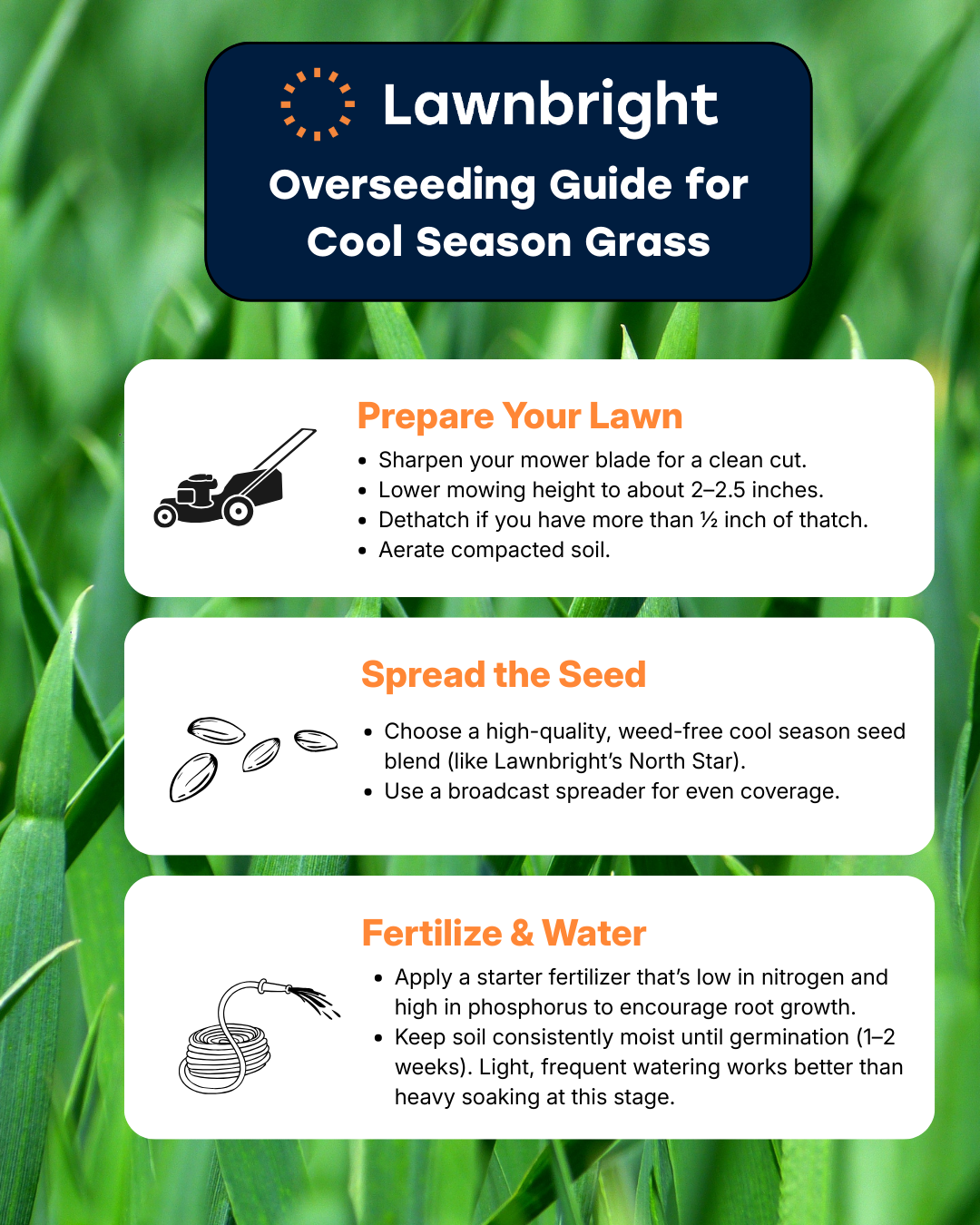
Is your lawn looking a bit tired and patchy? You might be wondering how to bring it back to life without starting from scratch.
Overseeding is a simple yet effective way to rejuvenate your grass, making it lush and vibrant again. The secret weapon? A spreader. Using a spreader to overseed ensures even coverage, giving every inch of your lawn a chance to thrive.
In this guide, you’ll discover exactly how to overseed your lawn with a spreader, transforming your outdoor space into a green paradise. Keep reading to learn the step-by-step process and unlock the secret to a healthier, more beautiful lawn.

Credit: lawnlove.com
Benefits Of Overseeding
Overseeding a lawn with a spreader helps keep your grass thick and healthy. It adds new grass seeds to the existing lawn.
This process improves the look and strength of your lawn in many ways.
Improve Lawn Density
Adding grass seed fills in thin areas and makes the lawn thicker. A dense lawn looks green and lush.
Thicker grass also helps block weeds from growing.
Repair Bare Spots
Overseeding fills in bare or damaged spots in your lawn. This helps the grass grow evenly again.
It is a simple way to fix worn areas caused by pets, foot traffic, or weather.
Enhance Disease Resistance
New grass seeds can add disease-resistant types of grass to your lawn. This helps the lawn stay healthy.
A strong, healthy lawn is less likely to get sick from common lawn diseases.
Choosing The Right Grass Seed
Overseeding your lawn helps keep it green and healthy. Picking the right grass seed is key for good results.
Use seeds that fit your climate and soil. This helps the grass grow strong and last longer.
Match Seed To Climate
Choose grass seed that suits your local weather. Warm-season grasses do well in hot areas. Cool-season grasses thrive in cooler places.
- Warm-season grass: Bermuda, Zoysia, St. Augustine
- Cool-season grass: Kentucky bluegrass, Fescue, Ryegrass
- Check your region’s average temperatures
- Consider rainfall and sunlight levels
Select Seed Type
Pick seed based on lawn use and care. Some seeds need less water and mowing. Others grow faster or resist pests better.
| Seed Type | Best For | Care Level |
| Fescue | Shaded lawns | Low to medium |
| Bermuda | Sunny lawns | Medium to high |
| Ryegrass | Quick green cover | High |
Check Seed Quality
Good seed quality affects lawn health. Look for fresh, clean seeds with high germination rates. Avoid seeds with many weed seeds or debris.
Check seed labels for:
- Purity percentage (above 90% is good)
- Germination rate (higher means better)
- Manufacture date (fresher is better)
- Weed seed content (should be low)
Preparing The Lawn
Preparing your lawn is key before overseeding with a spreader. A clean, healthy surface helps seeds grow well. Follow simple steps to get your lawn ready for new grass.
Good preparation includes mowing, removing debris, and aerating the soil. These tasks improve seed contact with the soil and help roots develop.
Mow And Rake
Start by mowing the lawn short. This helps seeds reach the soil easily. After mowing, rake the lawn to remove grass clippings and dead leaves.
- Set mower to a low height but do not scalp the grass
- Mow evenly to remove excess grass blades
- Rake to clear leftover clippings and thatch
- Remove thatch to expose soil for better seed contact
Remove Debris
Clear away sticks, rocks, and any debris from your lawn. Debris blocks seed growth and can damage your spreader. Keeping the lawn clean gives seeds space to grow.
| Common Lawn Debris | Reason to Remove |
|---|---|
| Sticks and twigs | Block seeds and spreader movement |
| Rocks | Damage lawn equipment and seeds |
| Leaves | Prevent sunlight and trap moisture |
| Dead grass clumps | Stop seed contact with soil |
Aerate Soil
Aerate your lawn by making small holes in the soil. This lets air, water, and nutrients reach grass roots. Aeration also helps seeds settle into the soil better.
- Use a core aerator for best results
- Aerate when soil is moist, not wet
- Focus on compacted areas with heavy foot traffic
- After aerating, leave soil plugs on the lawn to break down naturally

Credit: www.bunnings.com.au
Selecting A Spreader
Overseeding a lawn needs the right spreader for the best results. Choosing a spreader helps spread seed evenly and saves time.
Pick a spreader that fits your lawn size and seed type. The right choice makes overseeding easier and more effective.
Types Of Spreaders
There are two main types of spreaders: broadcast and drop. Each works differently and suits certain jobs better.
Broadcast spreaders throw seed over a wide area. Drop spreaders drop seed straight down for precise coverage.
- Broadcast spreader:Good for large lawns, covers quickly.
- Drop spreader:Best for small areas, avoids seed waste.
Consider Lawn Size
Match your spreader to your lawn’s size. Bigger lawns need a spreader that covers more ground fast.
Small lawns work well with smaller, easy-to-control spreaders. Large lawns benefit from bigger, wider-spreading models.
- Small lawns: use a handheld or small push spreader.
- Medium lawns: choose a push spreader with moderate capacity.
- Large lawns: a tow-behind or large broadcast spreader works best.
Adjust Settings
Set the spreader controls based on seed type and amount. Proper settings ensure even seed distribution.
Check the seed bag for spreader settings. Adjust the dial or flow rate to match the recommendations.
- Use a low setting for small seeds.
- Higher settings work for larger seeds or heavy applications.
- Test on a driveway first to see how much seed comes out.
Overseeding Steps
Overseeding helps improve your lawn by adding new grass seeds to thin areas. Using a spreader makes the job faster and more even.
Follow these simple steps to overseed your lawn with a spreader for the best results.
Fill The Spreader
Start by filling the spreader with the right amount of grass seed. Check the seed bag for the recommended amount.
Do not overfill the spreader to avoid clogs or uneven spreading.
Apply Seed Evenly
Push the spreader slowly and steadily across your lawn. Keep the speed even to spread seeds uniformly.
Try to cover every part of the area without missing spots.
Overlap Passes
Overlap each pass slightly to avoid gaps in seed coverage. This helps the new grass grow evenly.
Make sure the spreader settings stay the same during each pass for consistent seed flow.
Water The Lawn
After spreading the seeds, water the lawn gently but thoroughly. This helps the seeds start to grow.
Keep the soil moist by watering lightly every day until the new grass is established.
Post-overseeding Care
After overseeding your lawn with a spreader, proper care helps new grass grow strong. Good care improves seed germination and root development.
Follow simple steps to keep your lawn healthy. Water, fertilize, and mow carefully to support new grass growth.
Watering Schedule
Water the lawn lightly but often right after overseeding. Keep the soil moist to help seeds sprout. Avoid soaking the soil deeply at first.
Once grass sprouts, water less often but deeper. This encourages roots to grow deeper into the soil.
- Water 2-3 times daily for the first two weeks
- Reduce to once daily after grass appears
- Water early in the morning to reduce evaporation
- Stop watering heavily when grass reaches 2 inches
Fertilizing Tips
Use a starter fertilizer to help new grass grow strong roots. Apply it right after overseeding for best results. Avoid heavy fertilizer that can burn young grass.
After the grass grows, feed the lawn with a balanced fertilizer every 6-8 weeks. This keeps your lawn green and healthy.
- Apply starter fertilizer at overseeding time
- Use fertilizer with higher phosphorus for root growth
- Feed lawn every 6-8 weeks after grass grows
- Follow fertilizer package instructions carefully
Mowing Guidelines
Wait to mow until new grass is about 3 inches tall. Mowing too soon can damage young plants. Use a sharp mower blade for clean cuts.
Cut only the top third of the grass blade each time. This helps keep the grass healthy and strong as it grows.
- Wait for grass to reach 3 inches before first mow
- Use sharp mower blades to avoid tearing grass
- Cut no more than one-third of grass height per mow
- Mow regularly to keep lawn neat and healthy
Troubleshooting Common Issues
Overseeding a lawn with a spreader can improve grass growth. Some problems may happen during this process.
Understanding common issues helps you fix them quickly and get a healthy lawn.
Seed Washout
Seed washout occurs when rain or watering moves seeds away. This leaves bare spots in the lawn.
To prevent washout, avoid overseeding before heavy rain. Use light watering to keep seeds moist.
- Check weather forecast before overseeding
- Water seeds gently to avoid moving them
- Apply seed in calm, dry conditions
Poor Germination
Poor germination means few seeds grow into grass. It can happen due to bad soil or wrong seed type.
Test your soil and choose seeds that fit your climate. Keep soil moist but not too wet for best growth.
- Test soil pH before overseeding
- Pick seed types suited for your region
- Water regularly but avoid puddles
Weed Growth
Weeds may grow after overseeding if they get space and sunlight. They compete with grass for nutrients.
Remove weeds before overseeding. Use mulch or cover seed lightly to reduce weed seeds from sprouting.
- Pull weeds from the lawn before overseeding
- Apply a thin layer of mulch after spreading seed
- Keep new grass healthy to crowd out weeds

Credit: www.angi.com
Frequently Asked Questions
What Is The Best Spreader For Overseeding A Lawn?
A broadcast or drop spreader works best for overseeding. Broadcast spreaders cover large areas evenly. Drop spreaders provide precise seed placement. Choose based on your lawn size and seed type for optimal results.
When Is The Ideal Time To Overseed With A Spreader?
The best time to overseed is during early fall or spring. These seasons provide moderate temperatures and moisture. This helps seed germinate and establish quickly. Avoid hot summer or freezing winter conditions for best growth.
How Do I Prepare My Lawn Before Overseeding?
Mow your lawn short and remove debris first. Rake to loosen soil and improve seed contact. Aerate compacted areas if possible. These steps ensure seeds reach soil and grow strong roots.
How Much Seed Should I Put In The Spreader?
Follow seed package instructions for recommended seeding rates. Overloading can cause uneven spreading and wastage. Calibrate your spreader to distribute the correct amount. Adjust settings based on lawn size and seed type.
Conclusion
Overseeding your lawn with a spreader helps grass grow thick and green. Spread seeds evenly for best results. Water the lawn gently after spreading seeds. Keep the soil moist until grass starts to grow. Avoid heavy foot traffic during this time.
Regular care will make your lawn healthy and full. Small steps bring big changes to your yard. Try overseeding to refresh your lawn this season.

