

Are you wondering whether a gas pole saw or an electric one will give you the power you need for your trimming jobs? Choosing the right tool can make your work faster and easier, but it’s not always clear which option is stronger or more reliable.
You’ll discover the real differences between gas and electric pole saws, helping you decide which one suits your needs best. Keep reading to find out which tool delivers the strength and performance you’re looking for.
Gas Pole Saws Power
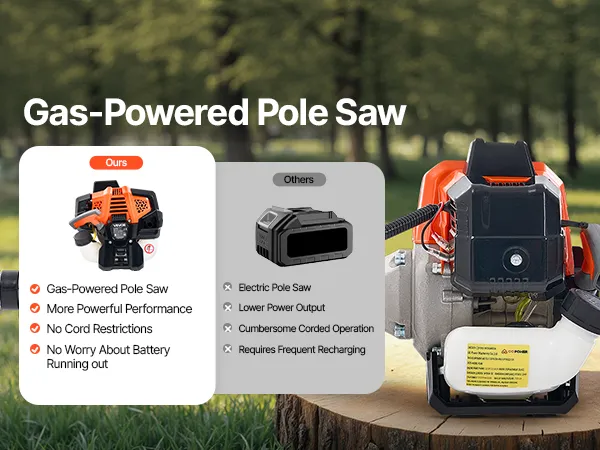
Gas pole saws use gasoline engines to cut tree branches. They offer strong power for trimming tall trees. Their power helps with tough jobs that need more force than electric models.
Understanding the power of gas pole saws involves looking at engine size, fuel use, and how they handle heavy tasks. These factors show why many choose gas over electric for big jobs.
Engine Capacity And Torque
Gas pole saws have larger engines than electric ones. This size gives them high torque, which means strong turning force. High torque helps cut thick and hard branches easily.
| Engine Capacity (cc) | Torque (Nm) |
| 25-30 | 1.5-2.0 |
| 31-40 | 2.0-3.5 |
| 41-50 | 3.5-4.5 |
Fuel Efficiency And Runtime
Gas pole saws run on gasoline mixed with oil. Their fuel use depends on engine size and work intensity. Larger engines use more fuel but give longer run times with larger tanks.
- Smaller engines are more fuel-efficient
- Fuel tanks hold 0.3 to 0.6 liters
- Run time varies from 30 minutes to over an hour
- Refueling is needed for long jobs
Handling Heavy-duty Tasks
Gas pole saws are built for hard work. Their strong engines and torque let them cut thick branches and dense wood. They keep power steady without slowing down under load.
Key benefits of gas pole saws for tough jobs:
- Powerful cutting force for large branches
- Good balance between weight and strength
- Can work for hours with breaks for fuel
- Durable parts that handle rough use
Electric Pole Saws Strength
Electric pole saws have grown popular for trimming trees and branches. They offer a quieter and cleaner option compared to gas models.
Understanding their strengths helps in choosing the right tool for different jobs. This article focuses on electric pole saws.
Battery Technology And Power Output
Battery technology improves the power and runtime of electric pole saws. New batteries last longer and recharge faster than older types.
Power output depends on the battery voltage and motor design. Higher voltage means more cutting strength and better performance.
- 18V to 40V batteries are common in electric pole saws
- Brushless motors increase efficiency and power
- Battery life varies from 30 minutes to over an hour per charge
Corded Vs Cordless Models
Corded electric pole saws provide unlimited runtime but need a power outlet nearby. They are lighter since they do not carry batteries.
Cordless models offer more freedom of movement. They rely on rechargeable batteries and are easy to carry around large yards.
- Corded saws suit long jobs near power sources
- Cordless saws work well where power outlets are scarce
- Cordless models need spare batteries for extended use
Performance In Light To Medium Jobs
Electric pole saws perform well for light to medium trimming tasks. They handle small branches and garden maintenance easily.
They may struggle with very thick or hard wood. Gas pole saws offer more power for heavy-duty cutting.
- Best for branches up to 6 inches thick
- Ideal for regular tree pruning and yard cleanup
- Quieter and less smelly than gas models
Comparing Durability
Gas pole saws and electric pole saws both have strengths in durability. Understanding how they wear out helps you choose the right tool. This guide compares their durability based on wear and tear, maintenance, and longevity.
Knowing these points can help you decide which saw fits your needs better. Each type works well in different conditions and tasks.
Wear And Tear Factors
Gas pole saws face wear from engine parts like pistons and spark plugs. These parts get hot and move fast, causing wear over time. Electric pole saws wear mainly on the motor and battery.
Electric saws usually have fewer moving parts, so they often show less mechanical wear. Gas saws can handle tough jobs but wear faster if used hard.
- Gas saws wear from engine heat and fuel residues
- Electric saws wear from motor use and battery cycles
- Electric saws have fewer mechanical parts to wear out
- Gas saws can handle rough use but may need parts replaced sooner
Maintenance Requirements
Gas pole saws need regular oil changes, fuel checks, and spark plug cleaning. They require more frequent maintenance to stay strong. Electric saws need less upkeep, mostly battery care and motor cleaning.
Proper maintenance helps both types last longer. Skipping maintenance can cause faster damage, especially in gas saws.
- Gas saws need fuel and oil changes often
- Spark plugs and air filters require cleaning or replacement
- Electric saws need battery charging and storage care
- Both need blade sharpening and cleaning
Longevity In Various Conditions
Gas pole saws tend to work well in tough, outdoor conditions like wet or cold weather. Electric saws can struggle in harsh environments but last long indoors or mild weather.
Electric saws usually last longer if used gently and kept dry. Gas saws may wear faster if used heavily but handle rough jobs better.
- Gas saws perform well in wet, cold, or rough outdoor conditions
- Electric saws last longer indoors and in mild weather
- Heavy use can shorten gas saw life
- Proper storage extends life of both saw types

Credit: www.seesiius.com
Noise And Emission Levels
Gas pole saws and electric pole saws differ in noise and emissions. These factors affect the environment and user experience.
Gas models usually produce more noise and harmful gases. Electric saws run quieter and have no direct emissions.
Environmental Impact
Gas pole saws burn fuel, which releases carbon monoxide and other pollutants. These gases add to air pollution and climate change.
Electric pole saws use electricity, which can come from cleaner sources. They do not produce smoke or fumes during use.
- Gas saws emit more pollutants
- Electric saws reduce air pollution
- Electric saws support cleaner energy use
User Comfort And Safety
Gas pole saws are loud and can cause hearing damage if used long. They also release fumes that may irritate the user.
Electric pole saws operate quietly and do not emit fumes. This makes them safer and more comfortable for users.
- Gas saws create loud noise and fumes
- Electric saws run quietly and clean
- Electric saws improve user safety and comfort
Cost And Value
Choosing between gas pole saws and electric ones depends on cost and value. These tools serve similar purposes but differ in price and running expenses.
Understanding the costs involved helps you pick the right tool for your budget and needs.
Initial Purchase Price
Gas pole saws usually cost more when you buy them. They have strong engines and heavier parts. Electric pole saws tend to be cheaper at first.
Electric models can be corded or battery-powered. Battery versions often cost a bit more than corded ones but less than gas saws.
- Gas pole saws: higher upfront cost
- Electric corded saws: lowest initial price
- Electric battery saws: moderate price
Operating Costs Over Time
Gas pole saws need fuel, oil, and regular maintenance. These costs add up as you use the tool more.
Electric saws use electricity or batteries. Charging costs less than gas but battery replacement can be expensive.
- Gas saws require fuel and oil purchases
- Regular tune-ups increase gas saw costs
- Electric saws cost less to operate per use
- Battery replacement can be a large expense
Resale And Depreciation
Gas pole saws often keep value longer if well maintained. They can be fixed and used for years.
Electric saws lose value faster. Battery life shortens over time. Some parts may not be easy to replace.
- Gas saws hold value with good care
- Electric saws depreciate faster
- Battery health affects electric saw resale price
Credit: dengarden.com
Best Use Cases
Choosing between gas pole saws and electric models depends on the task and environment. Each type offers unique benefits for different situations.
This guide highlights the ideal scenarios for using gas pole saws and where electric saws work best.
Ideal Scenarios For Gas Models
Gas pole saws provide strong power and mobility. They work well in places without easy access to electricity.
- Large property maintenance where long runtime is needed
- Heavy pruning jobs on thick branches
- Remote locations without power outlets
- Tasks requiring high cutting force and durability
- Extended use without needing frequent recharging
When Electric Saws Excel
Electric pole saws offer quiet operation and low maintenance. They suit lighter tasks and indoor or suburban areas.
| Use Case | Why Electric is Better |
| Small to medium yards | Less noise and easier handling |
| Light pruning | Quick start and low vibration |
| Urban areas | No fuel fumes and less pollution |
| Frequent short jobs | Battery or corded power allows fast use |
| Storage ease | Smaller and lighter design |
Making The Right Choice
Choosing between gas pole saws and electric ones depends on your needs. Both have strong points to consider.
Understanding your preferences and budget helps pick the best tool for your work.
Personal Needs And Preferences
Gas pole saws offer more power and longer run times. They are good for heavy, long jobs outside.
Electric pole saws are lighter and quieter. They suit small yards and quick trimming tasks.
- Choose gas if you need strong cutting power
- Choose electric for easy use and less noise
- Consider weight and comfort for long use
Budget Considerations
Gas pole saws usually cost more at first. They also need fuel and more upkeep.
Electric saws tend to be cheaper and need less care. You only pay for electricity or battery charging.
- Gas models have higher start-up costs
- Electric models save money on fuel
- Think about repair and maintenance costs
Long-term Benefits
Gas saws are strong and last long with good care. They handle tough jobs well.
Electric saws are eco-friendly and easy to store. Their batteries improve with new technology.
- Gas saws are durable for heavy use
- Electric saws reduce pollution and noise
- Battery life and power keep getting better
Credit: www.vevor.ca
Frequently Asked Questions
Are Gas Pole Saws More Powerful Than Electric Ones?
Gas pole saws generally offer more power and cutting strength. They use gasoline engines that deliver higher torque. Electric saws are quieter and lighter but usually less powerful. Power needs depend on your cutting tasks and preferences.
Do Gas Pole Saws Require More Maintenance?
Yes, gas pole saws need regular maintenance like fuel mixing, spark plug checks, and air filter cleaning. Electric models require less upkeep, mainly battery charging and blade sharpening. Proper maintenance extends the lifespan of both types.
Which Pole Saw Is Better For Heavy-duty Cutting?
Gas pole saws are better suited for heavy-duty, frequent cutting. Their engines provide consistent power for thick branches. Electric pole saws work well for light to medium pruning and occasional use. Choose based on job intensity.
Are Electric Pole Saws More Eco-friendly Than Gas Ones?
Electric pole saws produce no direct emissions and run quieter. Gas models emit exhaust gases and are noisier. For environmentally conscious users, electric saws are a greener choice, especially with rechargeable batteries.
Conclusion
Gas pole saws offer more power for tough jobs. They handle thick branches easily. But they need regular maintenance and fuel. Electric pole saws are lighter and quieter. They are perfect for smaller tasks. They also start quickly with a button.
Choosing between them depends on your needs. For heavy-duty tasks, gas saws shine. For light pruning, electric saws work well. Consider your yard size and frequency of use. Both types have their strengths. Think about what fits your work style best.
Make an informed choice for your gardening needs.

