
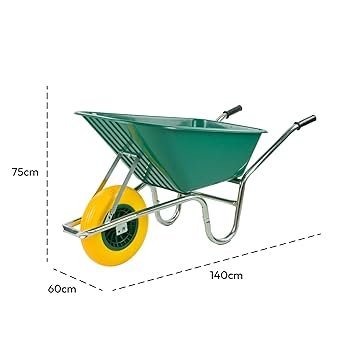
Choosing the right wheelbarrow size can make your work easier and faster. But with so many options, how do you know which one fits your needs?
You want a wheelbarrow that’s not too big to handle and not too small to carry your load. You’ll discover exactly what size wheelbarrow you need for your projects. By the end, you’ll feel confident picking the perfect one that saves you time and effort every time you use it.
Keep reading to find the answer tailored just for you.
Types Of Wheelbarrows
Choosing the right wheelbarrow size depends on the type you need. Different wheelbarrows serve different tasks.
Understanding the main types helps you pick the best one for your work or garden.
Standard Wheelbarrows
Standard wheelbarrows are the most common type. They usually have a single wheel and a moderate size tray. These wheelbarrows work well for light to medium jobs around the home or garden.
Contractor Wheelbarrows
Contractor wheelbarrows are built for heavy-duty work. They often have a larger, deeper tray and stronger frames. Many models have two wheels for better balance and stability on rough terrain.
- Large capacity trays hold more material
- Durable steel or heavy-duty plastic tubs
- Two wheels for easier control and balance
- Thicker tires to handle rough surfaces
Garden Wheelbarrows
Garden wheelbarrows are smaller and lighter. They are perfect for carrying plants, soil, and garden tools. These wheelbarrows usually have a smaller tray and one wheel for easy maneuvering in tight spaces.
Specialty Wheelbarrows
Specialty wheelbarrows are designed for specific jobs. Some examples include:
| Type | Use |
|---|---|
| Concrete Wheelbarrows | Strong tubs for mixing and carrying concrete |
| Two-Wheeled Wheelbarrows | Extra stability for heavy loads |
| Foldable Wheelbarrows | Compact storage and easy transport |
| Powered Wheelbarrows | Motorized for carrying heavy loads with less effort |
Common Wheelbarrow Sizes
Choosing the right wheelbarrow size depends on the type of work you plan to do. Different sizes offer various benefits for carrying loads.
Wheelbarrows come in small, medium, and large sizes. Each fits different tasks and user needs.
Small Wheelbarrows
Small wheelbarrows usually have a capacity of about 2 to 3 cubic feet. They are lightweight and easy to maneuver.
- Best for light gardening and small loads
- Weigh less than 30 pounds
- Good for children or seniors
- Easier to store due to compact size
Medium Wheelbarrows
Medium wheelbarrows hold about 4 to 6 cubic feet of material. They balance capacity and control for everyday tasks.
| Capacity (cubic feet) | Typical Weight (pounds) | Best Use |
| 4 | 40-50 | Garden work, light construction |
| 5 | 45-55 | Yard clean-up, mulch transport |
| 6 | 50-60 | General hauling and mixing concrete |
Large Wheelbarrows
Large wheelbarrows can hold 7 cubic feet or more. They are built for heavy-duty tasks with bigger loads.
Common features of large wheelbarrows:
- Strong steel or heavy-duty plastic trays
- Designed for construction and landscaping
- Heavier and require more effort to push
- Ideal for moving soil, rocks, or large debris
Factors Affecting Wheelbarrow Size Choice
Choosing the right wheelbarrow size is important for your tasks. The size affects how easy it is to move and how much you can carry.
Several factors influence the best wheelbarrow size. These include the material you plan to carry, the weight of the load, the terrain, and your own strength and comfort.
Material To Transport
The type of material you move affects the wheelbarrow size. Loose materials like soil or mulch need more space. Heavy materials like bricks need a smaller size to control weight.
- Soil, sand, or mulch require larger tubs
- Bricks or stones need smaller tubs for easier handling
- Tools and plants need moderate size and shape
Load Weight
The weight of your load decides how big your wheelbarrow should be. A larger tub holds more but can get very heavy. A smaller tub limits weight but requires more trips.
| Load Type | Recommended Tub Size | Notes |
| Light materials (leaves, mulch) | Large (6+ cubic feet) | Fewer trips needed |
| Medium materials (soil, compost) | Medium (4-6 cubic feet) | Balance of weight and capacity |
| Heavy materials (bricks, stones) | Small (under 4 cubic feet) | Easier to lift and control |
Terrain Type
Terrain affects the wheelbarrow size and type. Rough or uneven ground needs a wheelbarrow that is easy to push and stable. Flat surfaces allow for larger tubs.
- Gravel or rocky paths: smaller tub, pneumatic tires
- Soft soil or mud: wide wheels to avoid sinking
- Flat concrete or pavement: larger tubs possible
User Strength And Comfort
Your strength and comfort matter in size choice. A heavy, large wheelbarrow is hard to push. Choose a size that fits your ability to lift and move loads safely.
| User Strength | Recommended Wheelbarrow Size |
| Low strength or small stature | Small to medium tub (under 5 cubic feet) |
| Average strength | Medium tub (4-6 cubic feet) |
| High strength and experience | Medium to large tub (6+ cubic feet) |

Credit: www.amazon.co.uk
Matching Wheelbarrow Size To Job Type
Choosing the right wheelbarrow size helps you work efficiently. Different jobs need different wheelbarrow sizes. Using the correct size saves time and effort.
This guide explains which wheelbarrow size fits your work type. Learn what works best for landscaping, construction, farming, and home projects.
Landscaping And Gardening
For light gardening, a small wheelbarrow with a 4 to 6 cubic feet tray works well. It is easy to handle and move around plants and soil.
- Small size is easy to maneuver in tight spaces.
- Good for carrying mulch, soil, and plants.
- Less tiring for long hours of garden work.
Construction And Heavy Duty Work
Construction work needs large, heavy-duty wheelbarrows. Sizes from 6 to 8 cubic feet are best. They hold heavy materials like concrete, bricks, and gravel.
| Wheelbarrow Size | Material Capacity | Best Use |
| 6 cubic feet | Medium weight | Bricks, sand, gravel |
| 8 cubic feet | Heavy weight | Concrete, large loads |
Farm And Agricultural Use
Farm work needs wheelbarrows that carry large amounts of feed, tools, or crops. A size of 6 to 8 cubic feet with strong wheels is ideal for rough terrain.
Farm wheelbarrow features:
- Wide tray for big loads
- Durable steel frame
- Large pneumatic tires for uneven ground
Diy And Home Projects
For home projects, a medium-sized wheelbarrow works best. A 5 to 6 cubic feet tray is enough for moving tools and materials around the yard.
- Easy to push and control
- Good for small loads of wood, bricks, or dirt
- Not too heavy when empty
Wheelbarrow Capacity And Dimensions
Choosing the right wheelbarrow size depends on how much you need to carry. The capacity and size affect your work and comfort.
This guide explains wheelbarrow volume, weight limits, and tray dimensions. Use this to pick the best size for your tasks.
Volume Measurements
Volume shows how much space the wheelbarrow tray has. It is usually measured in cubic feet or liters.
Common wheelbarrow volumes range from 4 to 8 cubic feet. Larger volumes hold more material but can be harder to push.
- Small wheelbarrows: 4 to 5 cubic feet
- Medium wheelbarrows: 6 to 7 cubic feet
- Large wheelbarrows: 8 cubic feet or more
Weight Limits
Weight limits tell you how much load the wheelbarrow can carry safely. Exceeding it may damage the wheelbarrow or cause accidents.
Most wheelbarrows support weights between 100 and 150 pounds. Heavy-duty models can carry more but might be heavier to move.
- Light-duty wheelbarrows: up to 100 pounds
- Standard wheelbarrows: 100 to 150 pounds
- Heavy-duty wheelbarrows: over 150 pounds
Tray Dimensions
The tray size affects how easy it is to load and unload materials. It includes length, width, and depth.
Deeper trays hold more but can be harder to tip. Wider trays carry bulky items but may reduce balance.
| Tray Dimension | Typical Size | Effect |
|---|---|---|
| Length | 30 to 36 inches | Longer trays hold more but are heavier |
| Width | 20 to 24 inches | Wider trays carry bulky items easily |
| Depth | 8 to 12 inches | Deeper trays hold loose material better |

Credit: www.aquatix-2u.co.uk
Wheelbarrow Wheel Options
Choosing the right wheel for your wheelbarrow is important. It affects how easy it is to move your load.
Different wheels suit different tasks and surfaces. Learn about the common wheel types below.
Pneumatic Wheels
Pneumatic wheels are filled with air like a tire. They provide a smooth ride on rough ground.
They work well on dirt, gravel, and grass. They absorb shocks and make pushing easier.
- Good for uneven or soft surfaces
- Need regular air pressure checks
- Can get punctures from sharp objects
Solid Wheels
Solid wheels are made of hard rubber or plastic. They do not need air and cannot go flat.
They are durable and low maintenance. Solid wheels work best on smooth surfaces like concrete.
- Flat-proof and tough
- Less shock absorption
- Best on hard, flat ground
Dual Wheels
Dual wheels mean two wheels side by side. They offer extra balance and support.
They reduce tipping and spread the load better. Dual wheels are good for heavy or uneven loads.
- More stable on rough terrain
- Easier to balance heavy loads
- May be harder to maneuver in tight spaces
Tips For Choosing The Right Wheelbarrow Size
Choosing the right wheelbarrow size can make your work easier and faster.
It is important to think about what tasks you will do and where you will keep the wheelbarrow.
Assessing Job Requirements
Think about the type of work you will do with the wheelbarrow. Will you move heavy soil, tools, or light materials like leaves?
- Large loads need a bigger wheelbarrow with a large tray.
- Heavy materials require a strong, durable frame.
- For small tasks, a smaller wheelbarrow is easier to handle.
- Consider the terrain; rough ground may need a wheelbarrow with large wheels.
Considering Storage Space
Check the space where you will store the wheelbarrow when not in use. Some sizes may not fit in small sheds or garages.
| Wheelbarrow Size | Storage Space Needed |
| Small (2-3 cu ft) | Fits in tight spaces |
| Medium (4-6 cu ft) | Needs moderate storage space |
| Large (7+ cu ft) | Requires large storage area |
Budget Considerations
Wheelbarrow prices vary by size and material. Decide how much you want to spend before buying.
- Smaller wheelbarrows often cost less.
- Heavy-duty and larger models usually cost more.
- Look for quality parts to avoid frequent repairs.
- Think about long-term use to get the best value.
Maintenance And Longevity
Choosing the right size wheelbarrow is important for your work. Taking care of it helps it last longer. Proper maintenance keeps it safe and reliable.
Regular care prevents damage and saves money. Simple steps can protect your wheelbarrow from wear and tear.
Cleaning And Storage
Clean your wheelbarrow after each use. Dirt and debris can cause rust and damage parts. Use water and a brush to remove mud and soil.
Store the wheelbarrow in a dry place. Keeping it out of rain and sun protects the metal and paint. Cover it if you keep it outside.
- Rinse off mud and dirt
- Dry it completely before storage
- Keep it under shelter or cover
Tire Care
Check the tire pressure often. Proper inflation makes pushing easier and protects the tire from damage. Use a pump to fill air if needed.
Look for cracks or punctures. Replace tires if they show signs of wear. Keep the tires clean to avoid buildup that can cause problems.
- Check tire pressure weekly
- Fill air to the recommended level
- Inspect for cracks or holes
- Replace worn or damaged tires
Frame And Tray Upkeep
Inspect the frame and tray for rust or damage. Rust weakens the metal and can cause breaks. Sand and paint rusty spots to protect the frame.
Tighten loose bolts and screws regularly. Check the tray for dents or holes. Fix small holes with metal patches or sealants to stop leaks.
- Look for rust and remove it
- Paint to prevent further rust
- Tighten all bolts and screws
- Repair holes in the tray quickly

Credit: www.aquatix-2u.co.uk
Frequently Asked Questions
What Size Wheelbarrow Is Best For Gardening?
A 4 to 6 cubic feet wheelbarrow is ideal for gardening. It offers enough capacity without being too heavy to maneuver. This size balances load and ease, making it perfect for carrying soil, plants, and tools efficiently.
How Do I Choose Wheelbarrow Size For Heavy Loads?
For heavy loads, choose a smaller wheelbarrow around 4 cubic feet. It reduces strain and improves control. Larger sizes hold more but can become hard to handle when fully loaded with dense materials.
Can A Large Wheelbarrow Be Used For Small Tasks?
Yes, but large wheelbarrows can be cumbersome for small jobs. They are better suited for big projects requiring more material transport. Smaller sizes offer better agility and are easier for quick, light tasks.
What Wheelbarrow Size Suits Construction Work?
A 6 to 8 cubic feet wheelbarrow works best for construction. It can carry heavy materials like concrete and bricks efficiently. The size provides a good balance between capacity and maneuverability on job sites.
Conclusion
Choosing the right wheelbarrow size makes gardening easier. Consider your tasks first. Small gardens need compact wheelbarrows. Large areas require bigger ones. Think about strength too. Heavy loads need sturdy models. Also, check storage space. Compact models save space. Remember your comfort.
Ergonomic handles reduce strain. Lightweight designs help too. Consider frequency of use. Occasional users need basic models. Regular users benefit from advanced features. Always try before buying. Test how it feels. Ensure it balances well. A suitable wheelbarrow enhances productivity.
Makes tasks less tiring. Choose wisely for a better gardening experience.
