
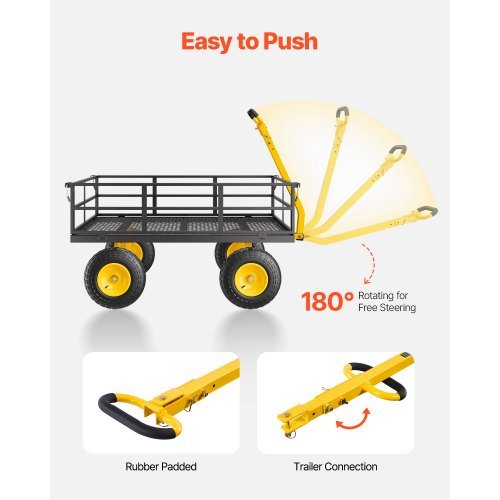
Are you tired of struggling to move heavy loads around your garden? Choosing the right garden cart can make all the difference in how easy and enjoyable your outdoor work feels.
But should you go for a push garden cart or a tow garden cart? Each has its own benefits and drawbacks that can impact your comfort, efficiency, and even your safety. You’ll discover which type suits your needs best, so you can save time and effort on your next gardening project.
Keep reading to find out how to make your garden work smarter, not harder.
Types Of Garden Carts
Garden carts help move tools, plants, and soil around the yard. There are different types based on how you move them.
Two common types are push carts and tow carts. Each has its own use and design for garden tasks.
Push Carts Overview
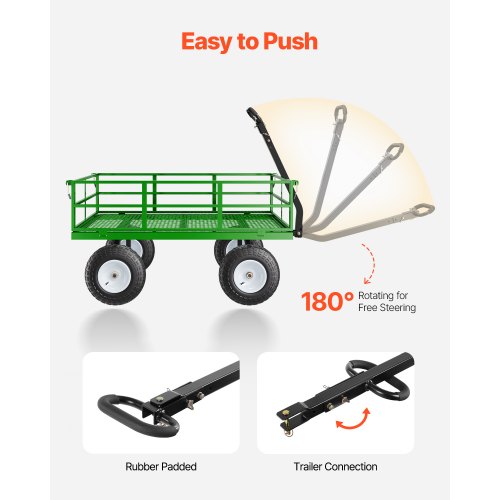
Push carts are designed to be pushed by hand. They usually have a handle and four wheels for easy movement.
- Ideal for small to medium loads
- Easy to control and maneuver
- Good for tight garden spaces
- Lightweight and simple design
Tow Carts Overview
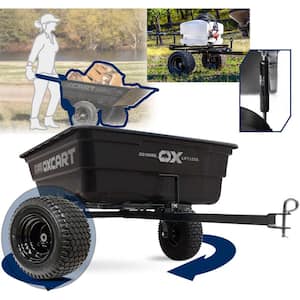
Tow carts attach to a lawn tractor or ATV. They help carry heavy loads across larger areas.
| Feature | Push Carts | Tow Carts |
|---|---|---|
| Load Capacity | Light to medium | Medium to heavy |
| Movement | Manual push | Pulled by vehicle |
| Best Use | Small gardens | Large yards or farms |
| Weight | Light | Heavier |

Credit: www.amazon.com
Design And Build
Garden carts come in two main types: push and tow. Each type has a unique design and build. These differences affect how you use them in your garden work.
Understanding the frame, wheels, and load capacity helps you pick the right cart. Let’s look closely at these key parts.
Frame And Material
Push carts often have a smaller frame. They are made to be light and easy to move by hand. Tow carts have bigger, stronger frames. They connect to a lawn tractor or ATV.
- Push carts use steel or heavy-duty plastic for frames.
- Tow carts mostly use steel for strength and durability.
- Both types have rust-resistant coatings to last longer.
- Push carts have handles for easy pushing and steering.
- Tow carts include a hitch for attaching to vehicles.
Wheel Types And Sizes
Wheels affect how smooth the cart moves over rough ground. Push carts usually have smaller wheels. Tow carts use larger wheels for better stability.
| Cart Type | Wheel Type | Wheel Size | Purpose |
|---|---|---|---|
| Push Cart | Pneumatic or solid rubber | 8 to 12 inches | Easy to push on grass and dirt |
| Tow Cart | Pneumatic with deep tread | 15 to 20 inches | Better for towing on uneven terrain |
Load Capacity
Load capacity shows how much weight a cart can carry safely. Push carts hold less weight. Tow carts handle heavier loads for big jobs.
- Push carts usually carry 300 to 600 pounds.
- Tow carts range from 800 to 2000 pounds capacity.
- Always check the cart’s load limit before use.
Maneuverability And Control
Maneuverability and control affect how easy a garden cart is to use. Both push and tow carts have unique handling traits. Choosing the right type depends on your garden layout and tasks.
This guide compares handling features of push carts and tow carts. It covers ease of movement, steering, and stability.
Handling Push Carts
Push carts offer direct control by the user. You move them by pushing or pulling the handles. This allows precise steering and easy stopping.
- Push carts are light and easy to turn in tight spaces.
- They work well on flat or slightly uneven ground.
- The user controls speed and direction directly.
- Brakes are rare but some models have wheel locks.
- Handling requires some physical effort, especially when loaded.
Handling Tow Carts
Tow carts attach to lawn tractors or ATVs. They require less physical effort but need space to turn. Control depends on the towing vehicle.
| Feature | Advantage | Consideration |
| Steering | Controlled by towing vehicle | Less precise in tight areas |
| Effort | Minimal physical effort | Needs vehicle to operate |
| Stability | Stable at higher speeds | May sway on uneven ground |
| Maneuverability | Good on open terrain | Less agile around obstacles |
Usage Scenarios
Choosing between a push garden cart and a tow garden cart depends on your yard size and tasks. Each type works better in different situations.
Understanding where and how you use the cart helps pick the right one for your garden work.
Best For Small Gardens
Push carts are great for small gardens. They are easy to move in tight spaces and simple to control.
You can quickly push them along garden paths or flower beds without much effort.
- Lightweight and easy to maneuver
- Fits narrow walkways
- Good for carrying small loads
Best For Large Properties
Tow carts work well on large properties. They attach to lawn tractors or ATVs, making hauling heavy loads easier.
This helps save time and reduces physical strain when moving soil, mulch, or tools over big areas.
- Handles heavy and bulky items
- Good for long distances
- Works well with power equipment
Terrain Considerations
Terrain affects which cart type to choose. Push carts do better on flat, smooth ground.
Tow carts handle rough or uneven terrain more easily with their larger wheels and tractor power.
| Terrain Type | Push Cart | Tow Cart |
|---|---|---|
| Flat, smooth paths | Easy to push | Works well |
| Gravel or dirt | Harder to push | Handles easily |
| Hilly or rough ground | Challenging | Best choice |
Assembly And Maintenance
Push and tow garden carts help move heavy loads in your garden. Both need proper setup and care to work well.
Understanding how to assemble and maintain these carts keeps them safe and lasting longer.
Setup Process
Push carts are simpler to put together because they have fewer parts. Tow carts have more parts and need more time.
Both types usually come with clear instructions and all needed tools. Follow these steps for easy setup.
- Unpack all parts and check for damage.
- Attach the wheels to the frame securely.
- Connect the handle or tow bar as shown in instructions.
- Tighten all bolts and nuts firmly.
- Test the cart by pushing or towing it empty first.
Upkeep Tips
Regular care keeps your garden cart working smoothly. Clean it after each use to stop dirt build-up.
Check parts often. Fix or replace broken pieces to avoid accidents.
- Lubricate wheel axles to prevent rust and noise.
- Store the cart in a dry place to avoid corrosion.
- Tighten loose bolts and screws regularly.
- Inspect tires for wear and inflate if needed.
- Clean the cart body with mild soap and water.
Credit: www.vevor.ca
Cost And Value
Choosing between a push and a tow garden cart depends on both cost and value. Understanding the price differences and long-term benefits helps make a smart choice. This guide looks at these factors clearly.
Each cart type serves different needs and budgets. We will compare their prices and show how their value lasts over time.
Price Comparison
Push garden carts often cost less at first. They are smaller and simpler in design. Tow garden carts usually have a higher upfront price. They come with added features for heavy loads.
| Cart Type | Average Price | Main Features |
|---|---|---|
| Push Garden Cart | $50 – $120 | Lightweight, easy to move, smaller capacity |
| Tow Garden Cart | $150 – $300 | Heavy-duty, large capacity, tow hitch ready |
Long-term Investment
Look beyond the price tag. Think about how long the cart will last and how well it suits your garden work. Tow carts often last longer and handle bigger jobs well.
- Push carts are cheaper but may need replacing sooner.
- Tow carts cost more but offer durability and strength.
- Consider repair costs and ease of maintenance.
- Choose a cart that fits your gardening needs to save money long term.
Safety Features
Choosing the right garden cart means thinking about safety. Both push and tow carts have features that keep you safe during use.
Understanding these safety features helps you pick the best cart for your garden tasks.
Stability Factors
Stability is key to preventing accidents with garden carts. Push carts often have a wide wheelbase to stop tipping. Tow carts rely on their hitch and wheel design for balance.
- Wide wheels keep push carts steady on uneven ground.
- Low center of gravity in tow carts helps avoid tipping during turns.
- Strong frame materials support heavy loads without bending.
- Locking wheels on some push carts prevent unwanted movement.
Load Security
Securing the load prevents spills and injuries. Push carts often have side panels or cages. Tow carts use straps or nets to hold items in place.
| Feature | Push Cart | Tow Cart |
| Side Panels | Usually fixed or removable | Rare |
| Load Straps | Optional | Often included |
| Load Capacity | Smaller, for lighter loads | Larger, for heavy loads |
| Securing Nets | Rare | Common |
User Reviews And Feedback
Users often share their thoughts on push and tow garden carts. Their feedback helps others choose the right cart. Both types have strengths and weaknesses.
Push carts are praised for ease of use in small gardens. Tow carts are liked for carrying heavier loads over longer distances.
Common Praises
Many users say push carts are easy to steer and control. They work well on flat surfaces and tight spaces. Tow carts get high marks for their large capacity and strong build.
- Push carts are lightweight and easy to maneuver.
- Tow carts handle heavy loads with less effort.
- Both types save time compared to carrying items by hand.
- Push carts are good for quick trips around the yard.
- Tow carts connect easily to lawn tractors or ATVs.
Typical Complaints
Users sometimes find push carts tiring to use on uneven ground. The smaller size limits how much they can carry. Tow carts can be hard to store because of their size.
- Push carts struggle on rough or hilly terrain.
- They need frequent stops to unload small loads.
- Tow carts may not fit in small garages easily.
- Some users report difficulty attaching tow carts to some vehicles.
- Both carts can have wheels that wear out over time.
Final Decision Factors
Choosing between a push or tow garden cart depends on key factors. Consider what fits your lifestyle and gardening needs best.
This guide covers personal needs, storage space, and budget limits to help you decide.
Personal Needs Assessment
Think about how you will use the garden cart. A push cart suits small yards and light loads. A tow cart works well for large gardens and heavy materials.
- Consider the weight you need to carry
- Check if you need to tow the cart with a vehicle
- Look at the terrain you will use it on
- Decide if ease of maneuvering is important
Space And Storage
Storage space is vital. Push carts are usually smaller and easier to store. Tow carts require more room due to their size and attachments.
| Type | Storage Size | Storage Needs |
| Push Cart | Compact | Fits in small sheds or garages |
| Tow Cart | Large | Needs open space or large storage area |
Budget Constraints
Price can guide your choice. Push carts often cost less. Tow carts may have higher initial costs but can save time for big jobs.
Consider these budget points:
- Cost of the cart
- Maintenance expenses
- Possible extra equipment for towing
- Long-term value for your gardening needs
Credit: www.homedepot.com
Frequently Asked Questions
What Is The Main Difference Between Push And Tow Garden Carts?
Push carts are designed to be pushed manually, offering easy control. Tow carts are built to be pulled behind vehicles, ideal for heavy loads.
Which Garden Cart Is Better For Small Yards?
Push garden carts are better for small yards due to their compact size and easy maneuverability in tight spaces.
Can Tow Garden Carts Handle Heavier Loads Than Push Carts?
Yes, tow garden carts usually handle heavier loads as they attach to vehicles, reducing physical effort for large tasks.
Are Push Garden Carts More Affordable Than Tow Carts?
Generally, push garden carts are more affordable because they have simpler designs and fewer components compared to tow carts.
Conclusion
Choosing between a push and tow garden cart depends on your needs. Push carts are ideal for small gardens. Easy to maneuver and store. Tow carts handle larger tasks effortlessly. Perfect for big yards and heavy loads. Consider your garden size and tasks.
Evaluate your physical ability too. Push carts require more manual effort. Tow carts need a compatible vehicle. Both types offer unique advantages. Assess your requirements carefully. Make an informed decision for your gardening tasks. Your garden’s efficiency depends on it.
Happy gardening with your perfect cart choice!

