
Are you trying to decide between a pump sprayer and a hose end sprayer for your garden or lawn? Choosing the right sprayer can save you time, effort, and money while keeping your plants healthy.
But what exactly sets these two tools apart? Understanding their differences will help you pick the one that fits your needs perfectly. Keep reading to discover how each sprayer works, their pros and cons, and which one is best for your specific tasks.
Your plants will thank you!
Pump Sprayer Basics
Pump sprayers are handheld tools used to spray liquids. They work by building pressure inside a container.
These sprayers are popular for gardening and cleaning tasks. They offer control over the spray flow.
How Pump Sprayers Work
A pump sprayer has a container, a pump, and a spray nozzle. You pump air into the container to increase pressure.
When you press the trigger, the liquid is pushed out through the nozzle in a spray pattern. You can adjust the nozzle to change the spray type.
Common Uses Of Pump Sprayers
- Applying pesticides and herbicides in gardens
- Spraying fertilizers on plants
- Cleaning outdoor surfaces with water or detergents
- Disinfecting areas in homes or greenhouses
- Watering plants in hard-to-reach places
Advantages Of Pump Sprayers
| Advantage | Explanation |
| Control | Adjust spray pattern and pressure easily |
| Portability | Lightweight and easy to carry |
| Efficiency | Delivers liquids evenly without waste |
| Cost | Usually affordable and low maintenance |
| Safety | Allows distance from chemicals while spraying |

Credit: www.amazon.com
Hose End Sprayer Basics
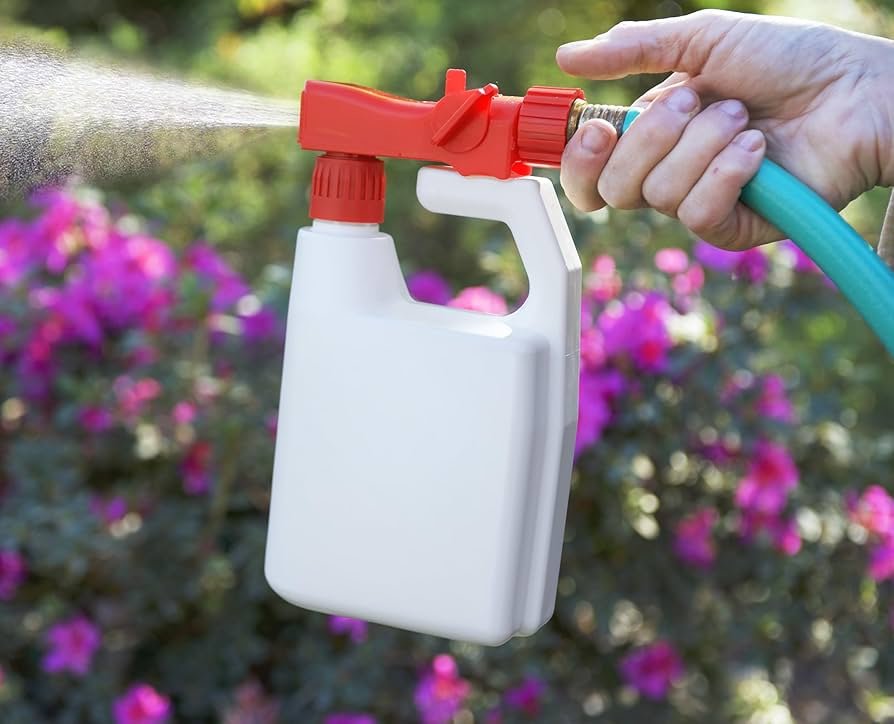
A hose end sprayer is a tool that attaches to a garden hose. It mixes water with liquid solutions like fertilizers or pesticides.
This sprayer helps spread liquids evenly over plants or lawns. It is simple to use and saves time compared to manual spraying.
How Hose End Sprayers Work
The sprayer connects to the hose and draws water through it. Inside, it mixes water with the chemical in a small container.
The mixed liquid flows out through a nozzle. You can adjust the nozzle to change the spray pattern and flow rate.
- Attach sprayer to hose
- Fill the container with the liquid solution
- Turn on water to start mixing
- Spray evenly over plants or lawn
Typical Applications For Hose End Sprayers
Hose end sprayers are ideal for applying garden chemicals over large areas. They work well on lawns, flower beds, and vegetable gardens.
These sprayers are also used for cleaning tasks or applying treatments to driveways and patios.
- Applying fertilizers and pesticides
- Watering large garden areas
- Cleaning outdoor surfaces
- Applying weed control solutions
Benefits Of Hose End Sprayers
Hose end sprayers save time by covering more area quickly. They reduce the need to carry heavy sprayer tanks.
These sprayers also help mix chemicals accurately, preventing overuse or waste of products.
- Easy to attach and use
- Mixes chemicals correctly
- Covers large areas fast
- Reduces physical effort
Comparing Accuracy And Coverage
Choosing between a pump sprayer and a hose end sprayer depends on how precise you want your spray to be. Both tools deliver liquids but differ in accuracy and area covered.
Understanding their spray patterns and effective ranges helps in picking the right sprayer for your needs.
Spray Pattern And Control
Pump sprayers let you adjust the spray pattern easily. You can choose a fine mist or a strong stream. This control helps target specific plants or areas with precision.
- Pump sprayers often have adjustable nozzles.
- You can control the spray pressure manually.
- This control reduces waste and overspray.
- Hose end sprayers offer fewer options for spray shape.
- They rely on water pressure from the hose.
Effective Range Differences
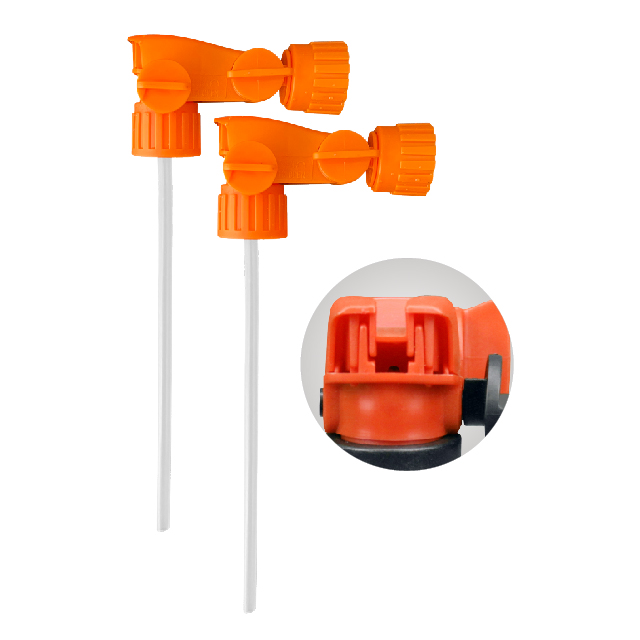
The range of a pump sprayer is usually shorter but more accurate. Hose end sprayers cover wider areas but with less precision.
| Feature | Pump Sprayer | Hose End Sprayer |
| Spray Range | Short to medium | Medium to long |
| Coverage | Focused, smaller areas | Wide, large areas |
| Control | Manual pressure adjustment | Dependent on hose flow |
| Accuracy | High accuracy | Lower accuracy |
Credit: www.ilotchina.com
Ease Of Use And Convenience
Pump sprayers and hose end sprayers help spread liquids like fertilizers or pesticides. They differ in how easy they are to use and how convenient they feel during work.
Choosing the right sprayer depends on your needs for setup, operation, portability, and storage. Let’s explore these points to see how they compare.
Setup And Operation
Pump sprayers need you to fill a tank, pump air to build pressure, and then spray. This process takes a few minutes but gives control over spraying pressure.
Hose end sprayers attach directly to a garden hose. They mix the liquid automatically and spray when you turn on the water. This makes setup quicker and easier.
- Pump Sprayer:Fill tank, pump handle to pressurize, pull trigger to spray
- Hose End Sprayer:Attach to hose, turn water on, spray immediately
Portability And Storage
Pump sprayers are usually smaller and can be carried around easily. You can take them to places without water access. They also store well in a closet or garage.
Hose end sprayers rely on a hose and water source. They are less portable but stay connected to the hose during use. Storage needs space for the hose and sprayer together.
- Pump Sprayer:Portable, easy to carry, stores compactly
- Hose End Sprayer:Less portable, needs hose connection, stores with hose
Maintenance And Durability
Understanding the maintenance and durability of pump sprayers and hose end sprayers is important. Both tools have unique cleaning needs and wear patterns.
Proper care can extend the life of your sprayer. Learn how to keep them in good condition with regular maintenance.
Cleaning Requirements
Cleaning your sprayer is vital for its performance. Different types of sprayers have varied cleaning methods.
- Rinse sprayers after each use to prevent clogging.
- Use warm water and mild detergent for thorough cleaning.
- Check for residue in nozzles and tubes regularly.
Common Wear And Repairs
Sprayers experience common wear over time. Knowing what to look for helps in making timely repairs.
| Component | Wear Sign | Repair Action |
| Hose | Cracks | Replace or seal |
| Nozzle | Clogs | Clean or replace |
| Pump | Leaks | Tighten or replace seals |
Cost Considerations
Choosing between a pump sprayer and a hose end sprayer involves thinking about cost. Both have different prices that affect your budget.
It is important to know the initial cost and the expenses over time. This helps you pick the best sprayer for your needs.
Initial Purchase Price
Pump sprayers usually cost more at first. They have a tank and a pump mechanism. Hose end sprayers are cheaper because they connect directly to the hose.
- Pump sprayers: $20 to $70
- Hose end sprayers: $10 to $30
- Pump sprayers need more parts, raising the price
- Hose end sprayers are simpler and cost less upfront
Long-term Expenses
Long-term costs include maintenance, repairs, and replacements. Pump sprayers may need more upkeep because of their parts. Hose end sprayers require less maintenance but can wear out hose fittings.
| Expense Type | Pump Sprayer | Hose End Sprayer |
| Maintenance | Medium (cleaning, seals) | Low (hose connection check) |
| Repairs | Occasional (pump parts) | Rare (hose damage) |
| Replacement Frequency | Every 3-5 years | Every 5-7 years |
| Consumables | Seals, nozzles | Hose washers |
Choosing The Right Sprayer
Choosing the right sprayer for your gardening tasks can be challenging. Understanding the differences between a pump sprayer and a hose end sprayer helps in making the right choice.
Each type of sprayer has its own advantages. Your needs and the task at hand determine which is best.
Matching Sprayer To Task
Pump sprayers are suitable for small areas. They work well for precise applications, like treating individual plants.
Hose end sprayers cover larger areas quickly. They are ideal for lawns and large garden sections.
- Pump sprayers offer control for small tasks
- Hose end sprayers are efficient for broad coverage
User Preferences And Needs
Consider your comfort and ease of use. Pump sprayers require manual effort, but are lightweight and portable.
Hose end sprayers connect to a garden hose. They are heavier but reduce manual labor.
- Pump sprayers are best for light tasks and mobility
- Hose end sprayers suit users who prefer less physical effort

Credit: www.amazon.com
Frequently Asked Questions
What Is A Pump Sprayer Used For?
A pump sprayer is used for precise application of liquids like pesticides and fertilizers. It allows manual pressure buildup for controlled spraying.
How Does A Hose End Sprayer Work?
A hose end sprayer attaches to a garden hose and mixes chemicals with water automatically. It sprays a diluted solution over large areas quickly.
Which Sprayer Is Better For Large Areas?
Hose end sprayers are better for covering large areas efficiently. They save time and effort by connecting directly to a hose.
Are Pump Sprayers Suitable For Indoor Use?
Yes, pump sprayers are ideal for indoor use due to their controlled spray and portability. They minimize chemical exposure indoors.
Conclusion
Choosing between a pump sprayer and a hose end sprayer depends on your needs. Pump sprayers offer control and precision for small jobs. Hose end sprayers cover larger areas quickly and easily. Both tools help apply liquids effectively but differ in use and convenience.
Think about your garden size and the type of spraying needed. This will guide you to the right choice. Understanding these differences saves time and effort while caring for plants. Simple tools, clear choices.
