
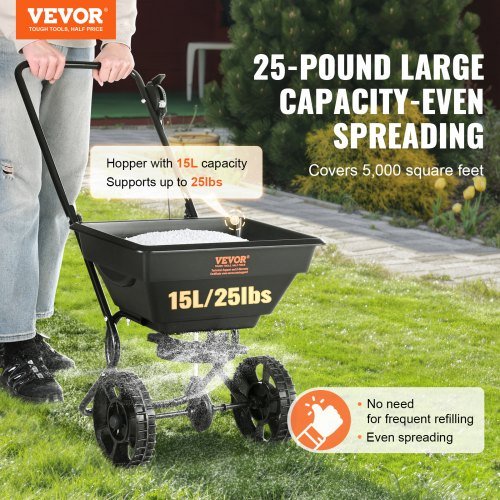
Are you confused about whether to choose a spreader or a seeder for your garden or farm? You’re not alone.
Knowing the difference between these two tools can save you time, effort, and money. Understanding how each works will help you get the best results for your soil and seeds. You’ll discover the key differences that make each one unique and find out which one suits your needs perfectly.
Keep reading, and you’ll never mix them up again!
Spreader Basics
Spreading tools help distribute seeds, fertilizers, or other materials evenly. They make planting and lawn care faster and easier.
Understanding how spreaders work is key to choosing the right one for your task. Different types serve different needs.
Types Of Spreaders
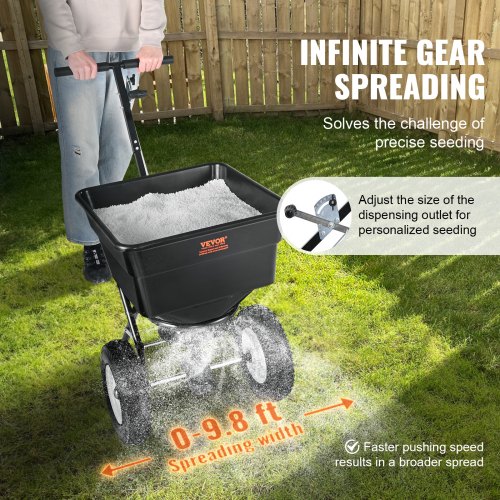
- Broadcast spreaders throw material over a wide area. They are good for lawns and big gardens.
- Drop spreaders release material straight down for more precise coverage. They work well for small or narrow spaces.
- Handheld spreaders are small and light. They suit small jobs and spot treatments.
How Spreaders Work
Most spreaders use a spinning disk or a gravity-fed system to spread material. The user controls the flow rate and speed.
| Spreader Type | Mechanism | Coverage |
|---|---|---|
| Broadcast | Spinning disk throws material outward | Wide |
| Drop | Material drops straight down | Narrow and precise |
| Handheld | Manual or battery-powered release | Small areas |
Common Uses
Spreaders help in many outdoor tasks. They make spreading seed, fertilizer, or ice melt easier and more even.
- Seeding lawns or gardens
- Applying fertilizer or lime
- Spreading ice melt on walkways
- Distributing pest control products
Credit: www.vevor.ca
Seeder Essentials
A seeder is a farming tool that plants seeds in the soil. It helps farmers save time and plant evenly.
Seeders differ from spreaders, which only spread seeds on the surface. Seeders place seeds at the right depth.
Types Of Seeders
There are many types of seeders. Each type fits different farming needs and soil conditions.
- Drill Seeders: Make holes and drop seeds in rows
- Broadcast Seeders: Scatter seeds over a large area
- Precision Seeders: Place seeds one by one with exact spacing
- Box Seeders: Drop seeds from a box with a rotating mechanism
Seed Distribution Methods
Seeders use different ways to spread seeds. These methods affect how well seeds grow.
- Drop Method: Seeds fall straight down into furrows
- Force Feed: Seeds are pushed into the soil by a wheel or blade
- Broadcasting: Seeds are spread evenly over the soil surface
- Row Planting: Seeds are placed in straight lines for easy care
Popular Applications
Seeders work well for many crops and fields. They help farmers plant quickly and accurately.
- Grain crops like wheat, barley, and oats
- Vegetables such as carrots, beans, and peas
- Grass and forage for animal feed
- Large farms and small gardens
Spreader Vs Seeder
Farmers use spreaders and seeders to help plant crops. Both machines save time and effort. They work differently to do their jobs.
This article explains the differences between spreaders and seeders. Knowing these can help you choose the right tool.
Functional Differences
A spreader spreads materials like fertilizer or seeds on the soil surface. It drops the material evenly over a wide area.
A seeder plants seeds directly into the soil at a set depth. It makes rows or lines for better seed growth.
- Spreader: disperses materials on top of the ground
- Seeder: places seeds into the soil in rows
- Spreader is for spreading; seeder is for planting
Design Variations
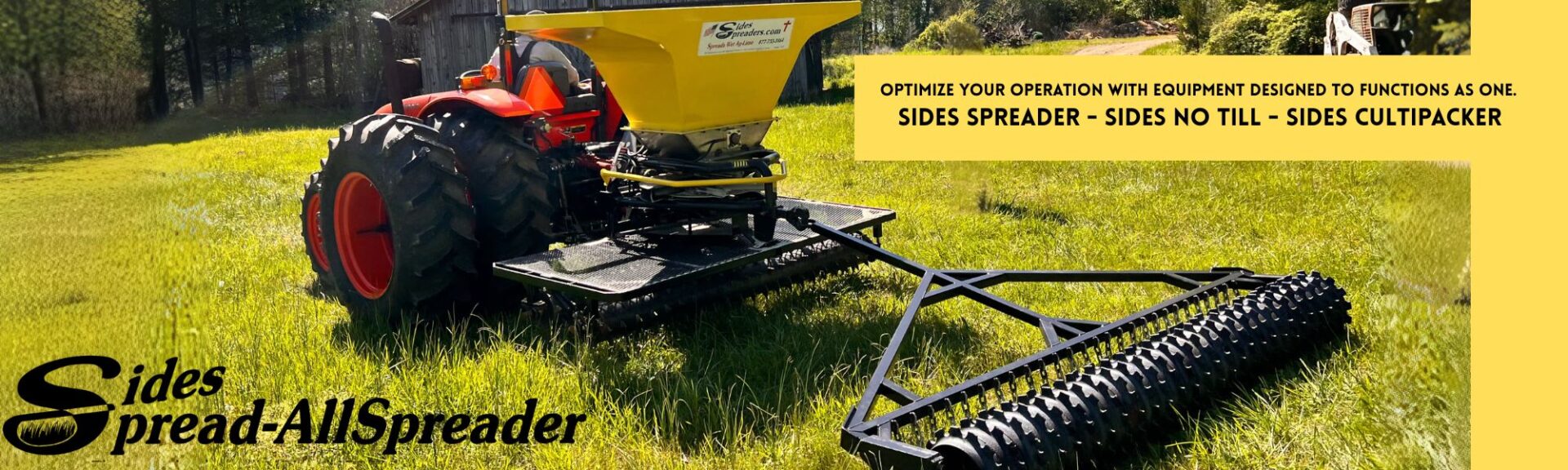
Spreaders have wide containers and rotating discs or spinners. These parts help throw material out evenly.
Seeders have seed hoppers and tubes. These guide seeds into the soil with precision. They often have discs or tines to open the ground.
- Spreader: large hopper and spinning mechanism
- Seeder: seed box, tubes, and soil openers
- Seeders can create rows; spreaders cover broad areas
Operational Efficiency
Spreaders work fast by scattering material quickly over fields. They cover big areas but do not plant seeds deeply.
Seeders take more time to plant because they place seeds carefully. This improves seed germination and crop growth.
- Spreaders are faster for spreading fertilizer or seeds
- Seeders take longer but plant seeds more accurately
- Seeders help increase crop yields by planting well
Choosing The Right Tool
Spreader and seeder are tools used in farming and gardening. They help place seeds or fertilizer on the soil.
Knowing the difference helps you pick the best tool for your needs. Each tool works better in certain situations.
Factors To Consider
Think about your soil type, field size, and what you want to plant. These affect the tool you should use.
Spreaders spread seeds or fertilizer evenly on the surface. Seeders place seeds deeper and in rows for better growth.
Cost And Maintenance
Spreaders usually cost less and need less care. They have fewer parts to clean and fix.
Seeders can be more expensive and need regular checks. They have parts that must be clean to work well.
- Spreaders: lower cost, simple maintenance
- Seeders: higher cost, more maintenance
Suitability For Different Crops
Spreaders work well for grass seed, fertilizer, or cover crops. They spread material on the surface quickly.
Seeders are best for crops needing rows, like wheat or corn. They place seeds at the right depth and space.
- Spreaders: grass, fertilizer, cover crops
- Seeders: wheat, corn, and row crops
Tips For Optimal Use
Using spreaders and seeders correctly can improve your garden’s growth. Each tool has unique features that suit different tasks.
Understanding how to use them well helps save time and ensures even coverage of materials.
Best Practices For Spreaders
Spreaders distribute fertilizer or other materials evenly over a lawn or field. Proper use avoids waste and damage.
- Calibrate the spreader before use to control the amount of material released.
- Walk at a steady pace to ensure uniform coverage.
- Avoid spreading on windy days to prevent drift.
- Fill the spreader only with the recommended materials.
- Clean the spreader after each use to prevent clogging.
Best Practices For Seeders
Seeders plant seeds at consistent depths and spacing. This helps seeds grow evenly and reduces waste.
| Practice | Benefit |
| Set the seeder depth correctly | Seeds get the right soil contact |
| Use the right seed rate | Prevents overcrowding or gaps |
| Check for blockages regularly | Ensures smooth seed flow |
| Operate at even speeds | Maintains consistent seed spacing |
| Clean after use | Extends machine life |
Common Mistakes To Avoid
Using spreaders and seeders wrongly can harm plants and waste materials. Avoid these mistakes for better results.
- Overloading the spreader or seeder, which causes uneven spreading or planting.
- Ignoring calibration, leading to too much or too little material applied.
- Using spreaders on windy days, causing material to drift away.
- Planting seeds too deep or shallow with a seeder.
- Failing to clean equipment, which can cause rust and blockages.
Credit: sidesspreaders.com

Credit: tarterusa.com
Frequently Asked Questions
What Is The Primary Function Of A Spreader?
A spreader evenly distributes seeds, fertilizer, or other materials over a wide area. It is ideal for covering large spaces quickly. Spreaders do not place seeds at a specific depth but scatter them broadly.
How Does A Seeder Differ From A Spreader?
A seeder plants seeds at a precise depth and spacing. It ensures better seed-to-soil contact and uniform growth. Unlike spreaders, seeders are designed specifically for planting seeds rather than spreading other materials.
Can A Spreader Be Used For Seeding Purposes?
While spreaders can scatter seeds, they lack precision in depth and spacing. This may lead to uneven germination. For best results, use seeders for planting and spreaders for fertilizer or mulch distribution.
Which Tool Is Better For Lawn Care, Spreader Or Seeder?
For lawn care, spreaders are generally preferred to distribute fertilizer or grass seed evenly. Seeders are better suited for agricultural planting where precise seed placement matters. Choose based on your specific lawn or field needs.
Conclusion
A spreader and a seeder serve different purposes in gardening and farming. A spreader scatters seeds or fertilizer evenly over the ground. A seeder plants seeds directly into the soil in rows or patterns. Knowing their differences helps you choose the right tool for your needs.
Using the correct equipment saves time and improves plant growth. Both tools make planting easier and more efficient. Understanding these basics leads to better garden or farm results. Choose wisely and watch your plants thrive.
