
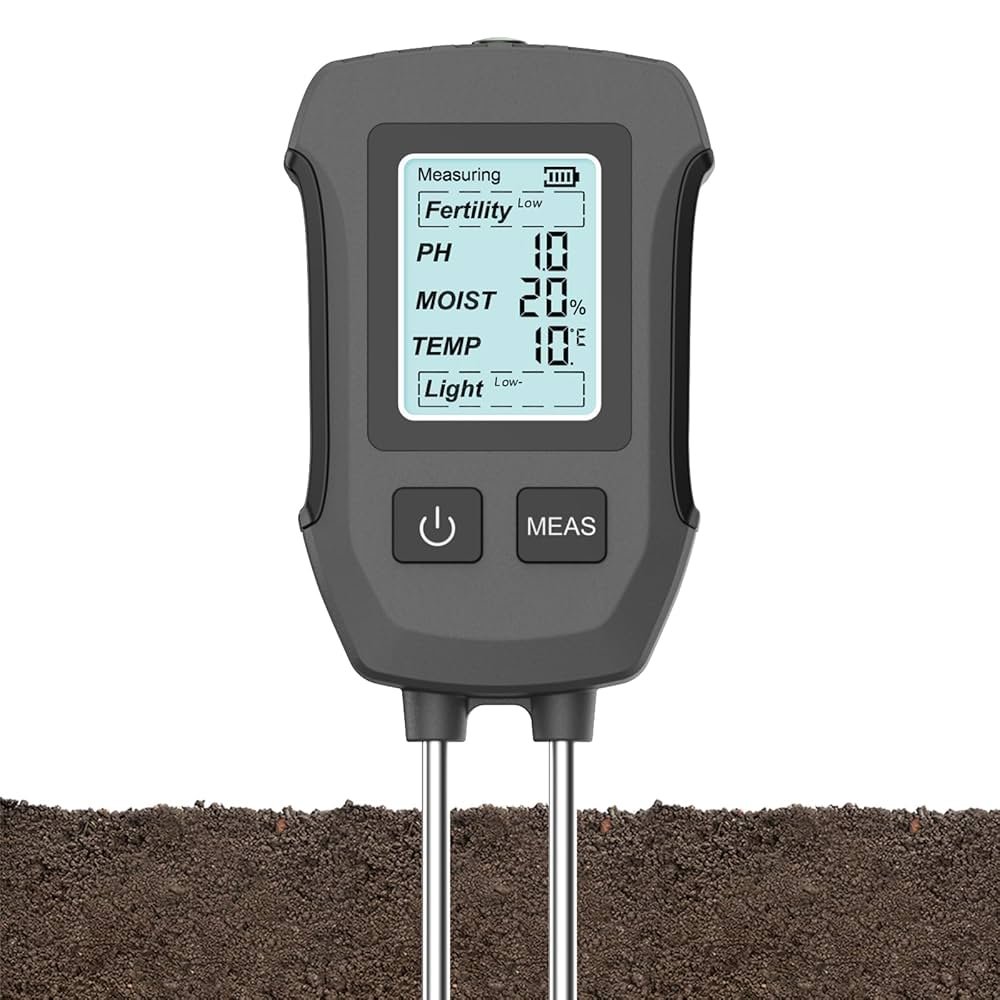
Have you ever wondered why your plants aren’t thriving, even though you’re doing everything right? It might be time to consider the hidden hero of gardening—light!
Plants need the right amount of light to grow, and that’s where a soil light meter comes into play. But what exactly does a soil light meter measure, and how can it transform your gardening experience? Understanding this tool could be the key to unlocking the lush, vibrant garden you’ve always dreamed of.
Dive in to discover how a simple gadget can make all the difference in your plant’s health and growth. Don’t let your green thumb go to waste—learn how to harness the power of light today!

Credit: www.amazon.ca
Purpose Of Soil Light Meters
Soil light meters measure the amount of light that reaches the soil surface. This helps understand how much sunlight plants get.
These meters are useful tools for gardeners and farmers to check light levels for healthy plant growth.
Role In Plant Growth
Plants need light to make food through photosynthesis. Soil light meters show if plants get enough light.
Too little light can slow growth, while too much can harm plants. Measuring light helps keep balance.
- Check sunlight in different garden areas
- Adjust plant placement for best light
- Plan crop rotation based on light needs
Importance For Gardeners And Farmers
Gardeners use soil light meters to choose the right plants for their garden spots. This improves plant health.
Farmers monitor light to optimize crop yield. It helps them decide when and where to plant crops.
- Identify shaded areas to avoid planting sun-loving crops
- Improve irrigation by knowing light exposure
- Save resources by planting suitable crops in each spot
How Soil Light Meters Work
Soil light meters measure the amount of light that reaches the soil surface. This helps gardeners and farmers understand light conditions for plants.
These devices work by detecting light levels and converting them into readable numbers. This shows if the soil gets enough light for healthy plant growth.
Measuring Light Intensity
Soil light meters use sensors to measure light intensity. This is the brightness of light hitting the soil.
The meter reads light in units called lux or foot-candles. Higher values mean more light is reaching the soil.
- Light intensity affects seed germination and plant growth
- Too little light can slow plant development
- Too much light may cause soil to dry out quickly
Sensor Types And Technology
Soil light meters use different sensors to detect light. The most common types are photodiodes and photoresistors.
Photodiodes convert light into electrical current quickly and accurately. Photoresistors change resistance with light levels, offering a simple way to measure light.
- Photodiode sensors:fast response, good for precise readings
- Photoresistor sensors:low cost, suitable for basic light checks
- Silicon photodiodes:sensitive to visible light, used in advanced meters
Key Parameters Measured
A soil light meter measures important light levels that affect plant growth. It helps to check if plants get enough light for photosynthesis. Understanding these key parameters is useful for gardeners and farmers.
The main values measured by these meters include Photosynthetically Active Radiation (PAR), lux, and foot-candle levels. Each value gives different information about light intensity and quality.
Photosynthetically Active Radiation (par)
PAR measures the light wavelengths plants use for photosynthesis. This range is between 400 and 700 nanometers. It shows how much usable light is available for plant growth.
- PAR is measured in micromoles per square meter per second (µmol/m²/s).
- It indicates the energy plants can convert into food.
- Higher PAR values mean more light for photosynthesis.
- Useful for indoor and outdoor plant lighting setups.
Lux And Foot-candle Levels
Lux and foot-candle are units measuring visible light intensity. Lux is common worldwide, while foot-candle is mostly used in the USA. Both tell how bright the light is at a specific spot.
| Parameter | Unit | Description |
|---|---|---|
| Lux | lx | Measures light intensity in lumens per square meter |
| Foot-candle | fc | Measures light intensity in lumens per square foot |
| Conversion | 1 foot-candle = 10.764 lux |
Benefits Of Using Soil Light Meters
Soil light meters help measure the amount of light reaching the soil surface. This data is important for gardeners and farmers. It helps them understand how much light plants receive for growth.
Using a soil light meter supports better decisions about plant care. It ensures plants get the right light levels to stay healthy and grow well.
Optimizing Plant Health
Plants need the correct light to perform photosynthesis. Too little or too much light can harm plant health. Soil light meters help track light levels accurately to avoid these problems.
- Detect shaded areas that limit growth
- Adjust plant placement for better sunlight
- Monitor seasonal changes in light intensity
- Prevent plant stress caused by poor light
Improving Crop Yields
Good light exposure can increase crop production. Soil light meters give farmers data to optimize planting layouts and times. This leads to higher yields and better quality produce.
| Benefit | How Soil Light Meter Helps |
| Maximize Photosynthesis | Measures light to ensure crops get enough energy |
| Reduce Crop Loss | Identifies low light zones to avoid poor growth |
| Plan Efficient Irrigation | Combines light data with soil moisture for better watering |
| Improve Harvest Timing | Tracks light changes to predict crop maturity |
Choosing The Right Soil Light Meter
Soil light meters help measure the amount of light that reaches your soil. This is important for growing plants well. Picking the right meter makes your work easier.
Many types of soil light meters exist. Each has features that suit different needs. Knowing what to look for saves time and money.
Factors To Consider
Choose a soil light meter by checking these important factors. Accuracy, ease of use, and durability matter most. Also, consider the type of plants you grow and your budget.
- Accuracy:The meter should give precise light readings.
- Measurement Range:Check if the meter covers the light levels in your garden.
- Display:A clear and easy-to-read screen helps in bright conditions.
- Portability:Lightweight meters are easier to carry and use.
- Power Source:Battery life or rechargeable options matter for long use.
- Durability:Look for water-resistant and sturdy meters for outdoor use.
Popular Models And Features
| Model | Measurement Range | Display Type | Power Source | Special Features |
| LightCheck Pro | 0-200,000 lux | Digital LCD | AA Batteries | Auto shut-off, backlight |
| GardenLite 3000 | 0-100,000 lux | Analog Dial | Rechargeable | Compact size, water-resistant |
| SunMeter Basic | 0-50,000 lux | Digital LCD | AAA Batteries | Simple one-button use |
Practical Tips For Accurate Measurement
Using a soil light meter gives you valuable data about light levels in your soil area. Accurate readings help you understand your plants’ environment better.
Follow simple methods to place the meter correctly and pick the best time to measure. This makes your data reliable and useful.
Proper Placement Techniques
Place the soil light meter sensor where roots get light exposure. Avoid shadows from nearby objects or leaves that may block light.
- Hold the sensor flat on the soil surface for even readings.
- Do not tilt the sensor; keep it level to the ground.
- Measure at multiple spots to get an average light level.
- Keep the sensor clean from dirt and moisture before measuring.
Timing And Environmental Considerations
Light levels change during the day and with weather. Pick the right time and conditions for best results.
| Time of Day | Best Practice |
| Early morning | Light is low; readings may be less accurate |
| Midday (10 AM – 2 PM) | Best time for consistent, bright light levels |
| Late afternoon | Light starts to fade; readings may vary |
| Cloudy or rainy days | Lower light levels; note weather during measurement |
Common Misconceptions
Soil light meters measure light levels in soil environments. Some users expect them to do more than just this. It is important to understand what these meters can and cannot measure. This helps avoid wrong conclusions about soil and plant health.
This article clears up common misunderstandings about soil light meters. It also explains their limits and how to avoid errors when using them.
Limitations Of Soil Light Meters
Soil light meters only measure the amount of light reaching the soil surface. They cannot measure soil nutrients, moisture, or temperature. Many people wrongly assume these meters give full soil health data.
- They do not detect soil pH or mineral content.
- They cannot measure water levels or drainage quality.
- Light readings can be affected by shadows or nearby objects.
- They do not assess root health or soil microorganisms.
Avoiding Measurement Errors
Errors in using soil light meters happen often. These errors give false readings and mislead users about soil conditions.
| Common Error | How to Avoid |
| Taking readings in shady spots | Choose open areas without shade for measurement |
| Not calibrating the meter | Calibrate the device according to the manual before use |
| Using the meter at wrong times | Measure during consistent daylight hours |
| Ignoring debris on soil surface | Clear leaves and dirt before measuring |

Credit: www.amazon.ca

Credit: www.amazon.ca
Frequently Asked Questions
What Does A Soil Light Meter Measure Exactly?
A soil light meter measures the light intensity reaching the soil surface. It helps determine if plants receive sufficient sunlight for growth. This tool is vital for gardeners and farmers to optimize plant health and yield.
How Does A Soil Light Meter Benefit Plant Growth?
By measuring light levels, a soil light meter guides proper plant placement. It ensures plants get the right light for photosynthesis. This improves growth, health, and crop production efficiency.
Can A Soil Light Meter Detect Light Quality?
No, a soil light meter measures only light intensity, not quality. It quantifies the brightness but doesn’t assess light spectrum or color, which also affect plant growth.
When Should You Use A Soil Light Meter?
Use a soil light meter when planting or monitoring crops. It helps adjust plant positions or artificial lighting for optimal growth conditions.
Conclusion
A soil light meter measures the amount of light reaching the soil surface. This helps gardeners and farmers know if plants get enough sunlight. Good light levels support healthy plant growth and strong roots. Using this tool can improve your garden’s success.
It shows where to plant sun-loving or shade-tolerant plants. Knowing light conditions saves time and effort in caring for plants. A soil light meter is a simple, useful device for better gardening. Try it to see how light affects your plants’ health.

