
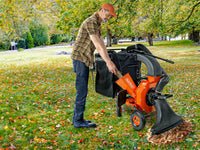
Are you tired of struggling with wet leaves that stick to your lawn and make cleanup a nightmare? You might be wondering if a leaf vacuum can really handle those soggy piles without clogging or losing power.
If you want to save time and effort while keeping your yard spotless, it’s important to know how leaf vacuums perform on wet leaves. Keep reading to discover the truth behind these tools and find out if they’re the right solution for your wet leaf problems.
How Leaf Vacuums Work
Leaf vacuums help clean yards by sucking up leaves. They make yard work faster and easier.
These tools can handle dry or wet leaves, but their performance changes with moisture. Understanding their mechanism helps you use them better.
Basic Mechanism
Leaf vacuums work by pulling leaves into a collection bag or container. A strong fan creates suction that lifts leaves off the ground.
The leaves enter a tube and get shredded by blades inside. This shredding reduces leaf volume and makes disposal simpler.
Types Of Leaf Vacuums
- Electric Leaf Vacuums:Powered by electricity, these are quieter and lighter but need a power source.
- Gas-Powered Leaf Vacuums:These have strong suction and are portable but produce noise and emissions.
- Battery-Operated Leaf Vacuums:Cordless and easy to use, they offer moderate power and run time.

Credit: www.lawnstarter.com
Challenges With Wet Leaves
Wet leaves are harder to clean up than dry leaves. Their moisture makes them heavy and sticky. This creates problems for leaf vacuums.
Understanding these challenges helps you decide if leaf vacuums work well on wet leaves.
Leaf Weight And Stickiness
Wet leaves weigh more than dry leaves. The water adds extra weight to each leaf. This makes them harder to pick up.
Wet leaves also stick together and to surfaces. This stickiness makes it tough for leaf vacuums to collect them efficiently.
- Wet leaves clump and block vacuum tubes
- Heavy leaves need stronger suction to lift
- Sticky leaves can clog the vacuum bag or container
Impact On Suction Power
Wet leaves reduce the suction power of leaf vacuums. The vacuum works harder to pull heavier, sticky leaves.
The vacuum motor may slow down or overheat. This lowers its efficiency and may cause damage over time.
- Suction drops when leaves block air flow
- Vacuum motor strain increases with wet leaves
- Less suction means more time spent cleaning
Performance On Wet Leaves
Leaf vacuums are popular for clearing yards quickly. Wet leaves can change how well these machines work. It is important to understand their performance on damp or soaked leaves.
Wet leaves stick together and to surfaces. This can make vacuuming harder. Some models handle wet leaves better than others.
Effectiveness Of Different Models
Not all leaf vacuums perform the same on wet leaves. Some use stronger suction or special features to manage moisture. Others struggle and clog easily.
- High-powered vacuums can pull in wet leaves without jamming.
- Models with wider intake openings reduce clogging risks.
- Vacuum and mulcher combos help break down wet leaves quickly.
- Lightweight machines may have weak suction on damp leaves.
Common Issues Encountered
Users often face problems when vacuuming wet leaves. These issues can lower the machine’s efficiency and cause frustration.
| Issue | Cause | Effect |
| Clogging | Wet leaves sticking inside | Vacuum stops working |
| Reduced suction | Heavy, wet leaf mass | Poor leaf pickup |
| Motor strain | Vacuum works harder | Overheating risk |
| Leaf residue | Leaves stick to ground | Incomplete cleaning |

Credit: www.familyhandyman.com
Tips For Using Leaf Vacuums On Wet Leaves
Leaf vacuums can help clear wet leaves from your yard. Wet leaves are heavier and stickier than dry ones. This can make vacuuming harder.
Knowing how to use your leaf vacuum on wet leaves will save you time and effort. Follow these tips to get better results.
Best Practices
Wet leaves can clog your vacuum. Use a slow, steady pace to avoid jams. Try to vacuum when leaves are only damp, not dripping wet. Avoid overfilling the bag or container to keep suction strong.
- Use a wide vacuum nozzle for better leaf pickup
- Vacuum in short bursts to prevent clogging
- Check the vacuum bag often and empty it before it gets full
- Wear gloves to protect your hands from cold, wet leaves
- Test a small area first to see how well your vacuum handles wet leaves
Maintenance And Cleaning
Cleaning your leaf vacuum after use is important. Wet leaves leave moisture inside that can cause rust or mold. Regular maintenance keeps your machine working well.
| Maintenance Task | Frequency | Details |
| Empty leaf bag | After each use | Remove wet leaves to avoid mold and odors |
| Clean vacuum nozzle | Weekly | Remove stuck leaves and debris |
| Check motor vents | Monthly | Clear any buildup to prevent overheating |
| Lubricate moving parts | Every 3 months | Use recommended oil for smooth operation |
Alternatives To Leaf Vacuums For Wet Leaves
Leaf vacuums often struggle with wet leaves. Wet leaves stick together and clog the machine.
Many people look for other ways to clean wet leaves. Some tools work better and need less effort.
Rakes And Brooms
Rakes are a simple way to move wet leaves. They do not get clogged like leaf vacuums.
Brooms can sweep wet leaves from hard surfaces. They work well on patios and driveways.
- Rakes loosen leaves from grass or soil
- Brooms sweep leaves on pavement
- Both tools are easy to use and clean
Mulching Mowers
Mulching mowers chop wet leaves into small pieces. This helps leaves break down faster.
Small leaf pieces mix with grass clippings. They add nutrients to your lawn naturally.
- Use mulching mower with sharp blades
- Mow slowly to handle wet leaves
- Leave chopped leaves on lawn as mulch
User Experiences And Reviews
Leaf vacuums are popular tools for yard work. People wonder if they work on wet leaves. Here are some experiences shared by users.
Reviews vary, with some praising and others criticizing. Let’s explore what people say.
Positive Feedback
Many users find leaf vacuums effective on wet leaves. They appreciate the time saved.
Some mention that powerful models work well, even when leaves are damp.
- Clears wet leaves quickly
- Reduces manual labor
- Handles large yards efficiently
Negative Feedback
Some users report issues with leaf vacuums on wet leaves. They note clogs and reduced performance.
Others say that certain models are not powerful enough for wet leaves.
- Frequent clogs reported
- Not all models are suitable
- Wet leaves stick to surfaces
Credit: www.einhell.cz
Frequently Asked Questions
Do Leaf Vacuums Work Effectively On Wet Leaves?
Leaf vacuums can work on wet leaves but with reduced efficiency. Wet leaves are heavier and may clog the vacuum. It’s best to let leaves dry for easier collection and better suction power.
Can Wet Leaves Damage A Leaf Vacuum?
Wet leaves can strain the motor and clog the vacuum. Excess moisture may cause rust or damage electrical parts. Using a leaf vacuum on wet leaves occasionally is okay, but frequent use is not recommended.
How To Improve Leaf Vacuum Performance On Wet Leaves?
To improve performance, use a leaf vacuum with strong suction and a mulching feature. Clear clogs frequently and empty the bag often. Drying leaves partially before vacuuming also helps prevent blockages and motor strain.
Are There Leaf Vacuums Designed For Wet Leaves?
Some leaf vacuums are built with wet/dry capabilities. These models handle moisture better and reduce clogging risks. Check product specifications to ensure the vacuum is suitable for wet leaf collection before purchase.
Conclusion
Leaf vacuums can work on wet leaves but with some limits. Wet leaves tend to stick together and may clog the vacuum. Dry leaves are easier to collect and require less effort. Using a leaf vacuum on damp grass or after rain takes more patience.
You might need to clean the vacuum often to keep it working well. Overall, leaf vacuums help clean yards faster, but wet leaves can slow the job down. Choose the right time to vacuum for the best results.
