
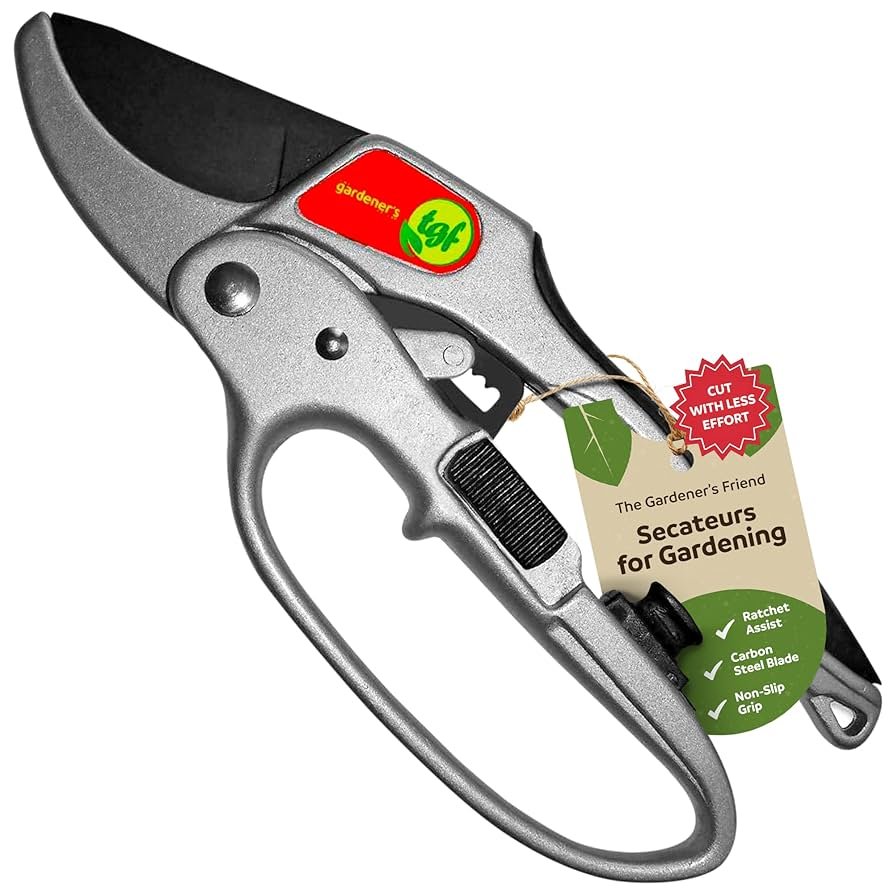
Are you tired of struggling with traditional pruning shears that leave your hands sore and your garden looking less than perfect? Imagine effortlessly snipping away at branches and stems with minimal strain and maximum precision.
That’s where ratcheting pruning shears come into play, transforming your gardening experience into a breeze. These innovative tools are designed to make your gardening tasks easier, more efficient, and even enjoyable. But why should you choose ratcheting pruning shears over standard ones?
Stick around, and you’ll discover how these game-changers can revolutionize your gardening routine, saving you time, energy, and even a little bit of your sanity. Ready to unlock the secret to a healthier, more beautiful garden? Keep reading to find out more!

Credit: www.amazon.com
Benefits Of Ratcheting Pruning Shears
Ratcheting pruning shears help gardeners cut branches easily. They use a special mechanism to make cutting less hard.
These shears are good for people who prune a lot. They save effort and make pruning faster.
Reduced Hand Fatigue
Ratcheting pruning shears use a locking system that holds the blade in place. This means you do not have to squeeze hard all the time.
Because of this, your hand does not get tired quickly. You can prune more without pain or discomfort.
Increased Cutting Power
The ratchet mechanism gives extra force to cut thick branches. It multiplies your hand strength for easier cuts.
This power helps cut through tough wood without damaging the shears or your hand.
Precision And Control
Ratcheting pruning shears give better control over each cut. The step-by-step cutting lets you stop at the right moment.
This means you can prune small branches and plants with more accuracy and less damage.
How Ratcheting Mechanism Works
Ratcheting pruning shears use a special mechanism to make cutting easier. This mechanism allows you to cut thick branches with less force.
The ratchet locks the blade in place after each squeeze. This lets you release the handle and squeeze again to finish the cut.
Step-by-step Cutting Process
The ratcheting shears cut branches in small steps. This process reduces hand strain and increases control.
- Place the branch between the blades.
- Squeeze the handles to close the blades partway.
- The ratchet locks the blades in place.
- Release the handles to relax your grip.
- Squeeze the handles again to cut further.
- Repeat until the branch is fully cut.
Comparison With Traditional Shears
Traditional pruning shears cut branches in one full squeeze. This needs more hand strength and can tire your hand quickly.
| Feature | Ratcheting Shears | Traditional Shears |
|---|---|---|
| Cutting Force Needed | Low, due to ratchet steps | High, full squeeze required |
| Ease of Use | Good for thick branches | Best for thin branches |
| Hand Strain | Reduced by step cuts | Can cause quick fatigue |
| Control | Better with ratchet locking | Less precise on tough cuts |
Ideal Uses For Ratcheting Shears
Ratcheting pruning shears help cut branches with less effort. They use a gear system that multiplies your hand strength.
These shears work well in many gardening tasks. They are great for cutting tough or thick plants.
Thick Branches And Stems
Ratcheting shears are perfect for cutting thick branches. The ratchet system lets you cut in stages, so less force is needed.
They can easily handle branches up to 1 inch thick. This makes pruning shrubs and small trees simpler.
- Cut branches without straining your hand
- Work through thicker stems that regular shears cannot
- Make cleaner cuts that help plants heal faster
Hard-to-reach Areas
The design of ratcheting shears helps reach tight spaces. Their slim handles and sharp blades fit well in crowded spots.
They allow you to prune without moving the plant much. This is useful for dense bushes or plants near walls.
- Easily cut branches inside thick foliage
- Work around fences or garden structures
- Reduce damage to nearby plants
Seasonal Pruning Tasks
Ratcheting shears are helpful for seasonal pruning jobs. They save energy during long pruning sessions in spring or fall.
They work well for trimming dead or overgrown branches. This helps plants grow healthy in new seasons.
- Cut back perennials after blooming
- Remove dead wood in autumn
- Shape shrubs before new growth starts

Credit: www.gardengurutools.com
Choosing The Right Ratcheting Shears
Ratcheting pruning shears help you cut thick branches with less effort. Picking the right shears makes your garden work easier and safer.
Look at key features like blade quality, handle comfort, and how long they last. These factors affect your pruning experience.
Blade Material And Sharpness
Good blades cut cleanly and stay sharp longer. Steel blades with special coatings resist rust and keep their edge. Sharp blades make cutting smooth and protect plants from damage.
| Blade Material | Features | Benefits |
| Carbon Steel | Very sharp, can rust | Clean cuts, needs drying |
| Stainless Steel | Rust-resistant, less sharp | Low maintenance, durable |
| Chrome-plated Steel | Rust-resistant, sharp | Long-lasting, smooth cuts |
Handle Design And Comfort
Handles should fit your hand and reduce strain. Soft grips and ergonomic shapes help you prune longer without pain.
- Look for cushioned grips to avoid blisters
- Choose handles shaped to fit your hand size
- Non-slip materials improve safety
- Lightweight handles ease wrist movement
Durability And Maintenance
Strong shears last longer and work well. Check for rust resistance and easy cleaning. Regular oiling keeps parts moving smoothly.
| Feature | Why It Matters | Care Tips |
|---|---|---|
| Rust Resistance | Prevents blade damage | Wipe dry after use |
| Strong Joints | Keep blades aligned | Tighten screws if loose |
| Easy Cleaning | Remove sap and dirt | Use soapy water and dry |
| Oiling Mechanism | Reduces wear and tear | Apply oil monthly |
Tips For Maximizing Efficiency
Ratcheting pruning shears help you cut branches with less effort. Using them right makes your work faster and easier.
Follow simple tips to get the best results and keep your tool in good shape.
Proper Cutting Techniques
Hold the shears firmly and position the blade at the right angle. Cut small branches first to avoid damage.
Make clean cuts to help plants heal quickly and reduce strain on the tool.
- Cut at a 45-degree angle for best results
- Use smooth, steady pressure while cutting
- Trim branches under 1 inch thick for easier cutting
- Avoid twisting or forcing the shears
Regular Tool Care
Keep your pruning shears clean and sharp for better cuts. Wipe off sap and dirt after each use.
Oiling the moving parts helps the tool work smoothly and prevents rust.
- Clean blades with a damp cloth after use
- Sharpen blades regularly with a sharpening stone
- Apply light oil to joints and blades
- Store shears in a dry place
Safety Precautions
Wear gloves to protect your hands from cuts and scratches. Always keep fingers away from the blade.
Check the tool before use to make sure it is working well and locked when not in use.
- Wear protective gloves and eye protection
- Keep shears locked when carrying or storing
- Do not use damaged or loose shears
- Cut away from your body and others

Credit: www.amazon.ca
Frequently Asked Questions
What Are Ratcheting Pruning Shears Used For?
Ratcheting pruning shears are designed for cutting thick branches with less effort. They provide better leverage and control. These shears are ideal for gardeners needing to prune tough or woody plants efficiently and safely.
How Do Ratcheting Pruning Shears Reduce Hand Fatigue?
They use a ratchet mechanism to divide the cutting into stages. This reduces the force needed per cut. Users experience less strain, making them perfect for extended pruning sessions or users with weaker hand strength.
Are Ratcheting Pruning Shears Better Than Standard Shears?
Yes, ratcheting shears offer improved cutting power and ease. They handle thicker branches with less effort. Standard shears may struggle with hard wood, while ratcheting shears ensure cleaner, smoother cuts.
Can Ratcheting Pruning Shears Handle Thick Branches?
Absolutely, they are specifically designed for thick and tough branches. The ratchet mechanism increases cutting power, allowing easier trimming of dense or woody stems without damaging the tool or your hands.
Conclusion
Ratcheting pruning shears make cutting branches easier and faster. They reduce hand strain and help you work longer. These shears give clean cuts that help plants heal well. They suit all gardeners, from beginners to experts. Choosing the right tool improves your garden’s health and look.
Small effort, big results. Try ratcheting pruning shears for your next gardening task. You will notice the difference quickly. Simple, efficient, and built to last. A smart choice for better pruning every time.
