
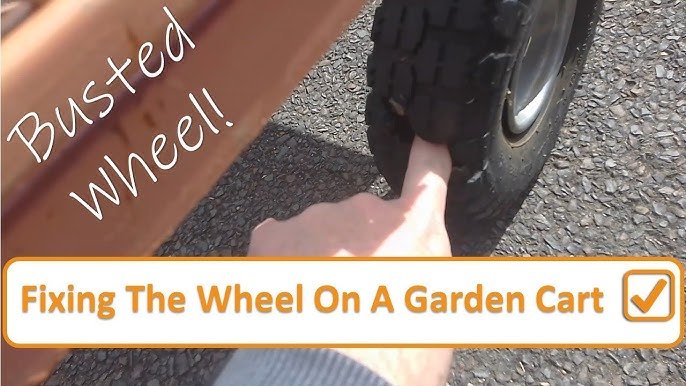
Is your garden cart wobbling instead of rolling smoothly? A broken or stuck wheel can turn your gardening chores into a frustrating challenge.
Before you consider replacing your garden cart, let’s explore how you can easily fix that wheel and get back to your gardening projects. Imagine the satisfaction of restoring your trusty cart to its former glory, saving both time and money.
In this guide, you’ll discover simple steps to diagnose and repair your garden cart wheel, ensuring you can transport soil, plants, and tools without a hitch. Ready to roll up your sleeves and dive in? Let’s fix that wheel together and bring ease back to your gardening routine.
Common Wheel Problems
Garden carts often face wheel issues that stop them from working well.
Fixing these problems can make your cart smooth and easy to use again.
Flat Tires
Flat tires happen when the tire loses air or gets a hole. This makes the cart hard to move.
Check the tire for nails or sharp objects. You can patch small holes or replace the tire if needed.
Loose Bearings
Bearings let the wheel turn smoothly. Loose bearings cause wobbling and noise.
- Remove the wheel from the axle
- Check the bearings for damage or dirt
- Tighten or replace the bearings
- Grease the bearings before putting the wheel back
Bent Axles
Bent axles make the wheel sit unevenly. This causes rough movement and wear on tires.
You can check the axle by spinning the wheel. If it wobbles, the axle might be bent.
| Signs of Bent Axle | Fix |
|---|---|
| Wheel wobbles when spun | Straighten or replace the axle |
| Uneven tire wear | Check axle alignment |
| Cart pulls to one side | Inspect wheel and axle closely |
Worn Out Treads
Treads on the tires give grip on rough ground. Worn treads cause slipping and less control.
Look at the tire surface. If the treads are smooth, replace the tire for safety and ease.

Credit: www.youtube.com
Tools And Materials Needed
Fixing a garden cart wheel requires the right tools and materials. Using proper items makes the repair easier and safer.
This guide lists the basic tools, replacement parts, and lubricants you will need. Prepare them before starting the repair.
Basic Hand Tools
You need simple hand tools to remove and install the wheel parts. These tools help you work carefully and efficiently.
- Wrench set for loosening nuts and bolts
- Screwdrivers (flathead and Phillips) for screws
- Pliers to grip and pull small parts
- Hammer for tapping stuck parts
- Socket set for wheel axle nuts
- Adjustable wrench for various sizes
Replacement Parts
Check the wheel for worn or broken parts. You may need to replace some to restore full function and safety.
| Part | Description | Common Size |
| Wheel | Plastic or metal wheel with tread | 10 to 16 inches diameter |
| Axle | Metal rod that holds the wheel | 3/8 to 1/2 inch diameter |
| Bearings | Allow smooth wheel rotation | Standard ball bearings |
| Washers | Distribute load on nuts | Varied sizes |
| Lock nuts | Secure axle in place | Matching axle thread |
Lubricants And Sealants
Lubricants reduce friction and noise in the wheel. Sealants keep dirt and water out of the moving parts.
- Grease for axle and bearings
- WD-40 or similar spray lubricant
- Silicone spray to repel water
- Thread locker to secure nuts
Removing The Wheel
Fixing a garden cart wheel starts with removing it safely. This step helps you check for damage and replace parts.
Follow clear steps to take off the wheel without hurting yourself or the cart.
Safety Precautions
Safety is important before you remove the wheel. Wear gloves to protect your hands from sharp edges.
Make sure the cart is on a flat surface to stop it from moving. Use wheel chocks if needed to keep it steady.
- Wear sturdy gloves
- Place the cart on flat ground
- Use wheel chocks to prevent rolling
- Have tools ready before starting
Step-by-step Removal Process
First, flip the garden cart so you can access the wheel easily. Use a jack if needed to lift it.
Next, find the axle pin or bolt holding the wheel. Use a wrench or pliers to loosen and remove it carefully.
- Flip or lift the cart to reach the wheel
- Locate the axle pin or bolt
- Use a wrench or pliers to loosen the fastener
- Remove the wheel by sliding it off the axle
- Keep all parts in a safe place for reassembly
Credit: www.vevor.com
Fixing Flat Tires
Flat tires on a garden cart wheel can stop your work. Fixing them helps you use the cart again. You can patch or replace the tube inside the tire. Proper inflation keeps the tire working well.
Learning how to repair flat tires saves money and time. Follow simple steps to fix your garden cart wheel.
Patching Tubes
Patching a tube is a good choice if the hole is small. Start by removing the wheel from the cart. Then take out the inner tube carefully.
Find the hole by inflating the tube slightly and listening or feeling for air leaks. Dry and clean the area around the hole before patching.
- Roughen the tube surface with sandpaper.
- Apply rubber cement and wait until it is sticky.
- Press the patch firmly on the hole.
- Let the patch dry before reinstalling the tube.
Replacing Tubes
Replace the tube if the damage is large or if the tube is old. Remove the wheel and take out the old tube. Check the tire and rim for sharp objects.
Place a new tube inside the tire. Make sure it fits well and is not twisted. Put the tire back on the rim carefully.
- Remove the wheel from the cart.
- Use tire levers to take off the tire.
- Take out the damaged tube.
- Check the tire inside for nails or glass.
- Insert the new tube evenly.
- Put the tire back on the rim.
- Reattach the wheel to the cart.
Inflating Correctly
Inflate the tube to the right pressure. Too little air causes flats. Too much air can burst the tube. Check the tire sidewall for the correct pressure range.
Use a hand pump or air compressor to fill the tire. Stop pumping when you reach the recommended pressure. Test the tire by pressing it with your hand.
- Find the pressure range on the tire sidewall.
- Use a pump with a pressure gauge.
- Inflate slowly to the correct pressure.
- Check the tire firmness by hand.
- Adjust pressure if needed.
Tightening Or Replacing Bearings
Garden cart wheels need smooth bearings to roll well. Tightening or replacing bearings can fix a wobbly wheel.
Proper care of bearings helps your cart last longer and work better.
Checking Bearing Condition
Look for signs of worn or damaged bearings. Remove the wheel to inspect it closely.
If the wheel feels rough or wobbly, the bearings might be dirty or broken.
- Spin the wheel by hand to feel for rough spots.
- Check for noise or resistance while spinning.
- Look for rust, dirt, or cracks on the bearing.
Adjusting Bearings
Sometimes bearings loosen and cause wobbling. Tighten the bearings to fix this.
Use a wrench to tighten the nuts on the wheel axle. Do not overtighten, or the wheel will not spin well.
- Remove the wheel from the cart.
- Use a wrench to tighten the axle nut slightly.
- Spin the wheel to check for smooth movement.
- Repeat until the wheel spins freely without wobbling.
Installing New Bearings
If bearings are damaged or old, replace them with new ones. This improves wheel performance.
Remove the old bearings carefully and clean the axle. Press new bearings into place.
- Remove the wheel from the cart.
- Take off the wheel hub to access bearings.
- Remove old bearings using a bearing puller or hammer gently.
- Clean the hub and axle of dirt and rust.
- Press new bearings into the hub evenly.
- Reassemble the wheel and tighten the axle nut properly.
- Test the wheel to ensure it spins smoothly.
Straightening Bent Axles
Bent axles on a garden cart can make it hard to move. Fixing them helps the cart work smoothly again. Straightening bent axles saves money and time.
This guide shows how to check the axle, the tools needed, and when to replace it if needed.
Assessing The Damage
Look closely at the bent axle before fixing it. Check how much it is bent and if there are cracks or breaks. Spin the wheel to see if it wobbles.
If the axle is only slightly bent, you can try straightening it. If it is badly damaged, it may need replacement.
Tools For Straightening
You need a few simple tools to straighten a bent axle. Use tools that help you apply steady force to the metal.
- Hammer or rubber mallet
- Bench vise or sturdy clamps
- Protective gloves
- Measuring tape or ruler
- Metal block or sturdy surface
These tools help you bend the axle back carefully without causing more damage.
When To Replace The Axle
Replace the axle if it is cracked, broken, or bent too much to fix. A damaged axle can be unsafe and cause more problems.
If the wheel still wobbles after straightening, or if the axle shows signs of rust or wear, it is better to get a new one.
Maintaining Wheel Performance
Keeping your garden cart wheels in good shape helps them last longer. Clean wheels work better and make your tasks easier.
Regular care prevents damage and saves you from costly repairs. Focus on cleaning, lubrication, and proper storage.
Regular Cleaning
Dirt and debris can slow down your garden cart wheels. Clean them after every use for smooth movement.
- Remove mud and leaves with a brush
- Use water to wash off sticky dirt
- Dry wheels completely before storing
- Check for stones stuck in the treads
Lubrication Tips
Lubrication keeps the wheel parts moving freely and reduces wear. Use the right oil or grease for best results.
| Lubricant Type | Use | Frequency |
| Light machine oil | Axle and bearings | Every 3 months |
| Grease | Heavy load wheels | Every 6 months |
| Dry lubricant | Dusty conditions | Monthly |
Storage Recommendations
Proper storage protects wheels from damage and rust. Keep your garden cart in a dry and safe place.
- Store cart indoors or under a cover
- Keep wheels off wet ground
- Check wheels monthly for rust or cracks
- Remove wheels if storing long term

Credit: www.reddit.com
When To Seek Professional Help
Fixing a garden cart wheel can be simple. Some problems need expert attention.
Knowing when to call a professional saves time and prevents more damage.
Wheel Frame Is Bent Or Broken
If the wheel frame is bent or cracked, fixing it yourself is hard. A bent frame can cause unsafe use.
Experts have the right tools to repair or replace the frame safely and correctly.
Wheel Bearings Are Damaged
Wheel bearings help the wheel turn smoothly. If they are worn out or broken, the wheel won’t roll well.
Replacing bearings needs special tools and skills. A professional can fix this quickly and properly.
Wheel Hub Is Stripped Or Cracked
The hub holds the wheel on the axle. A cracked or stripped hub can cause the wheel to fall off.
This kind of damage is hard to repair at home. Professionals can replace the hub to ensure safety.
Axle Is Bent Or Broken
A bent or broken axle affects the wheel’s alignment and movement. It can make the cart unsafe to use.
Fixing or replacing the axle requires skill and tools. A professional can handle this properly.
Multiple Problems Exist
If the wheel has many problems at once, repair can be complicated. Trying to fix all issues may cause more damage.
A professional can assess all damages and offer the best repair or replacement options.
Frequently Asked Questions
How Do I Fix A Flat Garden Cart Wheel?
To fix a flat garden cart wheel, first remove the wheel. Check for punctures or leaks in the tire. Patch small holes or replace the tube if needed. Inflate the tire to the recommended pressure and reattach the wheel securely.
What Tools Are Needed To Repair A Garden Cart Wheel?
You need a wrench, tire levers, a patch kit or replacement tube, and an air pump. These tools help remove the wheel, fix leaks, and reinflate the tire quickly and efficiently.
How Can I Prevent Garden Cart Wheel Damage?
Regularly check tire pressure and remove debris from the wheels. Avoid overloading the cart and store it in a dry place. Proper maintenance extends wheel life and prevents common damage.
When Should I Replace My Garden Cart Wheel?
Replace the wheel if the tire is severely damaged, the rim is bent, or the axle is broken. Persistent leaks or worn-out tread also indicate it’s time for a new wheel.
Conclusion
Fixing a garden cart wheel is easier than it seems. Follow each step with care and patience. Use the right tools to avoid extra damage. Check the wheel regularly to keep it working well. A smooth wheel makes gardening tasks faster and less tiring.
Small repairs save money and extend the cart’s life. Keep your garden cart ready for any job ahead. Simple maintenance helps you enjoy gardening more. Don’t let a broken wheel slow you down. Take action and get your cart rolling again.
