

Is your lawn looking less lush and more like a patchwork quilt of brown and green? If you’ve noticed that your grass isn’t thriving as it should, the culprit might be a thick layer of thatch smothering your lawn.
Thatch is that pesky layer of dead grass, roots, and debris that sits just above the soil, and it can block water, air, and nutrients from reaching the roots of your grass. But before you reach for chemical solutions or expensive tools, consider the natural ways to dethatch your lawn.
These methods not only promote a healthier lawn but are also eco-friendly and cost-effective. Imagine the satisfaction of watching your lawn flourish with a vibrant green hue, all thanks to simple, natural techniques you can apply yourself. Ready to transform your lawn into the envy of the neighborhood? Let’s dive into how you can gently and effectively dethatch your lawn using nature’s own remedies.
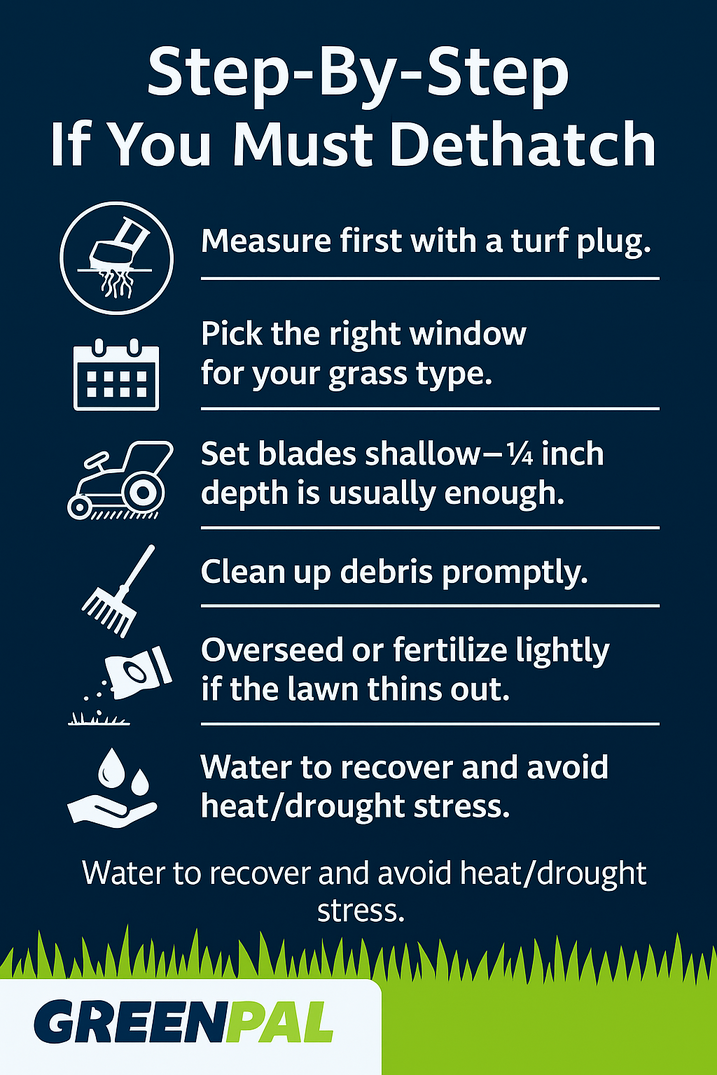
Credit: www.yourgreenpal.com
Why Dethatching Matters
Dethatching is the process of removing a layer of dead grass and roots. This layer is called thatch. Too much thatch can harm your lawn.
Removing thatch helps your grass grow strong and healthy. It lets water, air, and nutrients reach the soil better.
Impact Of Thatch On Lawn Health
Thatch stops water from soaking into the soil. This makes the grass roots dry and weak. It also blocks air from reaching roots.
Thatch can cause disease and pests. It gives bugs a place to hide and grow. Thick thatch makes your lawn less green and patchy.
- Reduces water and nutrient absorption
- Blocks air flow to roots
- Increases risk of pests and diseases
- Leads to thin, unhealthy grass
Signs Your Lawn Needs Dethatching
Your lawn may need dethatching if it feels spongy when you walk on it. This means the thatch layer is thick.
Look for brown patches or areas where grass grows slowly. Also, water may run off instead of soaking in.
- Spongy or springy feel underfoot
- Brown or bare spots in the grass
- Water pooling or running off the lawn
- Grass blades look thin or weak
Tools For Natural Dethatching
Dethatching your lawn naturally helps keep grass healthy. Using the right tools makes the job easier and safer.
This guide explains two common tools for natural dethatching and how to use them well.
Manual Rakes And Their Benefits
Manual rakes are simple tools that help remove dead grass and debris. They are easy to use and gentle on your lawn.
- Manual rakes do not use electricity or fuel.
- They allow you to control the pressure on the grass.
- Rakes are quiet and eco-friendly.
- They help improve lawn health by letting air and water reach roots.
- Manual rakes are affordable and need little maintenance.
Using A Power Rake Safely
Power rakes speed up dethatching but require care to avoid damage or injury. Follow safety steps before and during use.
| Safety Tips | Details |
| Wear protective gear | Use gloves, goggles, and sturdy shoes |
| Check the area | Remove stones, sticks, and toys before raking |
| Adjust depth settings | Set blades to remove only thatch, not soil |
| Work slowly | Move at a steady pace to avoid scalping lawn |
| Turn off when not in use | Stop the machine before adjusting or cleaning |
Top Natural Dethatching Methods
Dethatching your lawn naturally keeps it healthy and green. Removing thatch helps air, water, and nutrients reach the roots. It also prevents pests and diseases.
Below are three easy and natural ways to dethatch your lawn. Each method suits different lawn types and conditions.
Raking Techniques For Beginners
Raking is a simple way to remove thatch by hand. It works well on small to medium lawns with thin thatch layers.
- Use a spring-tine rake for loosening thatch.
- Rake in one direction to lift debris.
- Collect the loosened thatch with a garden rake.
- Do not rake too hard to avoid damaging grass roots.
- Best done during dry weather for easier cleanup.
Aeration Combined With Dethatching
Aeration helps dethatching by creating holes in the soil. This allows air and water to reach deeper roots. Combining aeration with dethatching improves lawn health.
| Tool | Function | Best Use |
| Core Aerator | Removes small soil plugs | Lawns with compacted soil |
| Slicing Aerator | Cuts into the soil surface | Looser soil, light thatch |
| Power Rake | Loosens and removes thatch | Thick thatch layers |
Using Lawn Mowers For Thatch Control
You can reduce thatch buildup using your lawn mower. Proper mowing cuts grass evenly and prevents thick thatch.
- Set mower blades higher to avoid cutting too short.
- Use a mulching mower to chop grass finely.
- Mow regularly to stop thatch from forming.
- Clean mower blades after each use.
- Avoid mowing wet grass to prevent clumping.
Best Time To Dethatch Your Lawn
Dethatching your lawn helps it stay healthy and green. Removing thatch lets water and nutrients reach the roots better.
Knowing the right time to dethatch is key. It depends on the season and weather conditions.
Seasonal Considerations
Choose the season when your grass grows fast. This helps the lawn recover quickly after dethatching.
- Early spring is good for cool-season grasses like fescue and bluegrass.
- Late summer to early fall works well for warm-season grasses like Bermuda and zoysia.
- Avoid dethatching during dormancy periods when grass growth slows.
Weather Conditions To Avoid
Dethatching requires dry soil and mild weather. Wet or very hot days can harm your lawn.
| Weather Condition | Reason to Avoid |
| Heavy Rain | Soil becomes compacted and roots can be damaged |
| Extreme Heat | Grass may dry out and struggle to recover |
| Frost or Snow | Grass is dormant and cannot heal after dethatching |
| Very Dry Conditions | Can stress the grass and slow recovery |
Post-dethatching Lawn Care
After dethatching your lawn, proper care is important. It helps your grass heal and grow strong.
Following a good care plan improves lawn health and prevents damage from dethatching.
Watering And Fertilizing Tips
Water your lawn gently but deeply after dethatching. This helps the roots absorb moisture well.
Fertilize with a balanced, slow-release fertilizer to provide steady nutrients. Avoid over-fertilizing to prevent stress.
- Water early in the morning to reduce evaporation
- Keep soil moist but not soggy
- Apply fertilizer about a week after dethatching
- Use fertilizers with nitrogen, phosphorus, and potassium
Overseeding For Lawn Recovery
Overseeding helps fill bare spots caused by dethatching. It promotes thick, healthy grass growth.
Choose grass seed that matches your lawn type. Spread seeds evenly and keep soil moist until they sprout.
- Rake lightly to loosen soil before seeding
- Use about 5 to 10 pounds of seed per 1,000 square feet
- Water daily with light sprays until grass grows
- Avoid heavy foot traffic on new grass
Credit: dengarden.com
Preventing Thatch Build-up Naturally
Thatch is a layer of dead grass and roots that builds up on your lawn. It can stop water and nutrients from reaching the soil. Preventing thatch helps keep your lawn healthy and green.
There are natural ways to stop thatch from building up. These methods focus on good lawn care habits and choosing the right grass.
Proper Mowing Practices
Mowing your lawn the right way reduces thatch build-up. Cut the grass at the right height and avoid cutting too short.
Use sharp mower blades to make clean cuts. This helps grass heal faster and reduces stress on the lawn.
- Set mower height to 2.5 to 3 inches
- Never remove more than one-third of the grass blade
- Mow regularly to avoid cutting too much at once
- Keep mower blades sharp for clean cuts
Choosing The Right Grass Types
Some grass types are less likely to form thatch. Choose grasses that grow well in your climate and soil.
Grasses with fine blades and deep roots usually have less thatch. They break down dead material faster, keeping your lawn healthy.
- Cool-season grasses: Kentucky bluegrass, fescue, ryegrass
- Warm-season grasses: Bermuda, zoysia, buffalo grass
- Choose grass that fits your local climate
- Use grass with good disease resistance

Credit: www.thisoldhouse.com
Frequently Asked Questions
What Is Lawn Thatch And Why Remove It Naturally?
Lawn thatch is a layer of dead grass and roots. Removing it naturally improves soil health and grass growth. It prevents diseases and enhances water absorption without harsh chemicals, promoting a greener, healthier lawn.
How Do Natural Dethatching Methods Work?
Natural dethatching uses manual rakes or aerators to loosen and remove thatch. It encourages beneficial microbes to break down organic debris. These methods improve soil aeration and nutrient flow, supporting healthy grass growth without damaging the lawn.
When Is The Best Time To Dethatch A Lawn Naturally?
The best time to dethatch naturally is during active grass growth. Early spring or early fall are ideal for cool-season grasses. For warm-season grasses, late spring to early summer works best. This timing ensures quick recovery and minimal stress.
Can Natural Dethatching Prevent Lawn Diseases?
Yes, natural dethatching reduces thatch buildup, which harbors pests and fungi. By improving air circulation and drainage, it lowers disease risk. Regular dethatching keeps your lawn healthier and more resistant to infections naturally.
Conclusion
Keeping your lawn free from thatch helps grass grow strong and healthy. Natural dethatching methods save money and protect the environment. Simple tools and regular care make a big difference. Healthy soil lets water and nutrients reach grass roots better.
Your lawn will look greener and feel softer underfoot. Small steps taken often lead to great results. Try these natural ways to keep your lawn fresh and lively all year. A little effort goes a long way in lawn care.
