
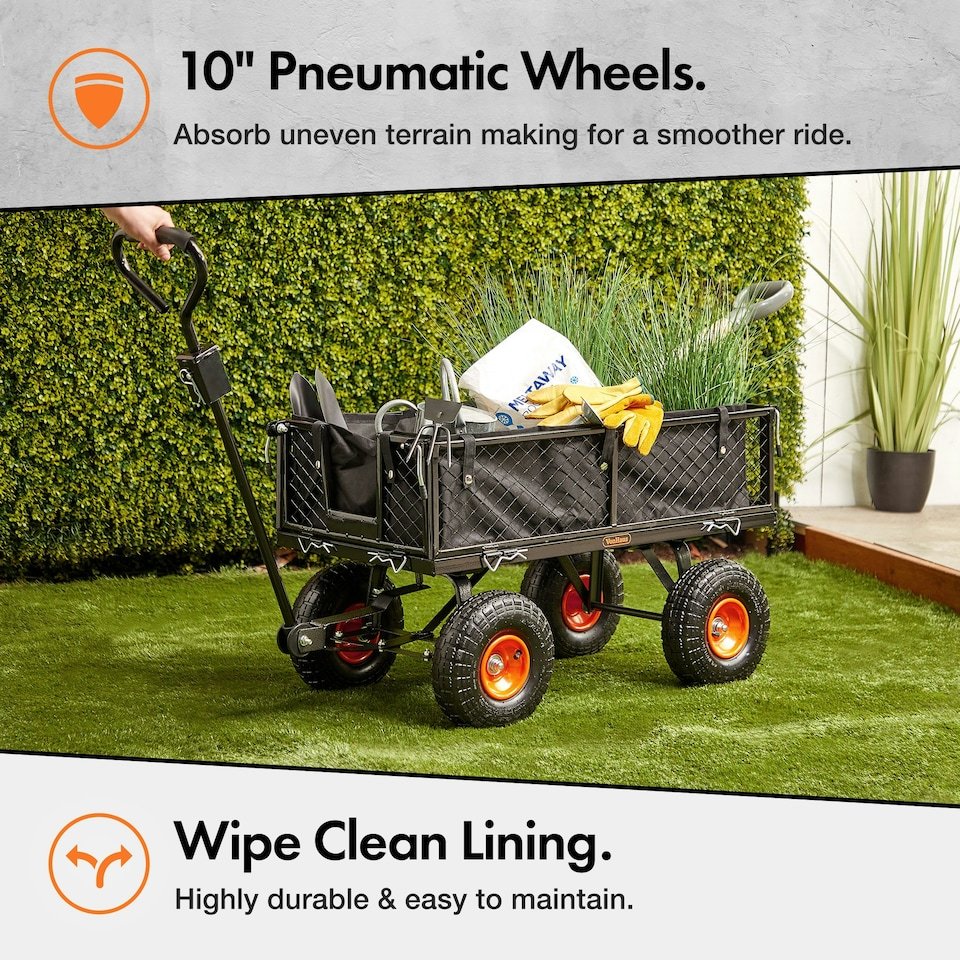
Have you ever struggled to move heavy loads across your garden because the ground is bumpy or uneven? If you own a garden cart, you might be wondering if it can handle rough terrain without tipping over or getting stuck.
Imagine saving time and effort by easily rolling your tools, soil, or plants wherever you need them—even on rocky or sloped surfaces. You’ll discover whether a garden cart is truly up to the challenge of uneven terrain and learn tips to make your gardening tasks smoother and safer.
Keep reading to find out how you can make the most of your garden cart, no matter what kind of ground you’re working on.

Credit: www.amazon.ca
Suitability Of Garden Carts For Uneven Terrain
Garden carts help carry tools, plants, and soil in your yard. They make work easier by reducing trips back and forth.
Using garden carts on uneven terrain can be tricky. Not all carts work well on bumpy or sloped ground.
Types Of Garden Carts
There are different garden carts designed for various needs. Some work better on flat ground, while others handle rough terrain.
Common types include wheelbarrows, two-wheel carts, and four-wheel carts. Each has strengths and limits on uneven surfaces.
- Wheelbarrows:Have one wheel for easy turning but can tip on rough ground.
- Two-wheel carts:More stable than wheelbarrows but harder to turn sharply.
- Four-wheel carts:Very stable and good for heavy loads, but may struggle on steep slopes.
Common Terrain Challenges
Uneven terrain can cause garden carts to tip or get stuck. Rocks, holes, and steep angles make moving loads harder.
Soft or muddy soil also affects how well a cart rolls. Wheels may sink or slip, requiring more effort to push or pull.
- Rocky surfaces:Can block wheels or cause tipping.
- Slopes:Risk of losing control or tipping over.
- Soft soil:Wheels sink and slow movement.
- Roots and bumps:Make pushing difficult and increase chance of damage.
Wheel Design And Terrain Compatibility
Garden carts are useful tools for moving heavy loads. Their wheels play a big role in how well they work on different surfaces. Uneven terrain can be tricky to navigate.
The type of wheel design affects the cart’s stability and ease of use. Choosing the right wheels helps the cart move smoothly on rough ground.
Pneumatic Vs Solid Wheels
Pneumatic wheels are filled with air. They act like small shock absorbers. These wheels handle bumps and holes well.
Solid wheels are made of hard rubber or plastic. They do not flatten or puncture. Solid wheels work best on smooth or packed surfaces.
- Pneumatic wheels absorb shocks better on rough terrain
- Solid wheels need less maintenance and never go flat
- Pneumatic wheels may need air refills and repairs
- Solid wheels are heavier but more durable on flat ground
Wheel Size And Tread Patterns
Bigger wheels roll over bumps easier than small wheels. They reduce the effort needed to pull the cart. Small wheels can get stuck in holes or rocks.
Tread patterns on wheels help grip the ground. Deep treads work well on mud or loose soil. Smooth tread wheels slide more on uneven ground but are easier to clean.
- Large wheels improve balance on uneven terrain
- Deep treads increase traction in soft or slippery soil
- Smooth wheels are better for hard, flat surfaces
- Wheel size and tread should match the garden’s surface
Cart Construction For Rough Surfaces
Using a garden cart on uneven terrain needs strong construction. The cart must handle bumps and rough ground without breaking.
A well-built cart lasts longer and works better on rough surfaces. Its frame and load capacity are important factors.
Frame Strength And Materials
The frame needs to be sturdy and made from strong materials. Steel frames are common because they resist bending and breaking.
Aluminum frames are lighter but still strong enough for rough use. Wood frames might not hold up well on bumpy terrain.
- Steel frames resist dents and cracks
- Aluminum frames are lightweight and durable
- Wood frames can crack or warp easily
- Powder-coated finishes protect metal from rust
Load Capacity Considerations
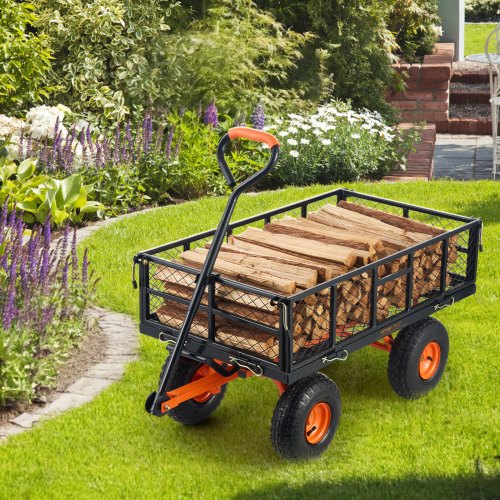
The cart must carry heavy loads without tipping or breaking. Uneven ground adds stress to the frame and wheels.
Check the load capacity to match your garden needs. Higher capacity carts often have reinforced frames and larger wheels.
- Match load capacity to typical garden materials
- Use carts with strong axles for heavy loads
- Larger wheels improve movement on uneven ground
- Do not exceed the cart’s weight limit
Credit: www.vevor.com
Techniques For Maneuvering On Uneven Ground
Garden carts are helpful tools for moving items across various terrains. Uneven ground can be tricky, but with the right techniques, you can maneuver easily.
This guide will help you use your garden cart effectively on bumpy surfaces. Learn how to balance weight and steer properly.
Balancing And Weight Distribution
Proper balance prevents the cart from tipping over. Distribute weight evenly to maintain stability on uneven surfaces.
- Place heavier items at the center of the cart.
- Ensure lighter items are placed around the heavier ones.
- Check that items do not shift during movement.
Using Handles And Steering
Using handles correctly makes steering on uneven terrain easier. Gripping firmly helps you maintain control.
Remember to:
- Use both hands for a firm grip.
- Steer slowly to avoid sudden movements.
- Adjust direction gradually for better control.
Modifications To Improve Performance
Garden carts often face challenges on uneven terrain. Simple modifications can enhance their performance. These changes help the cart move smoothly over bumpy surfaces.
Adjustments like upgrading the wheels and adding suspension can make a big difference. Let’s explore these options to improve your garden cart.
Upgrading Wheels
Bigger wheels help garden carts move over rough ground. Choose wheels with deep treads for better grip. This change helps the cart roll easily.
Consider using pneumatic tires. These tires are filled with air and provide a smoother ride. They absorb shocks and make the cart more stable.
- Choose larger wheels for better performance
- Pick wheels with deep treads for grip
- Use pneumatic tires for a smoother ride
Adding Suspension Or Shock Absorbers
Suspension systems help with uneven paths. They reduce the impact of bumps on the cart. This makes the cart easier to handle and control.
Installing shock absorbers is another option. They lessen the jolt from rough surfaces. Shock absorbers protect the cart and its contents.
- Install suspension systems for smoother rides
- Add shock absorbers to reduce jolts
- Enhance control and protect your cart
Safety Tips For Uneven Terrain Use
Using a garden cart on uneven ground needs care. Safety helps you avoid accidents and damage.
Follow these safety tips to keep your work safe and easy on rough surfaces.
Avoiding Overloading
Do not put too much weight in your garden cart. Overloading makes it hard to control on uneven terrain.
- Check the cart’s weight limit before loading.
- Distribute weight evenly to keep balance.
- Load heavy items at the bottom to lower the center of gravity.
- Make several trips if needed instead of one heavy load.
Proper Footwear And Handling
Wear sturdy shoes with good grip to avoid slipping. Handle the cart carefully to keep control on rough ground.
| Footwear Type | Why It Helps |
| Closed-toe boots | Protect feet from sharp objects and provide ankle support |
| Rubber-soled shoes | Offer good traction on slippery or loose surfaces |
| Non-slip shoes | Reduce risk of falls on wet or uneven ground |
Push the cart slowly and use both hands for better control. Avoid sudden turns or fast movements.
Top Garden Carts Recommended For Rough Terrain
Garden carts help carry heavy loads across your yard. Uneven terrain can make this task hard. Choosing the right garden cart makes moving easier and safer.
Some carts have special wheels and strong frames. These features help them handle rough ground well. Below are insights from users and experts on the best carts for rough terrain.
User Reviews And Expert Ratings
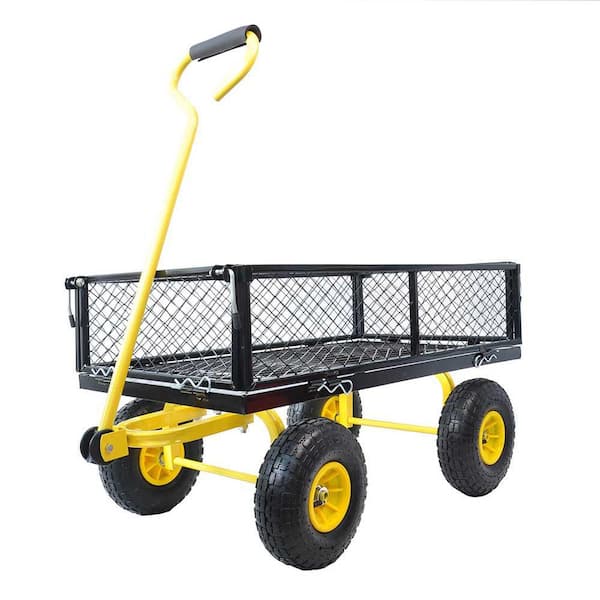
Users praise carts with large, air-filled tires. These tires absorb shocks and roll smoothly on bumpy ground. Metal frames with rust-resistant coating also get high marks. Experts rate carts by durability and ease of use.
- Air-filled tires improve grip and comfort.
- Wide wheelbase adds stability on slopes.
- Steel frames last longer and carry heavy loads.
- Handles with good grip reduce hand strain.
- Foldable designs save space when stored.
Price Vs Performance
Price is important but does not always mean better quality. Many mid-priced carts offer strong performance for rough terrain. Comparing features can help find the best value.
| Model | Price Range | Wheel Type | Weight Capacity | User Rating |
|---|---|---|---|---|
| Rough Rider 500 | $150 – $180 | Large Air Tires | 400 lbs | 4.7/5 |
| Terrain Master Pro | $120 – $140 | Polyurethane Wheels | 350 lbs | 4.5/5 |
| Heavy Hauler XL | $200 – $230 | Inflatable Tires | 450 lbs | 4.8/5 |
| Budget Carry Cart | $80 – $100 | Plastic Wheels | 250 lbs | 3.9/5 |
Credit: www.homedepot.com
Frequently Asked Questions
Can Garden Carts Handle Rough, Uneven Terrain?
Yes, many garden carts are designed with sturdy wheels and frames to manage uneven ground. However, performance varies by model and wheel type.
What Wheel Type Is Best For Uneven Terrain?
Pneumatic tires with deep treads provide better traction and shock absorption on rough surfaces, making them ideal for uneven terrain.
Are Lightweight Garden Carts Suitable For Uneven Ground?
Lightweight carts may struggle on rough terrain due to less stability and strength. Heavier, robust carts perform better on uneven surfaces.
How To Improve Garden Cart Stability On Uneven Terrain?
Choosing wide, large wheels and lowering the cart’s center of gravity enhances stability on bumpy or sloped ground.
Conclusion
Garden carts can handle uneven terrain with the right features. Wide, sturdy wheels help move over bumps and rough patches. Balance and weight distribution also make a big difference. Choose carts made for outdoor use and rough ground. Regular maintenance keeps the cart working well.
Using a garden cart on uneven land is possible and practical. It saves time and effort during gardening tasks. A good cart makes outdoor work easier and less tiring. Try different carts to find the best fit for your needs.

