
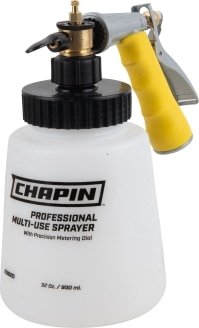
Ever found yourself frustrated with uneven garden sprays or cleaning tasks that take forever? If you’ve been wondering what psi is best for hose end sprayers, you’re not alone.
Choosing the right pressure can transform your hose into a powerful tool, making your outdoor chores more efficient and effective. Imagine effortlessly watering your garden, washing your car, or cleaning your deck with just the right amount of pressure. This guide will reveal the secrets behind selecting the ideal psi, so you can achieve optimal results every time.
Keep reading to discover how to make your hose end sprayer work perfectly for you!
Credit: www.thelawnforum.com
Hose End Sprayers Basics
Hose end sprayers attach to garden hoses for easy spraying. They mix water with chemicals or fertilizers. This tool helps spread liquids evenly over plants or lawns.
Knowing the right psi for your sprayer is key. It affects the spray pattern and coverage. Let’s explore types and common uses of hose end sprayers.
Types Of Hose End Sprayers
Hose end sprayers come in different styles. Each type fits certain jobs and pressure needs. Some use adjustable nozzles, while others have fixed spray patterns.
- Dial Sprayers:Allow you to choose dilution rates. Good for many chemicals.
- Trigger Sprayers:Use a trigger to control spray. Best for small jobs.
- Foamers:Create thick foam for better coverage. Useful for cleaning.
- Battery-Powered Sprayers:Add power for tough spraying. Use higher psi settings.
Common Uses And Applications
Hose end sprayers work well for many outdoor tasks. They help apply pesticides, fertilizers, and cleaning solutions quickly.
| Task | Recommended PSI | Notes |
| Lawn Fertilizing | 20-40 PSI | Even coverage without damage |
| Garden Pest Control | 30-50 PSI | Fine spray for plant leaves |
| House Cleaning | 40-60 PSI | Strong spray for dirt removal |
| Car Washing | 30-50 PSI | Gentle enough to avoid paint damage |
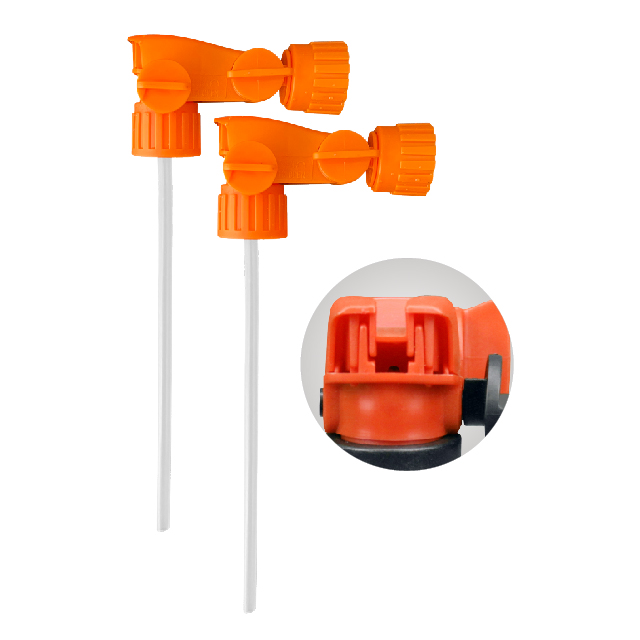
Credit: www.ilotchina.com
Importance Of Psi In Sprayers
PSI stands for pounds per square inch. It measures the pressure of water or liquid in a sprayer.
Choosing the right PSI is important for hose end sprayers. It affects how well the spray works and covers surfaces.
How Psi Affects Spray Performance
The PSI controls the force that pushes liquid out of the sprayer nozzle. If the PSI is too low, the spray may drip or fall in large drops.
High PSI creates a fine mist that spreads evenly but can waste liquid if too strong.
- Low PSI may cause uneven spray and poor coverage.
- High PSI can lead to misting and wind drift.
- Correct PSI balances spray reach and liquid use.
Impact On Coverage And Efficiency
The right PSI helps cover large areas without wasting liquid. It also saves time by spraying quickly and evenly.
| PSI Level | Spray Pattern | Best Use |
| 10-20 | Coarse droplets | Heavy-duty cleaning |
| 20-40 | Medium droplets | General gardening |
| 40-60 | Fine mist | Delicate plants and pesticides |
Recommended Psi Ranges
Choosing the right PSI for your hose end sprayer matters. The pressure affects spray coverage and plant safety.
This guide explains the best PSI ranges for different spraying needs.
Low Psi For Gentle Spraying
Low PSI settings are ideal for delicate plants and light treatments. They produce a fine mist that covers surfaces without damage.
- PSI range: 15 to 30 PSI
- Best for young seedlings and flowers
- Reduces risk of leaf burn
- Conserves liquids by limiting overspray
Medium Psi For General Use
Medium PSI works well for most garden tasks. It balances coverage and pressure for effective spraying.
| PSI Range | Use Case | Notes |
|---|---|---|
| 30 to 50 PSI | Vegetable gardens, shrubs | Good droplet size for coverage |
| 40 to 60 PSI | Lawn treatments, small trees | Stronger spray to reach higher areas |
High Psi For Tough Jobs
High PSI settings handle heavy-duty spraying. Use them for thick weeds and hard-to-reach spots.
Tips for High PSI Use:
- Keep PSI between 60 and 80 for best results.
- Wear protective gear to avoid spray injury.
- Test spray pattern to avoid plant damage.

Credit: www.youtube.com
Matching Psi To Sprayer Types
PSI means pounds per square inch. It shows the pressure of water or liquid in sprayers. Using the right PSI helps sprayers work well.
Different sprayers need different PSI levels. Choosing the correct PSI improves spray coverage and saves liquid.
Adjustable Vs Fixed Psi Sprayers
Adjustable PSI sprayers let you change pressure to fit the job. Fixed PSI sprayers have one set pressure.
Adjustable sprayers work for many tasks. Fixed sprayers are simpler and easier to use.
- Adjustable PSI sprayers give more control
- Fixed PSI sprayers are ready to use right away
- Adjustable types cost more but are versatile
- Fixed types are cheaper and good for simple jobs
Best Psi For Different Sprayer Models
Different sprayer models work best at certain PSI levels. Using the right PSI helps spray evenly and saves liquid.
| Sprayer Model | Recommended PSI | Notes |
|---|---|---|
| Light Duty Hose-End | 20-30 PSI | Good for small gardens and delicate plants |
| Medium Duty Hose-End | 30-40 PSI | Works well for lawns and shrubs |
| Heavy Duty Hose-End | 40-50 PSI | Best for tough weeds and large areas |
| Adjustable Hose-End | 20-50 PSI | Set PSI based on spray need |
Tips For Optimizing Psi
PSI stands for pounds per square inch. It measures the pressure in hose end sprayers. Using the right PSI helps spray evenly and avoid damage.
Too much pressure can waste chemicals and cause leaks. Too little pressure gives a weak spray. Adjusting PSI improves spraying results.
Using Pressure Regulators
Pressure regulators control how much pressure flows through the sprayer. They keep PSI steady, even if water pressure changes.
Using a pressure regulator prevents damage to the sprayer parts. It also helps deliver the right amount of liquid to plants.
- Choose a regulator that fits your sprayer model
- Check the pressure range to match recommended PSI
- Install the regulator close to the sprayer
- Test the pressure after installation
Maintaining Consistent Water Flow
Consistent water flow keeps PSI stable. Fluctuating water flow causes uneven spraying and poor coverage.
Keep the hose free of kinks and blockages. Use a water source with steady pressure for best results.
- Check the hose for bends or damage
- Use a clean water supply without debris
- Open the water valve slowly to avoid pressure spikes
- Use a flow meter to monitor water flow if needed
Common Psi Mistakes To Avoid
Using the right PSI for hose end sprayers is important for good spraying results. Too much or too little pressure can cause problems. This guide explains common PSI mistakes and how to avoid them.
Knowing the risks of wrong PSI helps you protect your sprayer and get even coverage. Read on to learn about the dangers of over-pressurizing and under-pressurizing.
Over-pressurizing Risks
Using too high PSI can damage your hose end sprayer and cause poor spray results. Over-pressurizing puts extra stress on parts and wastes your spray product.
- Can cause leaks or bursts in the hose or nozzle
- Leads to uneven spray patterns and overspray
- Makes the sprayer harder to control
- Wastes chemicals and increases cost
- May shorten the life of the sprayer
Under-pressurizing Issues
Using too low PSI results in weak spray and poor coverage. Under-pressurizing means your sprayer does not deliver enough force for good application.
| Issue | Effect | Why It Happens |
| Weak Spray | Poor coverage of plants | Low pressure reduces spray reach |
| Clogging | Nozzle blocks more easily | Low force fails to clear debris |
| Uneven Application | Some areas get less spray | Inconsistent pressure flow |
| Longer Work Time | More effort needed to finish | Low pressure slows spraying |
Frequently Asked Questions
What Psi Is Ideal For Hose End Sprayers?
The ideal PSI for hose end sprayers is between 30 to 50 PSI. This range ensures proper spray coverage and effective application without damaging the sprayer or plants.
Can Too High Psi Damage Hose End Sprayers?
Yes, too high PSI can damage hose end sprayers. Excessive pressure may cause leaks, uneven spraying, or breakage. Always stay within the recommended PSI range for safety and efficiency.
How Does Psi Affect Spraying Performance?
PSI controls the spray pattern and droplet size. Lower PSI results in larger droplets and less coverage. Higher PSI creates finer mist but may waste product. Proper PSI balances coverage and product use.
Is 40 Psi Suitable For All Hose End Sprayers?
40 PSI is generally suitable for most hose end sprayers. However, always check the manufacturer’s guidelines. Some models may require adjustments for optimal performance and durability.
Conclusion
Choosing the right PSI for hose end sprayers matters a lot. Too high pressure can damage plants or cause uneven spraying. Too low pressure might not spread the liquid properly. Most sprayers work best between 20 and 40 PSI. Always check your sprayer’s instructions.
Adjust pressure to fit your specific needs. This helps you save product and protect your garden. Good pressure means better results with less waste. Keep your plants healthy and your spraying efficient. Simple steps lead to a great spray every time.
