
If you're staring at a lawn peppered with sunny dandelion blooms, you’re not alone. The question "what is the best herbicide for dandelions" has a frustratingly simple answer: it depends. Dandelions aren’t just weeds, they’re resilient perennials with deep taproots that shrug off half-measures. What works in one yard might torch another, depending on grass type, climate, and how much you care about pets or organic gardening.
Our research shows that 70, 95% of young dandelions die with proper selective herbicide use, but mature plants with established taproots often regrow unless treated at the right time. That’s why your choice can’t be generic, it needs to match your exact conditions. Let’s walk through the real deciding factors.
Problem: Why Dandelions Are Hard to Kill—and Why One Herbicide Won’t Fit All
Dandelions aren’t your average weed. Each plant sends down a taproot that can reach 10 inches deep and regenerate if sliced or stressed. They bloom early, produce up to 2,000 seeds per plant, and those fluffy parachutes travel for miles. Most herbicides only kill visible foliage, not the root, so you’ll see yellow flowers again in weeks.
Worse, blanket spraying can damage your grass, harm pollinators, or linger in soil where you plan to grow veggies.
This is why a one-size-fits-all approach backfires. A chemical mix safe for Kentucky bluegrass might burn St. Augustine. A vinegar spray that works in your herb garden could scorch nearby tomato plants.
And if you’ve got kids or dogs, toxicity matters as much as efficacy. The real challenge isn’t finding an herbicide, it’s finding the right one for your specific yard and values.
Quick Answer: The Right Herbicide Depends on Your Lawn, Lifestyle, and Weed Stage
There’s no universal “best” herbicide for dandelions because success hinges on three things: your grass type, the dandelion’s growth stage, and your personal limits (like pet safety or organic preferences). If you’ve got cool-season grass and young weeds, a selective broadleaf killer with 2,4-D will likely do the trick. If you’re growing food or have pets, an organic acetic acid spray might be your only option. And if your lawn’s beyond saving, glyphosate offers a reset, but at the cost of everything green.
As of 2026, manufacturer specs confirm that most effective post-emergent herbicides require reapplication within 2, 4 weeks for full control, especially on mature plants. Don’t expect one-and-done results unless you catch dandelions early.
Core Explanation: How Dandelions Resist Control (and How Herbicides Actually Work)
Dandelions survive because they’re built like tanks. Their taproot stores energy, letting them regrow after mowing or light herbicide hits. They also sense stress, cutting or spraying triggers hormone shifts that accelerate flowering and seed production. Most herbicides work by disrupting plant growth hormones (like auxins) or shutting down photosynthesis, but they need time and the right conditions to move from leaves down to the root.
Systemic herbicides, such as those containing 2,4-D or dicamba, travel through the plant’s vascular system, ideally reaching the root. But cold weather slows this process, and rain within 24 hours can wash it away. Contact herbicides (like vinegar) only burn foliage, leaving the root alive. That’s why timing, temperature, and application method aren’t details, they’re make-or-break factors.
Key Decision Factors: What You Must Know Before Choosing
Before you grab any bottle off the shelf, ask yourself these three questions. Your answers will steer you straight to the right product, and save you money and frustration.
Lawn Type Matters (Cool-Season vs. Warm-Season Grass)
Cool-season grasses (Kentucky bluegrass, fescue, ryegrass) thrive in northern climates and are most vulnerable to herbicide damage in spring. They recover best when treated in early fall. Warm-season grasses (Bermuda, zoysia, St. Augustine) grow actively in summer and shouldn’t be sprayed with broadleaf killers during peak heat, it stresses them unnecessarily.
Rule of thumb: Never apply selective herbicides to warm-season lawns in spring. Wait until late summer or early fall when dandelions are pulling nutrients back into their roots.
Weed Life Stage (Seedling vs. Mature with Taproot)
Young dandelions (under 6 leaves) absorb herbicides quickly and die fast. Mature plants with thick taproots need higher concentrations or repeat applications. If you see puffball seeds, it’s already too late for prevention, you’re playing catch-up.
| Stage | Best Treatment Window | Success Rate |
|---|---|---|
| Seedling | Early spring | 85–95% |
| Rosette | Fall | 75–90% |
| Flowering | Avoid (seeds spread) | <50% |
| Post-bloom | Late fall | 60–75% |
Your Non-Negotiables (Pets, Kids, Organic Gardening, HOA Rules)
If your dog rolls in the grass daily or your toddler eats dirt like a snack, skip synthetic chemicals. Look for OMRI-listed organic options like citric acid or clove oil sprays. HOAs often ban certain active ingredients, check local ordinances before buying. And if you’re growing edibles within 20 feet of treated areas, avoid soil-residual herbicides entirely.
Decision Branches: Match Your Situation to the Right Herbicide
Now that you know your constraints, here’s how to pick. Think of this as your personal herbicide flowchart.
For Lawns: Selective Broadleaf Killers (2,4-D, Dicamba, MCPP)
These are the workhorses of lawn care. They target broadleaf plants (like dandelions) without harming grass, when used correctly. Products like Trimec or Weed-B-Gon contain blends of 2,4-D, MCPP, and dicamba for faster uptake. Apply in fall when dandelions are transporting nutrients downward.
Rainfast in 4, 6 hours; avoid mowing 2 days before or after.
Best for: Homeowners with cool-season lawns, no pets/kids restrictions, and moderate infestations.
For Edible Gardens or Pet Areas: Organic Options (Vinegar-Based, Citric Acid)
Household vinegar (5% acetic acid) works on young weeds but struggles with taproots. Commercial organic sprays use 20, 30% acetic acid plus citric acid or clove oil for better penetration. They’re non-selective, so shield nearby plants, and break down quickly in soil. Reapply every 7, 10 days until gone.
Best for: Vegetable gardens, pet zones, organic growers, or anyone avoiding synthetics.
For Total Reset (No Lawn Left): Non-Selective (Glyphosate)
When dandelions have choked out your grass entirely, glyphosate (Roundup, etc.) kills everything, including roots. Use only as a last resort. Spray on a calm day, wait 7 days, then rake and reseed. Not safe near water sources or edible plants.
Best for: Bare patches, invasive takeover, or complete lawn renovation.
For Prevention: Pre-Emergent Corn Gluten Meal
This natural protein byproduct stops dandelion seeds from germinating. Apply in early spring (before soil hits 55°F) and again in fall. Doesn’t kill existing weeds, only prevents new ones. Takes 2, 3 years for full effect but builds long-term resilience.
Best for: Low-infestation yards wanting chemical-free prevention.
Step-by-Step: How to Apply Without Harming Your Lawn or Environment
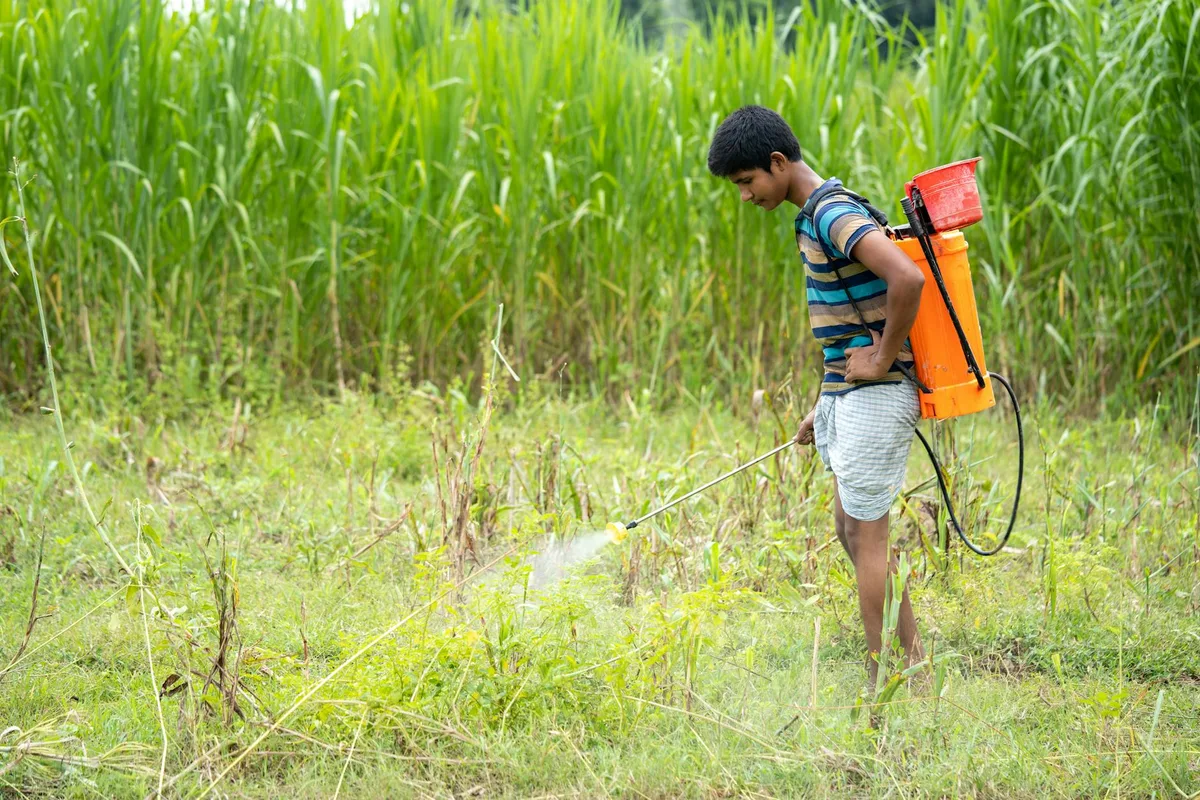
Timing isn’t just a suggestion, it’s the difference between success and wasted product. Apply herbicides when dandelions are actively growing: early fall for cool-season lawns, late summer for warm-season grasses. Avoid windy days (drift kills nearby plants) and rain forecasts (most need 4, 24 hours to absorb). Calibrate your sprayer to deliver even coverage, too little won’t kill roots, too much damages grass.
Mix concentrates exactly per label instructions. Over-diluting reduces efficacy; under-diluting risks phytotoxicity. For spot treatments, use a shielded sprayer or cardboard barrier to protect surrounding grass. Always wear gloves and eye protection, even with organic options, concentrated acetic acid can burn skin.
Common Mistakes That Waste Money and Damage Grass
Spraying mature flowering dandelions is the fastest way to fail. Those plants are diverting energy to seeds, not roots, so herbicides don’t translocate well. You’ll kill the top, but the taproot laughs underground. Another classic error: treating during drought.
Stressed weeds close their stomata, blocking chemical uptake. Wait for rain or irrigate lightly 24 hours before application.
Mowing too soon after spraying cuts off the leaves herbicides need to enter the plant. Give it 48 hours. And never mix products unless the label explicitly allows it, combining 2,4-D with certain surfactants can create volatile compounds that harm grass.
Costs & Coverage: What You’ll Really Pay per Square Foot
Ready-to-use (RTU) sprays cost $5, $15 per quart but only treat 250, 500 sq ft. Concentrates run $10, $30 per quart and cover 1,000, 2,000 sq ft when mixed properly. That makes concentrates 3, 4x more economical for anything beyond a few weeds. Granular herbicides cost $20, $40 per 5,000 sq ft bag but require a spreader and water activation.
Organic options are pricier per use, vinegar-based sprays average $0.50, $1.00 per 1,000 sq ft per application, and often need 2, 3 rounds. Factor in reapplication costs: most effective programs include a follow-up spray 2, 4 weeks later.
Safety & Legal Checks: Labels, Timing, and Local Restrictions
The label isn’t fine print, it’s a legal document. EPA regulations require all herbicides to list active ingredients, signal words (Caution/Warning/Danger), and restricted-use conditions. In California, dicamba applications near vineyards require buffer zones. Some municipalities ban synthetic herbicides entirely, Portland, OR, prohibits 2,4-D on public lands.
Check for water proximity too. Glyphosate and dicamba can runoff into streams, harming aquatic life. If your property drains into a pond or creek, choose low-mobility options like pelargonic acid. And always store chemicals in original containers, away from children and pets.
Final Decision Guide: Your Personalized Herbicide Match
Match your scenario to the right path:
- Cool-season lawn, light infestation, no pets: Selective broadleaf spray (2,4-D + MCPP) in early fall.
- Warm-season lawn, moderate weeds: Wait for late summer, use a low-dicamba formula.
- Edible garden or pet zone: 20% acetic acid spray, applied weekly until gone.
- Total lawn failure: Glyphosate spot-treatment, then reseed after 7 days.
- Prevention-focused: Corn gluten meal in spring and fall, plus hand-pulling rosettes.
If you’re still unsure, start small. Test your chosen herbicide on a few weeds first. Observe for 7 days. If they yellow and wilt without harming grass, scale up.
If not, switch tactics. Dandelions are stubborn, but with the right match, they don’t stand a chance.

