
Is your lawn looking dull, patchy, or just not as healthy as it should be? The problem might be thatch—a thick layer of dead grass and roots blocking water and nutrients from reaching your soil.
If you want a lush, green lawn that stands out, dethatching is the secret weapon you need. But how do you do it right? In this step-by-step dethatching guide, you’ll learn exactly what to do, when to do it, and how to make the process easy and effective.
Keep reading, and discover how to breathe new life into your lawn starting today.
Why Dethatch Your Lawn
Dethatching removes the layer of dead grass and roots on your lawn. This layer is called thatch. Too much thatch stops water and nutrients from reaching the soil.
Removing thatch helps your lawn breathe and grow stronger. It improves the overall health of the grass.
Impact Of Thatch On Lawn Health
Thatch can cause many problems for your lawn. It blocks air, water, and nutrients from reaching the roots. This weakens the grass and makes it more likely to die.
- Stops water from reaching the soil
- Prevents air from reaching roots
- Harbors insects and pests
- Causes grass to become thin and weak
- Increases risk of lawn diseases
Benefits Of Removing Thatch
Removing thatch helps your lawn get the air, water, and nutrients it needs. It makes the grass healthier and more green. Dethatching also helps stop pests and diseases.
| Benefit | Explanation |
| Improved Water Absorption | Water reaches soil faster and deeper |
| Better Air Flow | Roots get enough oxygen for growth |
| Stronger Grass Roots | Grass grows thicker and more resilient |
| Reduced Pest Problems | Less hiding places for insects |
| Healthier Lawn | Less disease and stress on grass |

Credit: www.reddit.com
Tools You’ll Need
Dethatching your lawn requires the right tools for good results. Using proper equipment helps remove dead grass and debris easily.
Below are the main tools to prepare before you start dethatching your lawn step by step.
Manual Rakes
Manual rakes are simple tools that you can use to remove thatch by hand. They are best for small lawns or light thatching jobs.
- Use a rake with sharp, curved blades to pull up dead grass.
- Work in sections to clear the lawn evenly.
- Manual raking is slow but gives you good control.
Power Dethatchers
Power dethatchers use motorized blades or tines to remove thatch faster. They work well on medium to large lawns.
| Type | Best For | Key Feature |
| Electric Dethatcher | Small to medium lawns | Quiet and easy to use |
| Gas Dethatcher | Large lawns | More power, handles thick thatch |
| Tow-Behind Dethatcher | Very large lawns | Attach to lawn tractor |
Additional Lawn Care Tools
Besides dethatching tools, you will need some extras to keep your lawn healthy after dethatching.
- Lawn mower to trim grass before and after dethatching
- Leaf blower or rake to clear debris
- Garden gloves to protect your hands
- Soil aerator to improve soil after dethatching
- Water hose or sprinkler for watering the lawn
When To Dethatch
Dethatching is important to keep your lawn healthy. It removes dead grass and roots that block water and nutrients.
Knowing the right time to dethatch helps your lawn grow strong and green. This guide explains when to dethatch your lawn.
Best Seasons For Dethatching
The best time to dethatch depends on your grass type. Cool-season grasses and warm-season grasses have different schedules.
- For cool-season grasses like fescue and bluegrass, dethatch in early spring or early fall.
- For warm-season grasses like Bermuda and zoysia, dethatch in late spring or early summer.
- Avoid dethatching during drought or extreme heat to prevent lawn damage.
Signs Your Lawn Needs Dethatching
Look for these signs to know if your lawn needs dethatching. Acting early helps your grass stay healthy.
| Sign | Description |
| Spongy Lawn | The lawn feels soft when you walk on it. |
| Excessive Thatch | Thatch layer is more than 1/2 inch thick. |
| Poor Water Absorption | Water pools or runs off instead of soaking in. |
| Patchy Grass Growth | Grass looks thin or bare in some spots. |
| Weed Growth | Weeds start growing more than usual. |
Preparing Your Lawn
Getting your lawn ready is important before dethatching. It helps the dethatching process work better.
Proper preparation protects your grass and soil. It also makes your lawn healthier after dethatching.
Mowing Tips Before Dethatching
Mow your lawn a few days before dethatching. Keep the grass height medium, about 2 to 3 inches.
Do not cut the grass too short. Short grass can get damaged during dethatching.
- Mow the lawn evenly to avoid uneven dethatching
- Remove grass clippings to clear the surface
- Check your mower blade is sharp for a clean cut
Watering Guidelines
Water your lawn lightly one or two days before dethatching. The soil should be moist but not wet.
Wet soil can cause damage and clumping. Dry soil makes dethatching harder and less effective.
- Water early in the morning for best absorption
- Use about half an inch of water
- Avoid watering on the day of dethatching
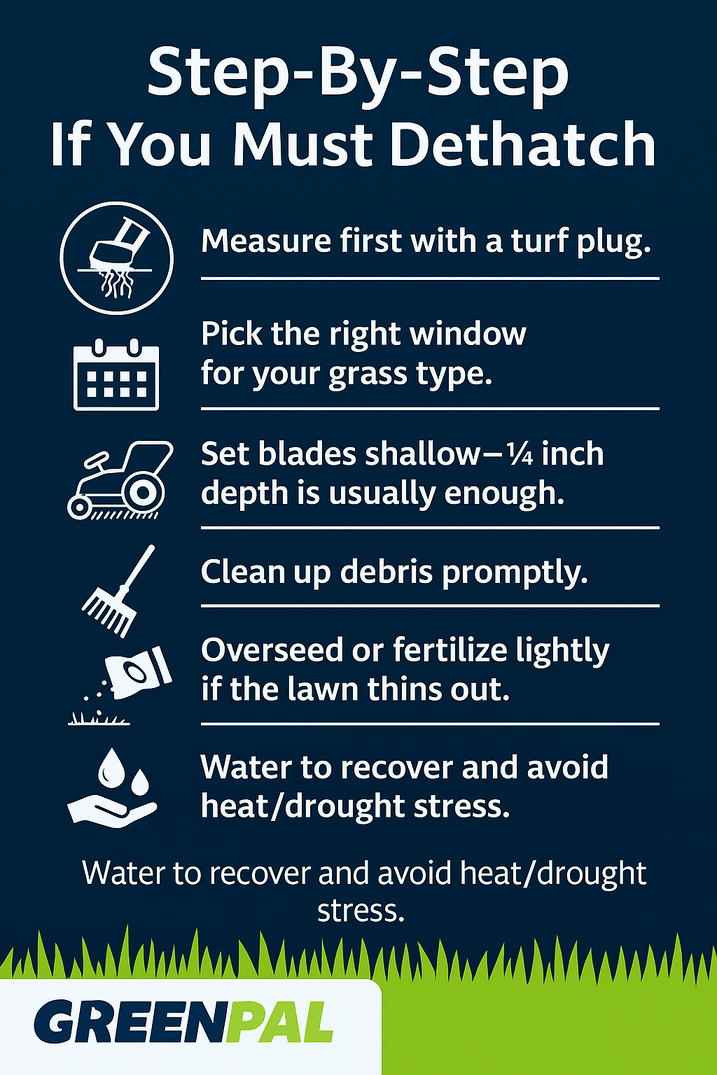
Step By Step Dethatching Process
Dethatching removes the layer of dead grass and roots on your lawn. This helps the grass grow better and stay healthy. You can do this by hand or with a machine.
Follow these simple steps to dethatch your lawn safely and effectively. Each method has its own process and tools.
Using Manual Rake Method
Using a manual dethatching rake is good for small lawns. It is slow but gives you control over the process. You can remove thatch gently without hurting the grass.
- Start by mowing the lawn short.
- Hold the rake at a low angle to the ground.
- Pull the rake towards you, digging into the thatch layer.
- Work in small sections for best results.
- Collect the loosened thatch with the rake as you go.
Operating A Power Dethatcher
A power dethatcher is faster and better for large lawns. It uses rotating blades or tines to pull out thatch. Make sure to follow safety rules when using it.
- Read the machine manual before starting.
- Set the blades to the correct depth for your lawn.
- Wear safety goggles and closed shoes.
- Start the machine and move slowly over the lawn.
- Overlap each pass slightly to cover the whole area.
- Turn off the machine before adjusting settings or moving.
Collecting And Disposing Thatch
After dethatching, the dead grass and roots pile up on the surface. You need to collect and remove this material to keep your lawn clean and healthy.
| Tool | Use | Tip |
|---|---|---|
| Lawn Mower with Bag | Collects thatch while mowing | Use after dethatching is complete |
| Rake | Gather loose thatch into piles | Choose a wide-tooth rake for better results |
| Leaf Blower | Blows thatch into piles | Work with wind direction for easier cleanup |
| Compost Bin or Yard Waste Bags | Dispose of collected thatch | Check local rules for yard waste disposal |
Post-dethatching Care
After dethatching, your lawn needs special care to recover. Follow these steps to ensure your grass grows back healthy and strong.
Proper attention will lead to a lush and vibrant lawn. Let’s explore the essential steps for post-dethatching care.
Lawn Aeration
Aeration helps your lawn breathe by allowing air, water, and nutrients to reach the roots. It is an essential step after dethatching.
Aeration can be done using two main methods:
- Core Aeration: Removes small plugs of soil.
- Spike Aeration: Uses a tool to poke holes in the soil.
Choose the method that suits your lawn best.
Fertilizing And Seeding
Fertilizing and seeding help fill in bare spots and promote even growth. Use a balanced fertilizer to feed your lawn.
- Spread fertilizer evenly across the lawn.
- Apply grass seed to any sparse areas.
- Gently rake the surface to cover seeds with soil.
Watering After Dethatching
Proper watering is crucial after dethatching. It helps the grass recover and grow strong roots.
| Watering Schedule | Amount | Frequency |
| Initial Watering | 1 inch | Immediately after dethatching |
| Following Weeks | 1 inch | Once a week |
| Dry Periods | 1.5 inches | Twice a week |
Common Mistakes To Avoid
When dethatching your lawn, avoid common mistakes to keep it healthy. Dethatching helps your grass grow better, but doing it wrong can harm your lawn.
Learn about these errors so you can ensure your lawn stays green and lush.
Dethatching Too Often
Dethatching too often can stress your lawn. Grass needs time to recover after dethatching. Doing it too much can weaken your grass.
- Dethatch only once a year or every other year
- Observe grass health before another session
- Let grass grow strong between dethatching
Ignoring Lawn Type
Different lawns need different care. Some grass types need more dethatching than others. Knowing your lawn type helps you decide the right approach.
| Lawn Type | Dethatching Frequency |
| Bermuda | Once a year |
| Fescue | Every two years |
| Zoysia | Once a year |
Poor Tool Maintenance
Tools need care too. Dull or broken tools can damage your lawn. Keeping tools clean and sharp is important for good dethatching.
Regularly check your tools:
- Sharpen blades before each use
- Clean tools after dethatching
- Store tools in a dry place
Credit: www.yourgreenpal.com
Maintaining A Thatch-free Lawn
Thatch is a layer of dead grass and roots that builds up on your lawn. It can stop water and nutrients from reaching the soil. Keeping your lawn free of thatch helps grass grow healthy and strong.
Regular care and checking thatch levels can prevent problems. Follow simple steps to keep your lawn fresh and green all year.
Regular Lawn Care Practices
Good lawn care lowers thatch buildup. Mowing, watering, and aeration are key tasks. Proper mowing keeps grass at the right height. Water deeply but less often to encourage roots to grow.
- Mow your lawn regularly, but do not cut grass too short.
- Water early in the morning to reduce evaporation.
- Aerate the soil to help air and water reach roots.
- Use a rake or dethatcher to remove excess thatch yearly.
- Apply fertilizer carefully to avoid overfeeding the lawn.
Monitoring Thatch Levels
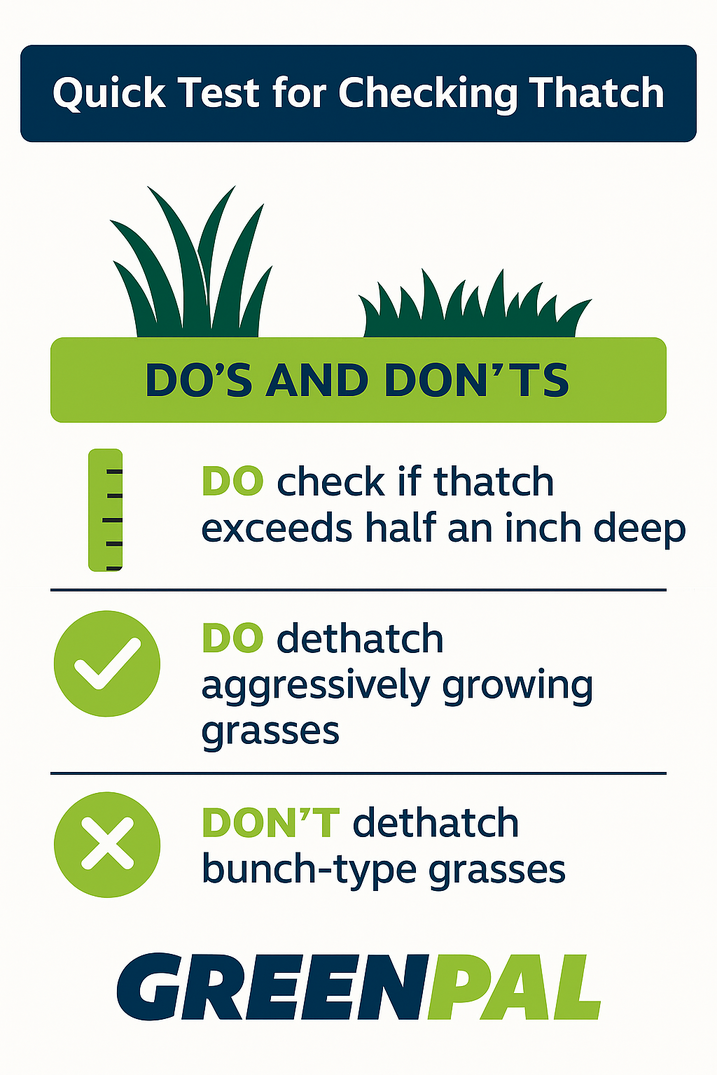
Check your lawn’s thatch layer twice a year. Use a small shovel or garden trowel. Dig a small section to see how thick the thatch is. If it is more than half an inch, dethatching is needed.
| Thatch Thickness | Action Needed |
| Less than 0.5 inch | No action, maintain regular care |
| 0.5 to 1 inch | Light dethatching recommended |
| More than 1 inch | Strong dethatching required immediately |
%20(1).jpg)
Credit: www.yourgreenpal.com
Frequently Asked Questions
What Is Dethatching And Why Is It Important?
Dethatching removes thick layers of dead grass and debris. It improves air, water, and nutrient flow to soil. This helps your lawn grow healthier and prevents disease. Regular dethatching keeps grass roots strong and promotes a lush, green lawn.
When Is The Best Time To Dethatch Your Lawn?
The best time to dethatch is during active grass growth. For cool-season grasses, early spring or early fall works well. For warm-season grasses, late spring to early summer is ideal. This timing allows your lawn to recover quickly after dethatching.
How Often Should You Dethatch Your Lawn?
Most lawns benefit from dethatching once every 1 to 3 years. Over-dethatching can damage grass roots and soil. Check your lawn’s thatch layer; if it’s thicker than 0. 5 inches, it’s time to dethatch. Regular inspection helps maintain a healthy lawn balance.
What Tools Do I Need For Dethatching?
Common dethatching tools include a dethatching rake, power dethatcher, or lawn scarifier. Manual rakes suit small lawns, while power dethatchers handle larger areas. Choose the tool based on your lawn size and dethatching frequency for best results.
Conclusion
Dethatching your lawn helps grass grow healthy and strong. Follow each step carefully to remove dead grass and debris. Use the right tools and work steadily for best results. Regular dethatching keeps your lawn green and fresh. Remember, patience and care make a big difference.
Start small and watch your lawn improve over time. Keep your grass happy and enjoy a beautiful yard all year. Simple steps lead to great results.

