
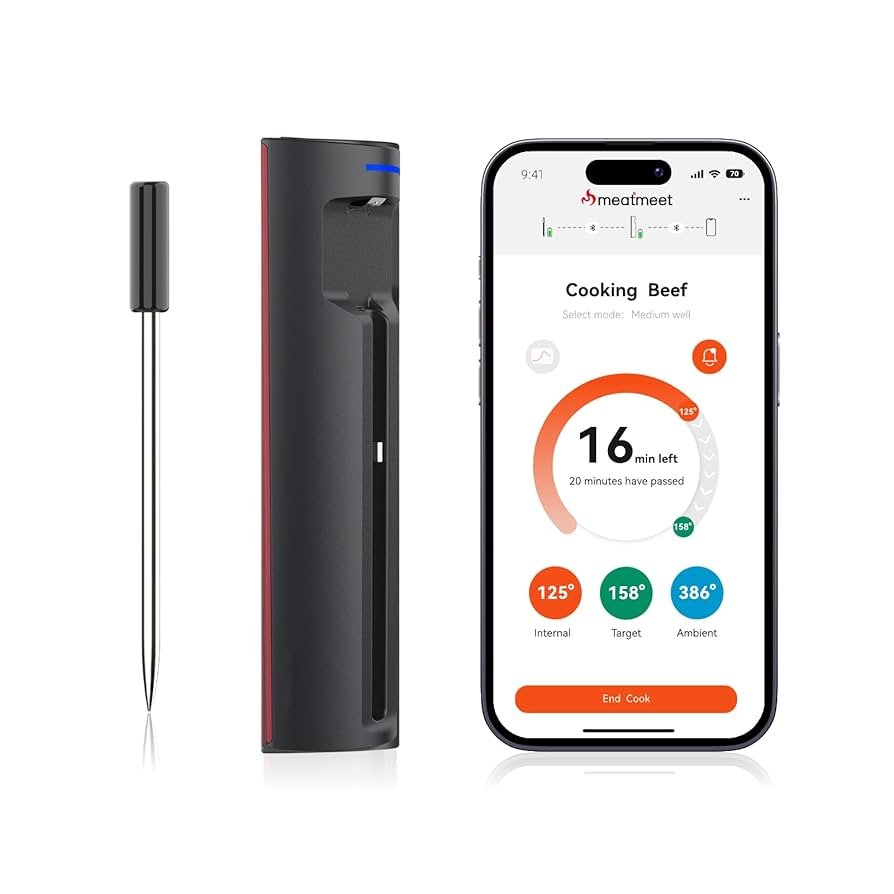
Cooking the perfect meal means getting the temperature just right. But checking your meat without losing heat or risking burns can be tricky.
That’s where a wireless meat thermometer comes in. It lets you monitor your food from a distance, giving you freedom and confidence in the kitchen. If you want juicy steaks, tender roasts, or perfectly cooked chicken every time, this guide will show you exactly how to use your wireless meat thermometer like a pro.
Keep reading to unlock the secret to hassle-free, delicious cooking.

Credit: ibspot.com
Choosing The Right Wireless Meat Thermometer
Choosing the right wireless meat thermometer can make a huge difference in your cooking experience. It’s not just about knowing when your meat is done; it’s about confidence and precision. Picking the perfect device means understanding what features matter most to you and how different types fit your cooking style and budget.
Key Features To Look For
Start by checking the temperature range and accuracy. A good thermometer should give precise readings quickly to avoid overcooking.
Look for a strong wireless connection with a good range so you can monitor your meat without being stuck next to the grill or oven.
Consider ease of use, including clear display, simple controls, and an app that works well if the thermometer connects to your phone.
Additional features like preset temperature alerts for different meats and a long battery life can save you from constant checking and interruptions.
Types Of Wireless Thermometers
You’ll find several types of wireless meat thermometers, each designed for different needs.
- Bluetooth Thermometers:Great for short-range use, perfect if you’re grilling in your backyard and want to monitor from your patio.
- Wi-Fi Thermometers:These offer longer range and let you check temperatures remotely, even when you’re away from home.
- Dual-Probe Thermometers:Ideal if you cook multiple pieces or types of meat at once and want to track each separately.
Think about how and where you cook most often to decide which type fits your routine best.
Budget Considerations
Wireless meat thermometers come in a wide price range. You don’t always need to spend a lot to get reliable results.
Basic models with essential features can be affordable and perfect for occasional cooks. However, investing a bit more can get you faster readings and better connectivity.
Ask yourself how often you’ll use the thermometer and what features you truly need. Sometimes, paying more upfront saves you from frustration and buying a new one later.
Setting Up Your Wireless Meat Thermometer
Setting up your wireless meat thermometer correctly is essential to get accurate temperature readings and ensure your food cooks perfectly every time. This process is straightforward but requires attention to detail. Let’s walk through the key steps so you can start monitoring your meat with confidence and ease.
Unboxing And Initial Setup
Begin by carefully unboxing your wireless meat thermometer and checking all components. You should find the probe, the transmitter, possibly a receiver or app instructions, and batteries or charging cables.
Before using it, clean the probe gently with warm water and mild soap to remove any factory residue. Insert batteries or charge the device fully to avoid interruptions during cooking.
Consider where you’ll place the transmitter during cooking—it should be near the grill or oven but away from extreme heat sources. Setting up in a convenient spot helps maintain a strong connection and easy access.
Connecting To Your Device
Most wireless meat thermometers connect to your smartphone or tablet via Bluetooth or Wi-Fi. Turn on the thermometer and enable Bluetooth or Wi-Fi on your device.
Open the corresponding app or follow the manufacturer’s instructions to pair the thermometer. If you run into connection issues, try restarting both devices or moving closer to the transmitter.
Once connected, you can customize alerts and monitor temperatures remotely. This hands-free approach means you can focus on other tasks without constantly checking the grill.
Calibrating For Accuracy
Calibration ensures your thermometer gives precise readings, which is vital for food safety and desired doneness. Many thermometers come pre-calibrated, but it’s wise to double-check.
Test the probe by placing it in boiling water (212°F or 100°C) and ice water (32°F or 0°C). The readings should be very close to these temperatures. If they’re off, follow the app or manual instructions to adjust the calibration.
Calibration doesn’t take long and can save you from overcooked or undercooked meals. Have you ever guessed the temperature and ended up with dry chicken? Proper calibration prevents that disappointment.
Using The Thermometer During Bbq
Using a wireless meat thermometer during your BBQ changes how you control the cooking process. It lets you keep a close eye on your meat’s temperature without hovering over the grill. This freedom means you can enjoy the party and still get perfectly cooked results every time.
Inserting The Probe Correctly
Place the probe deep into the thickest part of the meat, avoiding bone or fat to get an accurate temperature reading. If you’re grilling a whole chicken or roast, aim for the center where heat takes longer to penetrate.
Remember, if the probe is too shallow, you risk undercooking. Too close to the bone, and the reading might be higher than the actual meat temperature. Think about how you insert a thermometer in a steak—it’s about precision, not just sticking it anywhere.
Monitoring Temperature Remotely
One of the best features of a wireless thermometer is monitoring temps from your phone or watch. You don’t need to stand by the grill constantly, which means you can chat with guests or prepare sides without stress.
Set alerts for your target temperature so you get notified the moment your meat reaches the ideal doneness. This prevents overcooking and lets you relax until it’s time to pull the meat off the heat.
Adjusting Cooking Based On Readings
Use the temperature data to make real-time decisions. If the meat is heating up too fast, lower the grill’s heat or move the meat to a cooler spot.
On the other hand, if the temperature isn’t rising as expected, you might need to increase the heat or check for issues like a blocked air vent on your smoker. Trust the thermometer, not just the clock—meat cooks differently every time.

Credit: manuals.plus
Temperature Guidelines For Different Meats
Knowing the right temperature for each type of meat ensures safe and tasty results. Using a wireless meat thermometer helps track the exact temperature without opening the grill or oven. Each meat has a different temperature to reach for perfect cooking.
Beef And Lamb
Beef and lamb vary depending on the cut and doneness preference. Here are general temperature guidelines:
- Rare: 120-125°F (49-52°C)
- Medium Rare: 130-135°F (54-57°C)
- Medium: 140-145°F (60-63°C)
- Well Done: 160°F (71°C) and above
Use the thermometer to check the thickest part of the meat for accuracy.
Poultry
Poultry like chicken and turkey must reach a safe internal temperature to avoid illness. The USDA recommends:
- Whole bird or parts: 165°F (74°C)
Make sure the thermometer is inserted near the bone but not touching it.
Pork And Fish
Pork and fish have different cooking needs for flavor and safety:
- Pork: 145°F (63°C) with a 3-minute rest time
- Fish: 145°F (63°C) or until flesh is opaque and flakes easily
Check the thickest area of pork or fish for the best reading.
Tips For Perfect Bbq Results
Wireless meat thermometers help monitor BBQ temperatures without opening the grill. Set the desired temperature and get alerts when meat is ready. This keeps food juicy and cooks it perfectly every time.
Grilling the perfect BBQ can be an art, and a wireless meat thermometer is your secret weapon to mastering it. This handy tool helps you ensure every cut of meat is cooked to perfection. Explore practical tips that will elevate your BBQ game and make you the star of your next cookout.Avoiding Common Mistakes
Even the best cooks can make mistakes, especially when multitasking during a BBQ. A common error is relying solely on estimated cooking times. Instead, trust your thermometer to give you real-time updates on the internal temperature of the meat. Another frequent mistake is forgetting to calibrate your thermometer. Make sure it’s accurate before you start grilling. This small step can prevent undercooked or overcooked meals.Maintaining Consistent Heat
Consistent heat is crucial for a great BBQ. Use your thermometer to monitor not only the meat but also the grill’s ambient temperature. This ensures your grill stays at the desired heat level. If you find your grill cooling down, adjust the vents or add more charcoal or wood chips. These quick adjustments can keep your BBQ on track.Using Alerts And Timers
One of the best features of a wireless meat thermometer is the alert system. Set it to notify you when your meat reaches its desired temperature. This allows you to mingle with guests or prep side dishes without worry. Timers are another valuable tool. Use them to keep track of cooking intervals, ensuring you flip or baste your meat at the right moments. This can be the difference between a good BBQ and a great one. Are you ready to transform your grilling experience? With these tips and a reliable wireless meat thermometer, you can achieve perfect BBQ results every time.
Credit: www.youtube.com
Cleaning And Maintaining Your Thermometer
Keeping your wireless meat thermometer clean and well-maintained ensures accurate readings and long-lasting use. Regular care prevents damage and avoids food contamination. Proper cleaning and smart storage protect the device’s sensitive parts. Troubleshooting helps fix common problems quickly.
Proper Cleaning Techniques
Always clean the probe after each use. Use warm, soapy water and a soft cloth. Avoid soaking the entire device to protect electronics. Wipe the transmitter with a damp cloth only. Never use harsh chemicals or abrasive materials. Dry the probe completely before storing. Clean the battery compartment gently if needed.
Storage Tips
Store the thermometer in a dry, cool place. Keep it away from direct sunlight and moisture. Use the original case or a protective cover. Avoid placing heavy objects on top of the device. Remove batteries if you won’t use it for a long time. Check the probe for bends or damage before storing.
Troubleshooting Common Issues
If the thermometer shows inaccurate temperatures, check the probe for dirt. Replace batteries if the device won’t turn on. Reset the device by turning it off and on again. Ensure the probe is fully inserted into the meat. If the wireless signal is weak, move closer to the receiver. Contact customer support if problems persist.
Frequently Asked Questions
How Do I Set Up A Wireless Meat Thermometer?
To set up, insert batteries and pair the probe with the receiver or app. Follow the manufacturer’s instructions for Bluetooth or Wi-Fi connection. Place the probe in the meat, and monitor the temperature remotely for accurate cooking.
What Is The Ideal Temperature For Cooking Meat?
Ideal temperatures vary by meat type: 145°F for beef steaks, 160°F for ground meats, and 165°F for poultry. Use your wireless thermometer to ensure meat reaches safe internal temperatures for health and taste.
Can I Use A Wireless Meat Thermometer For Grilling?
Yes, wireless thermometers are perfect for grilling. They withstand high heat and allow you to monitor meat temperature without opening the grill, preserving heat and ensuring perfectly cooked meat.
How Do I Clean A Wireless Meat Thermometer Probe?
Clean the probe with warm, soapy water after use. Avoid submerging the wireless receiver. Dry thoroughly before storing to maintain hygiene and prolong the device’s lifespan.
Conclusion
Using a wireless meat thermometer makes cooking easier and safer. It helps you check the meat’s temperature without opening the grill or oven. This saves time and keeps the heat inside. You can cook meat perfectly every time, avoiding undercooked or burnt results.
Just set the thermometer and wait for the alert. Enjoy juicy and tasty meals with less stress. Practice a few times, and you will feel more confident. Cooking becomes fun and simple with this handy tool. Try it on your next barbecue or dinner.

