
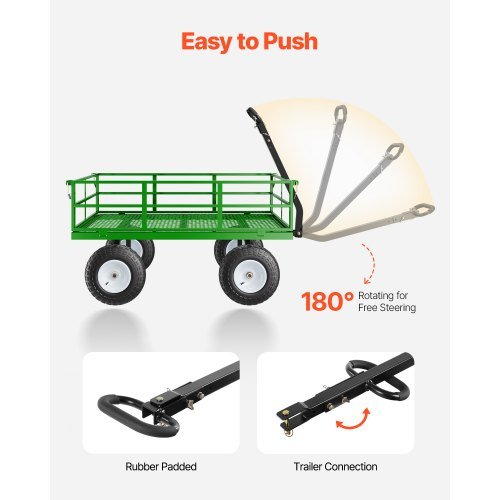
Have you ever struggled to move a heavy garden cart across your yard? Pushing a garden cart might seem simple, but doing it the right way can save you time, effort, and even prevent injury.
Whether you’re hauling soil, plants, or tools, knowing how to push your garden cart effectively makes your work easier and more enjoyable. You’ll discover practical tips and techniques to master the art of pushing your garden cart with ease. Keep reading to make your gardening tasks smoother and less tiring.
Choosing The Right Cart
Using a garden cart makes moving heavy items easier. Picking the right cart helps you work faster and with less effort.
Think about what you will carry and where you will use the cart. This helps you find the best cart for your needs.
Types Of Garden Carts
Garden carts come in different styles. Some have flat beds, others have deep sides. Each type fits certain tasks better.
- Flatbed carts:Good for carrying large, flat items like boards and soil bags.
- Utility carts:Have high sides to hold loose materials like leaves or mulch.
- Dump carts:Can tip to empty contents easily. Great for heavy loads.
- Foldable carts:Easy to store and carry small loads.
Weight Capacity Matters
Check the weight limit of the cart before buying. Overloading a cart can damage it and make pushing hard.
Choose a cart with a capacity that fits your heaviest loads. This keeps you safe and saves effort.
- Light carts: Hold up to 100 pounds, good for small jobs.
- Medium carts: Carry 100 to 300 pounds, ideal for most garden tasks.
- Heavy-duty carts: Can hold over 300 pounds, perfect for large loads.
Wheel Options And Terrain
Wheel type affects how easy it is to push your cart. Some wheels work better on soft soil, others on hard surfaces.
Choose wheels based on your garden’s terrain. This helps you move loads without getting stuck or tiring quickly.
- Pneumatic wheels:Filled with air, good for rough or uneven ground.
- Solid rubber wheels:Tough and puncture-proof, best on smooth surfaces.
- Plastic wheels:Lightweight but less durable, for light loads on flat terrain.
- Wide wheels:Spread weight to prevent sinking in soft soil.
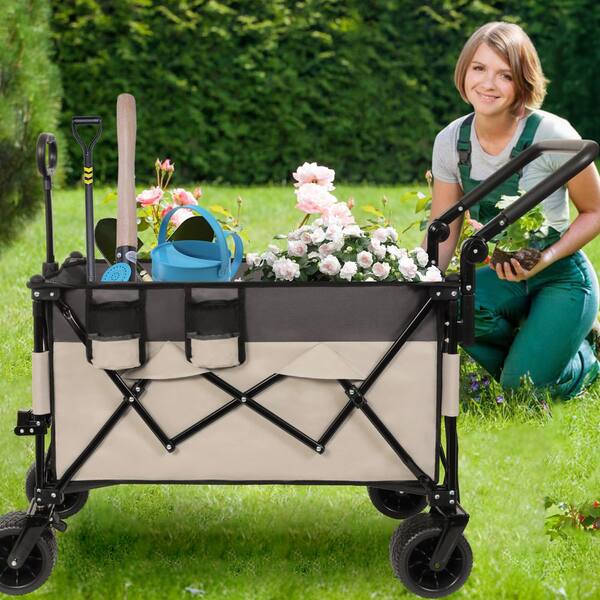
Credit: www.homedepot.com
Preparing The Cart For Use
Before pushing a garden cart, get it ready for safe use. Proper preparation helps avoid accidents.
Check the cart carefully to make sure it works well and carries loads easily.
Checking Tire Pressure
Check the air pressure in the tires before using the garden cart. Proper pressure helps the cart roll smoothly.
Use a tire gauge to measure the pressure. Inflate or deflate tires as needed to match the recommended level.
- Look for the pressure number on the tire sidewall
- Use a hand pump or air compressor to adjust pressure
- Check tires for cracks or damage while inspecting pressure
Securing Loads Properly
Make sure the items in the cart are tied down or held securely. This stops them from falling out while you push.
Use ropes, straps, or bungee cords to keep the load in place. Check that nothing is loose before moving the cart.
- Place heavier items at the bottom
- Cover loose items with a tarp if needed
- Double-check all straps or ties before pushing
Balancing Weight Distribution
Balance the weight evenly across the cart. This makes pushing easier and prevents tipping over.
Keep the heaviest items near the center of the cart. Avoid putting too much weight on one side or the front.
- Place heavy items low and centered
- Distribute smaller items evenly
- Test balance by gently moving the cart before use
Effective Pushing Techniques
Pushing a garden cart is easier with the right techniques. Good habits help you move the cart safely and smoothly.
Using proper methods reduces strain and helps you control the cart better. Follow these tips to push your garden cart well.
Proper Body Position
Stand close to the cart to keep your balance. Keep your feet shoulder-width apart for stability.
Bend your knees slightly and keep your back straight. This position protects your muscles and helps you push without pain.
Using Both Hands
Hold the handles with both hands to spread the effort evenly. This way, you avoid putting too much pressure on one side.
Keep your grip firm but relaxed. This helps you steer the cart and control its speed better.
Maintaining A Steady Pace
Push the cart at a steady speed to keep control. Avoid sudden pushes or stops that can cause spills or loss of balance.
Take smooth, even steps and adjust your speed if the ground is uneven. This keeps the cart moving safely.
Navigating Different Terrains
Pushing a garden cart can be easy or hard, depending on the ground. Different surfaces need different ways to move the cart.
Learning how to handle the cart on various terrains helps keep you safe and makes work faster.
Grass And Soil Tips
Grass and soil can be soft and uneven. This makes the cart harder to push. Wet soil can be slippery and cause the wheels to get stuck.
Use smooth, steady pushes to keep the cart moving. Try to avoid wet or muddy spots when possible.
- Check the soil for soft patches before pushing.
- Push straight to avoid the wheels sinking.
- Keep the load balanced to help the cart roll better.
Handling Gravel And Mulch
Gravel and mulch can make the cart bounce. Small stones can shift under the wheels. Mulch may hide uneven spots.
Push slowly and hold the handles firmly. This helps control the cart and stops it from tipping.
- Use wide wheels if possible to avoid sinking.
- Clear large debris from the path before pushing.
- Take shorter pushes to keep balance.
Moving On Slopes Safely
Slopes add risk when pushing a garden cart. The cart can roll back or tip if not careful.
Always push uphill if possible. Keep a firm grip and slow down on the way down.
- Face the cart when moving uphill for better control.
- Use both hands to hold the handles securely.
- Take small steps and keep the load light on slopes.
Maintaining Your Garden Cart
Keeping your garden cart in good shape helps it last longer. Simple care can avoid many problems.
Regular maintenance keeps your cart working smoothly. Follow these tips to protect your cart.
Regular Cleaning
Clean your garden cart after each use to remove dirt and debris. This prevents rust and damage.
- Use a brush to remove loose soil.
- Rinse the cart with water.
- Wipe dry with a cloth to avoid rust.
- Clean the wheels and axle areas well.
Lubricating Moving Parts
Lubricate the wheels and axles to keep them turning smoothly. This stops squeaks and wear.
- Choose a grease or oil made for outdoor tools.
- Apply lubricant to the wheel bearings and axles.
- Wipe off extra oil to avoid dirt buildup.
- Repeat lubrication every few months or after heavy use.
Storing The Cart Properly
Store your garden cart in a dry, covered place. This protects it from weather damage.
| Storage Tip | Reason |
| Keep under a shed or garage | Protects from rain and sun |
| Elevate off the ground | Prevents moisture damage |
| Cover with waterproof tarp | Blocks dust and dirt |
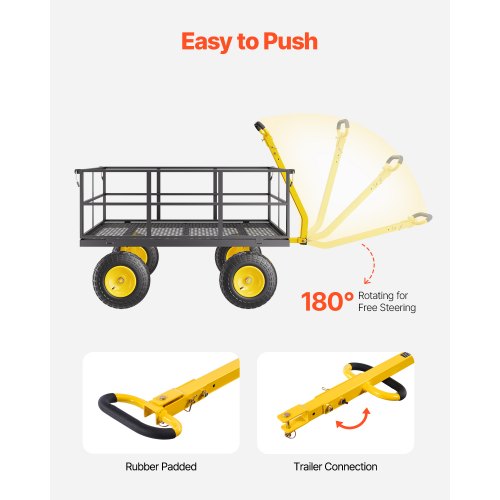
Credit: www.vevor.com

Credit: www.amazon.com
Frequently Asked Questions
How Do I Safely Push A Garden Cart Uphill?
Always lean forward slightly and keep a firm grip on the handles. Use your legs to push, not your back. Move slowly and take small steps to maintain balance and control.
What Is The Best Way To Load A Garden Cart?
Distribute weight evenly across the cart bed to avoid tipping. Place heavier items at the bottom and lighter ones on top. This ensures stability and easier pushing.
How Can I Prevent A Garden Cart From Tipping Over?
Keep the load balanced and avoid overloading one side. Push the cart on even ground whenever possible. Slow down when turning to maintain control.
What Type Of Terrain Is Easiest For Pushing A Garden Cart?
Flat, firm surfaces like paved paths or compacted soil are ideal. Avoid soft, muddy, or uneven terrain that can cause the cart to get stuck or tip.
Conclusion
Pushing a garden cart is easier with the right steps. Keep your back straight and use your legs to move. Make sure the path is clear and avoid rough spots. Balance the load well so it does not tip. Take breaks if the cart feels too heavy.
Practice these tips to make your work smoother. A little care can save you time and effort. Enjoy your gardening tasks with less strain and more comfort.

