
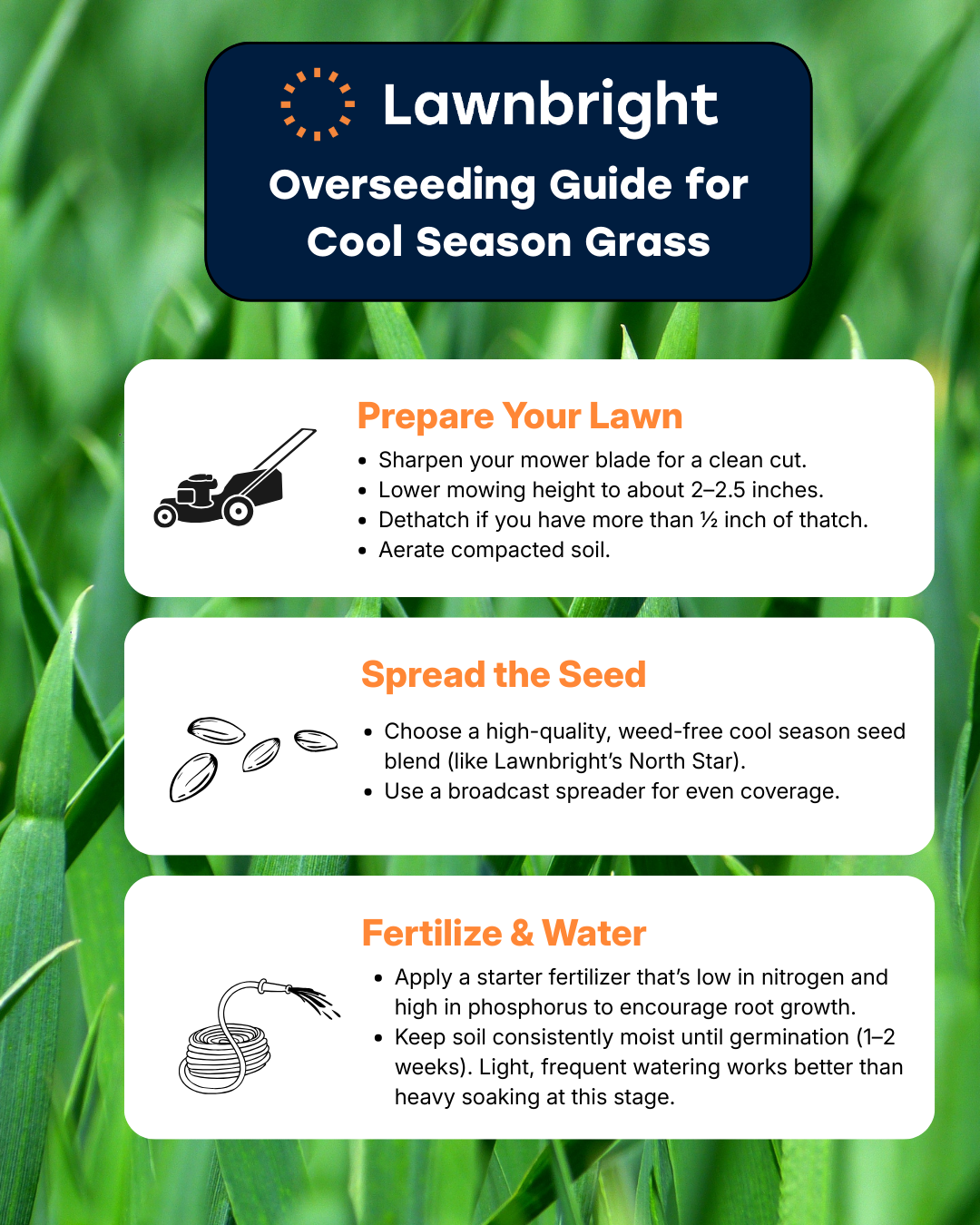
Want to refresh your lawn and make it look lush without buying a spreader? You’re in the right place.
Overseeding your lawn can bring life back to tired grass, fill in bare spots, and give your yard that green, healthy boost. But what if you don’t have a spreader? Don’t worry—there are simple, effective ways to do it yourself.
Keep reading, and you’ll learn easy steps to overseed your lawn without any special equipment. By the end, your grass will thank you with a fuller, greener look you’ll love.

Credit: landzie.com
Benefits Of Overseeding
Overseeding adds new grass seeds to your lawn. It helps improve your yard without using a spreader.
This process refreshes your lawn and makes it healthier and thicker over time.
Improving Lawn Density
Overseeding fills bare spots and thin areas in your lawn. It creates a thick, even grass cover.
A denser lawn looks better and can handle foot traffic without damage.
Enhancing Grass Health
Adding new seeds introduces strong grass types to your lawn. These grasses fight diseases well.
Healthier grass grows greener and stays lush through different seasons.
Preventing Weed Growth
Thick grass from overseeding blocks sunlight from reaching weed seeds. This stops weeds from growing.
A strong lawn reduces the need for chemical weed killers and keeps your yard clean.
Preparing Your Lawn
Overseeding a lawn without a spreader needs good preparation. Preparing your lawn helps seeds grow well.
This guide covers mowing, raking, soil testing, aeration, and seed choice. These steps improve seed contact and growth.
Mowing And Raking
Start by mowing your lawn short, about 1 to 1.5 inches tall. This helps seeds reach the soil easily.
After mowing, rake the lawn to remove dead grass, leaves, and debris. This clears space for seeds to settle.
- Mow to a low height without stressing the grass
- Use a rake to clear thatch and debris
- Raking improves seed-to-soil contact
Soil Testing And Aeration
Test your soil to check its pH and nutrient levels. Good soil helps grass seeds grow strong roots.
Aerate the lawn to allow air, water, and nutrients into the soil. Aeration also helps seeds reach the soil better.
- Use a soil test kit or send a sample to a lab
- Adjust soil pH if needed with lime or sulfur
- Aerate by poking holes in the lawn with a fork or aerator tool
Choosing The Right Seed
Pick grass seed that matches your climate and lawn type. Good seed choice ensures healthy grass growth.
Use high-quality seed that has good germination rates. Avoid old or damaged seed for best results.
- Select seed suited for sun or shade areas
- Choose seed blends for durability and color
- Check seed package for germination and purity info
Manual Overseeding Techniques
Overseeding a lawn without a spreader is easy with simple tools. You can improve your grass by spreading seeds by hand or with household items.
Manual overseeding helps fill bare spots and thickens your lawn. Use one of these methods to spread seed evenly and grow healthy grass.
Hand Scattering Method
The hand scattering method uses your hands to spread grass seed. It is good for small areas or patchy spots. This technique lets you control where the seeds go.
- Wear gloves to protect your hands.
- Mix seed with dry sand to help spread evenly.
- Take small handfuls and toss seed across the lawn in a crisscross pattern.
- Work in sections to cover the entire area.
- Lightly rake the soil after spreading to help seeds settle.
Using A Seed Dropper
A seed dropper lets you drop seeds in a controlled way. It works well for precise overseeding in small patches or rows.
| Tool | Description | Best For |
| Simple Seed Dropper | Holds seed and releases small amounts | Small patches |
| Homemade Dropper | Modified bottle with holes in the lid | Rows and narrow areas |
| Commercial Seed Dropper | Adjustable release rate for even spreading | Lawn edges and flower beds |
Spreading Seed With A Bucket
You can use a bucket to spread seed over large areas. This method is simple and uses items you may already have.
Follow these tips for bucket spreading:
- Pour seed into a clean bucket.
- Walk slowly across the lawn, swinging the bucket to scatter seed evenly.
- Mix seed with dry sand to improve spread uniformity.
- Use a seed rake or light rake after to press seeds into the soil.

Credit: lawnlove.com
Seed-to-soil Contact Tips
Overseeding a lawn without a spreader needs care to help seeds grow well. Good seed-to-soil contact is key. It helps seeds stay in place and get the water and nutrients they need.
This guide shares easy ways to improve seed contact with soil. You do not need special tools. Just follow these simple steps for better grass growth.
Raking After Seeding
After spreading seeds by hand, gently rake the lawn surface. This pushes seeds into the soil. It also helps remove debris that blocks seed contact.
Use a leaf rake or garden rake with soft tines. Avoid heavy raking to keep seeds from moving too much or burying too deep.
- Lightly rake in one direction
- Cover seeds with a thin soil layer
- Do not rake too hard or deep
Light Rolling For Better Contact
After raking, use a lawn roller or a heavy board to press seeds into the soil. This improves contact and helps seeds stay moist. Rolling also smooths the soil surface.
Do not roll too much. A light roll is enough to press seeds without compacting the soil. If you do not have a roller, a flat piece of wood works well.
- Roll lawn evenly after raking
- Apply light pressure only
- Use a board if no roller is available
Watering Strategies
Watering right after overseeding helps seeds start growing. Keep the soil moist but not soaked. Too much water can wash seeds away or cause mold.
Water lightly once or twice a day until grass sprouts. Then reduce frequency and water deeper to encourage strong roots.
- Water immediately after seeding
- Keep soil moist with light watering
- Water less often but deeper after sprouts
Maintaining The Overseeded Lawn
After overseeding your lawn without a spreader, proper care helps new grass grow strong. Regular maintenance keeps the lawn healthy and green.
Focus on watering, feeding, and weed control. These steps support seed germination and lawn recovery.
Watering Schedule
Keep the soil moist to help seeds sprout. Water lightly several times a day in the first two weeks. Reduce frequency as grass grows.
- Water 2–3 times daily for 5–10 minutes each
- Reduce to once daily after two weeks
- Switch to deep watering twice a week after one month
- Water early in the morning to reduce evaporation
Fertilizing Recommendations
Feed new grass with nutrients to boost growth. Use a balanced fertilizer with nitrogen, phosphorus, and potassium.
| Timing | Fertilizer Type | Application Rate |
| Right after overseeding | Starter fertilizer (high phosphorus) | Follow label instructions |
| 4 to 6 weeks later | Balanced fertilizer (NPK 10-10-10) | 1 pound per 1,000 sq ft |
| 8 to 10 weeks later | Slow-release nitrogen fertilizer | 1 pound per 1,000 sq ft |
Weed Control Measures
Weeds compete with new grass for nutrients and water. Avoid using herbicides until grass is strong.
- Remove weeds by hand during early growth
- Use mulch or grass clippings to block weed seeds
- Apply selective herbicides only after mowing 3–4 times
- Keep lawn healthy to naturally reduce weed growth

Credit: www.angi.com
Common Mistakes To Avoid
Overseeding a lawn without a spreader can be tricky. Many people make common mistakes that affect the results. Avoid these to ensure a healthy, lush lawn.
Following simple guidelines will make overseeding effective and efficient. Let’s explore some common errors to avoid.
Overseeding Too Thickly
Applying too much seed is wasteful. It can also lead to uneven growth. Seeds need space to grow properly.
Calculate the right amount of seed needed for your lawn size. Spread seeds evenly with your hand for best results.
- Check seed package for coverage guidelines
- Use hands to scatter seeds lightly
- Ensure seeds are not clumped together
Neglecting Soil Preparation
Soil needs to be ready for seeding. Neglecting this step can lead to poor germination. Prepare soil properly before overseeding.
Clear your lawn of debris and loosen the topsoil. This helps seeds contact the soil and grow better.
- Remove rocks and leaves from the lawn
- Use a rake to loosen the soil
- Level the soil surface for even seed distribution
Ignoring Post-seed Care
Proper care after seeding is crucial. Ignoring this can hinder seed growth. Pay attention to watering and maintenance.
Water seeds lightly and regularly. Avoid heavy foot traffic on the lawn until seeds are established.
- Water the lawn daily in the morning
- Avoid walking on newly seeded areas
- Fertilize when seedlings are visible
Frequently Asked Questions
How Can I Overseed A Lawn Without A Spreader?
You can overseed by hand using your palms or a bucket. Evenly scatter seeds in a crisscross pattern for better coverage. Lightly rake to ensure seed-to-soil contact, then water gently to promote germination.
What Tools Replace A Spreader For Overseeding?
Use your hands, a bucket, or a garden shovel to spread seeds. A handheld seed broadcaster can also help. These tools allow precise control and avoid costly equipment.
When Is The Best Time To Overseed Without A Spreader?
Early fall or spring is ideal. Temperatures should be mild and soil moist. This helps seeds germinate quickly without needing heavy equipment.
How Much Seed Do I Need For Overseeding?
Calculate seed based on lawn size and seed type. Follow package instructions carefully. Using too much seed wastes money; too little results in patchy growth.
Conclusion
Overseeding a lawn without a spreader is simple and effective. Hand spreading or using household tools works well. Take your time and spread seeds evenly for best results. Water the lawn gently after spreading the seeds. Keep the soil moist until grass grows strong.
This method saves money and gives good lawn coverage. Your lawn will look fresh and green soon. Small steps make a big difference in lawn care. Try these easy tips and enjoy a healthy lawn.

