
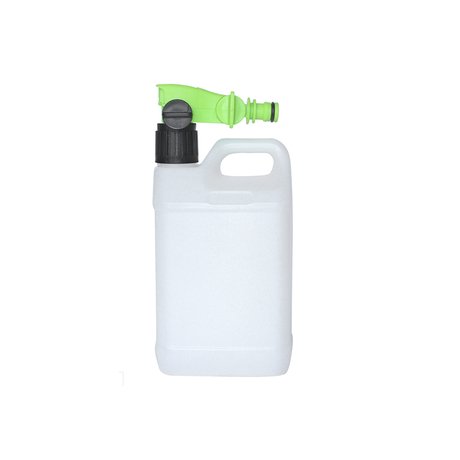
Are you tired of guessing how much fertilizer to add to your hose end sprayer? Using too much or too little can waste your product, damage your plants, or leave your lawn looking less than perfect.
But don’t worry—measuring fertilizer for your hose end sprayer doesn’t have to be confusing. You’ll learn simple, step-by-step methods to get the right amount every time. Keep reading, and you’ll save money, protect your plants, and achieve the beautiful yard you’ve been aiming for.
Credit: www.ilotchina.com
Choosing The Right Fertilizer
Choosing the right fertilizer is key for using a hose end sprayer. The fertilizer must mix well with water and spray evenly. This guide helps you pick the best fertilizer and measure it correctly.
Understanding fertilizer types and their concentration helps avoid damage to plants and equipment. Let’s look at the types of fertilizers suitable for hose end sprayers and how to check their strength.
Types Of Fertilizers For Hose End Sprayers
Fertilizers come in different forms. Not all work well in hose end sprayers. Choose one that dissolves easily and sprays smoothly.
- Liquid Fertilizers:These are ready to mix with water. They spray evenly and work quickly.
- Water-Soluble Granules:These granules dissolve in water before spraying. They need thorough mixing.
- Suspension Fertilizers:These have tiny solid particles in liquid. They require constant stirring to avoid clogging.
Checking Fertilizer Concentration
Knowing fertilizer concentration helps you measure the right amount. Too strong can burn plants. Too weak may not feed them well.
| Fertilizer Type | Typical Concentration | Mixing Tip |
| Liquid Fertilizer | 1-3% nitrogen | Shake well before use |
| Water-Soluble Granules | 10-20% nitrogen | Dissolve fully in warm water |
| Suspension Fertilizer | 5-15% nitrogen | Keep stirring during spraying |
Gathering Necessary Tools
Measuring fertilizer correctly is important for your plants. You need the right tools to do this well. Using tools helps mix the right amount of fertilizer with water.
Before starting, gather all tools. This will make the job easier and prevent mistakes.
Measuring Cups And Containers
Use measuring cups or containers with clear markings. These help measure fertilizer and water accurately. Avoid guessing amounts to protect your plants.
- Choose cups with milliliter or ounce markings
- Use containers that are easy to pour from
- Pick materials that are durable and easy to clean
- Have separate cups for fertilizer and water
Calibrating The Sprayer
Calibrating your hose end sprayer ensures the right mix reaches your plants. It adjusts the sprayer to spread fertilizer evenly and in the correct amount.
| Tool | Purpose |
| Measuring cup | Measure fertilizer and water accurately |
| Calibration container | Catch and measure output from sprayer |
| Stopwatch or timer | Time how long sprayer runs during calibration |
| Marker or tape | Mark sprayer settings for future use |
Reading Sprayer Instructions
Using a hose end sprayer correctly helps you apply fertilizer safely and evenly. The instructions guide you on the right amount of fertilizer to use.
Understanding the instructions ensures you avoid damage to plants and save fertilizer. Read them carefully before starting.
Understanding Dilution Ratios
Dilution ratios show how much fertilizer to mix with water. They look like numbers separated by a colon, such as 1:100.
- The first number is the amount of fertilizer.
- The second number is the amount of water.
- For 1:100, mix 1 part fertilizer with 100 parts water.
- Check the label for the exact ratio needed.
Setting The Sprayer Dial
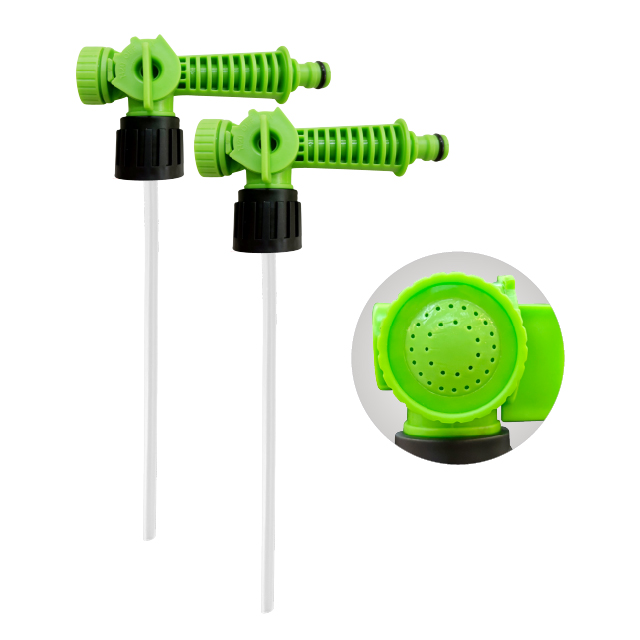
The sprayer dial controls how much fertilizer mixes with water. You need to set it according to the instructions.
| Dial Setting | Fertilizer Amount | Water Amount |
|---|---|---|
| 1 | 1 ounce | 100 ounces |
| 2 | 2 ounces | 100 ounces |
| 3 | 3 ounces | 100 ounces |
Match the dial number to the ratio on your fertilizer label. Adjust carefully for the best results.

Credit: www.amazon.com
Calculating Fertilizer Amount
Knowing the right amount of fertilizer to use in a hose end sprayer helps plants grow well. It keeps the mixture safe and effective.
This guide shows how to convert fertilizer ratios and adjust for different hose lengths. You will learn simple steps to get the right measurement.
Converting Ratios To Measurements
Fertilizer labels often show ratios like 1:100 or 1:200. This means one part fertilizer mixes with 100 or 200 parts water. You must turn this ratio into a real amount you can measure.
- Find the total water volume your sprayer holds in gallons or liters.
- Divide the water volume by the second number in the ratio. For example, 100 gallons ÷ 100 = 1 gallon of fertilizer.
- Use this amount of fertilizer to mix with the water in the sprayer tank.
- For smaller measures, convert gallons to cups or milliliters as needed.
Adjusting For Different Hose Lengths
Hose length affects how much fertilizer you need. Longer hoses dilute the mix more. Shorter hoses need less adjustment.
| Hose Length | Adjustment Factor | How to Use |
|---|---|---|
| Up to 50 feet | 1.0 (No change) | Use the calculated fertilizer amount as is. |
| 50 to 100 feet | 1.1 | Multiply fertilizer amount by 1.1 for slightly longer hose. |
| 100 to 150 feet | 1.2 | Multiply fertilizer amount by 1.2 to adjust for length. |
| Over 150 feet | 1.3 | Increase fertilizer by 30% to keep strength consistent. |
Mixing Fertilizer Solution
Measuring fertilizer for a hose end sprayer is important for healthy plants. Using the right mix helps plants grow strong.
This guide shows how to mix fertilizer solution correctly and safely.
Step-by-step Mixing Process
Start by reading the fertilizer label for the right amounts. Use clean water for better results.
- Fill the sprayer tank with water up to half.
- Measure the fertilizer carefully using a cup or scoop.
- Add the fertilizer to the tank slowly.
- Stir or shake the tank to mix the solution well.
- Fill the tank with more water to the full level.
- Mix again to ensure even distribution.
Always check the solution before spraying to avoid damage to plants.
Safety Precautions
Wear gloves and eye protection when handling fertilizer. Keep children and pets away from the mixing area.
- Do not inhale fertilizer dust or spray.
- Mix in a well-ventilated area.
- Wash hands after mixing.
- Store fertilizer in a safe, dry place.
- Clean the sprayer after use to prevent clogging.
Following safety steps keeps you and your plants safe.
Testing And Adjusting Application
Measuring fertilizer for a hose end sprayer requires careful testing. Adjusting the application ensures plants receive the right nutrients.
Understanding how to test and adjust is essential for optimal plant growth. Proper measurements prevent over or under-fertilization.
Performing A Trial Spray
A trial spray helps determine the correct application rate. This step is crucial to avoid harming plants.
- Fill the sprayer with water only.
- Spray a small section of plants.
- Observe the spray pattern and coverage.
- Adjust the nozzle if needed for even distribution.
Fine-tuning Fertilizer Concentration
Adjusting the fertilizer concentration is key to healthy plants. Too much can damage roots, while too little may be ineffective.
| Fertilizer Type | Recommended Dilution |
| Liquid Fertilizer | 1 tablespoon per gallon |
| Granular Fertilizer | 1 cup per 1000 sq ft |
Maintaining The Sprayer
Proper maintenance of your hose end sprayer ensures it lasts long. It also helps in applying fertilizer efficiently.
Regular cleaning and correct storage keep the sprayer in good condition. This prevents clogs and maintains its functionality.
Cleaning After Use
Always clean the sprayer after each use. This prevents residue build-up which can cause clogs.
Rinse the sprayer with warm water. Make sure to remove all traces of fertilizer.
- Detach the sprayer from the hose.
- Fill the sprayer with clean water.
- Spray until the water runs clear.
- Check the nozzle for clogs.
Storing Fertilizer Properly
Proper storage of fertilizer is important. It keeps the nutrients effective for the next use.
Store fertilizer in a cool, dry place. Keep it away from direct sunlight and moisture.
- Seal the fertilizer bag tightly.
- Label the container with the date of purchase.
- Keep it out of reach of children and pets.

Credit: www.amazon.ca
Frequently Asked Questions
How Do I Calculate Fertilizer For A Hose End Sprayer?
Measure the sprayer’s tank volume first. Check the fertilizer label for the recommended dilution ratio. Multiply the tank volume by the ratio to get the precise fertilizer amount.
What Tools Help Measure Fertilizer Accurately For Spraying?
Use a measuring cup or syringe for precise liquid fertilizer measurement. A graduated container can also help ensure accurate mixing ratios.
Can I Use Any Fertilizer With A Hose End Sprayer?
Not all fertilizers are suitable. Use only water-soluble fertilizers labeled for hose end sprayer use to avoid clogging and damage.
How Often Should I Calibrate My Hose End Sprayer?
Calibrate before each use or season. This ensures accurate fertilizer application and prevents over or under feeding your plants.
Conclusion
Measuring fertilizer for a hose end sprayer is simple and important. Use the correct amount to avoid plant damage or waste. Always read the instructions on the fertilizer label carefully. Mix the fertilizer with water as directed for the best results.
Check your sprayer’s settings before applying. Keep your plants healthy and your garden green. Following these steps helps you apply fertilizer safely and effectively every time. Small efforts lead to big garden rewards.

