
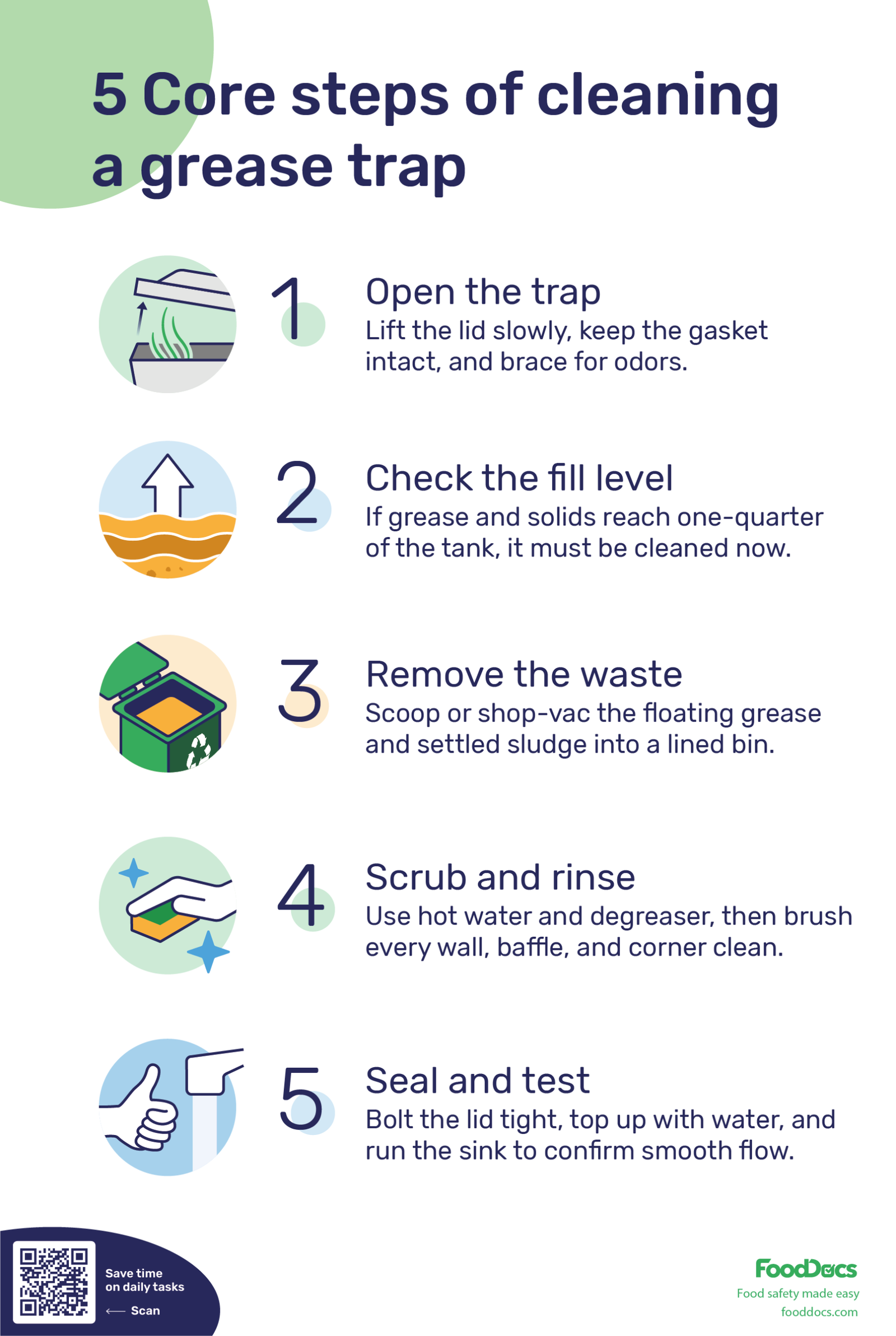
Are you struggling with a greasy, clogged grease management system? Keeping your system clean is not just about hygiene—it’s about preventing costly damage and ensuring everything runs smoothly.
In this guide, you’ll discover simple, effective steps to clean your grease management system without the usual hassle. By following these easy tips, you can save time, avoid expensive repairs, and keep your kitchen or facility operating at its best.
Ready to get your system spotless and working like new? Let’s dive in.
Preparing For Cleaning
Preparing to clean a grease management system is key to a smooth process. Careful preparation helps avoid mistakes and keeps the area safe. This phase sets the foundation for effective and efficient cleaning.
Gathering Necessary Tools
Collect all tools needed before starting. Common tools include:
- Protective gloves
- Safety goggles
- Scrapers and brushes
- Buckets or containers for grease
- Cleaning agents suitable for grease
- Rags or paper towels
- Wrenches or screwdrivers for disassembly
Having everything ready saves time and avoids interruptions.
Ensuring Safety Measures
Safety is vital during cleaning. Wear protective gloves and goggles. Ensure good ventilation in the area. Keep a fire extinguisher nearby since grease is flammable. Avoid open flames or sparks. Inform others about the cleaning work to prevent accidents. Follow any local safety regulations strictly.
Shutting Down The System
Turn off the grease management system completely before cleaning. Cut power supply to avoid electrical hazards. Close valves to stop grease flow. Allow the system to cool if it was in use. Confirm there is no pressure in pipes. This step prevents injuries and equipment damage.
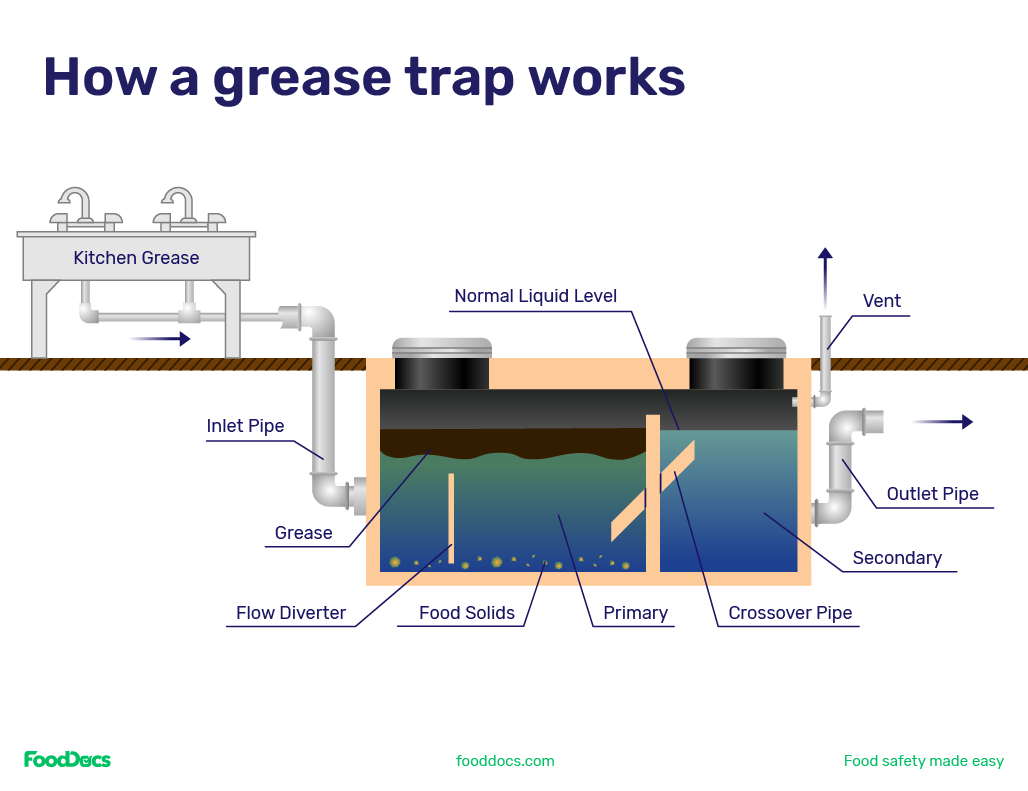
Credit: www.fooddocs.com
Draining Grease And Waste
Draining grease and waste is a crucial part of maintaining your grease management system. Proper draining prevents clogs and keeps your system running smoothly. It also ensures that waste is handled safely and responsibly.
Locating Drain Valves
Start by identifying the drain valves on your grease management system. These valves are usually found at the bottom or side of the grease trap or interceptor. Check your system’s manual or look for labeled pipes and handles to make sure you’ve found the right spot.
Sometimes the valves can be stuck or hard to reach. Using a flashlight can help you inspect better. If you’re unsure, don’t hesitate to ask a professional or someone experienced in grease trap maintenance.
Proper Disposal Methods
Never pour drained grease or waste down regular drains. This can cause blockages and environmental damage. Instead, collect the waste in sealed containers designed for grease disposal.
Many local waste management services offer special pickups for grease waste. You can also take it to approved recycling centers. Always check local regulations to avoid fines or harm to the environment.
Think about how you handle grease waste now. Could your current method be improved to protect your pipes and community better?
Removing Grease Traps
Removing grease traps is a key part of maintaining your grease management system. If you neglect this step, grease can build up and cause blockages or unpleasant odors. Handling the trap carefully ensures a smooth cleaning process and helps you spot issues before they become costly problems.
Detaching The Trap
Start by turning off any water flow near the trap to avoid spills. Use gloves and protective eyewear as grease can be slippery and sometimes splashes unexpectedly.
Loosen the trap’s screws or bolts with the right tools, usually a wrench or screwdriver, depending on the model. Gently pull the trap away from its housing, keeping it level to prevent grease and debris from spilling.
Have a bucket or container ready to catch any leftover grease or water inside the trap. This small preparation saves you from a messy cleanup on the floor.
Cleaning And Inspecting The Trap
Empty the grease and debris into a disposable container—never pour it down the drain. Use a scraper or brush to remove stuck-on grease from the trap walls.
Rinse the trap with hot water mixed with a mild detergent. Avoid harsh chemicals that can damage the trap’s material or harm the environment.
Check the trap for cracks, rust, or worn seals. These signs mean it might be time to repair or replace the trap to maintain system efficiency.
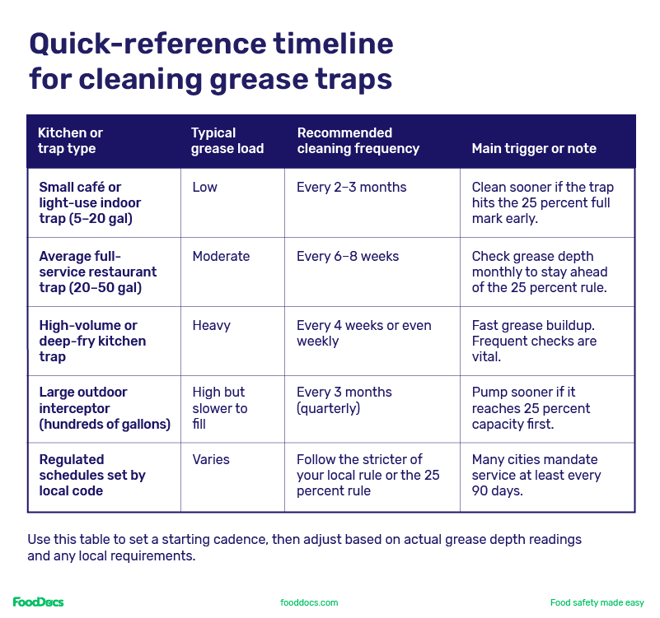
Credit: www.fooddocs.com
Scrubbing And Washing Components
Scrubbing and washing components is a crucial step in cleaning a grease management system. Proper cleaning removes built-up grease, dirt, and debris that block the system’s function. This process helps maintain efficiency and extends the life of the equipment.
Each part needs careful attention during scrubbing and washing. Using the right methods ensures thorough cleaning without damaging components. Follow these guidelines to keep the system running smoothly.
Choosing Cleaning Agents
Select cleaning agents that break down grease effectively. Use mild detergents or degreasers safe for your system’s materials. Avoid harsh chemicals that can corrode metal or plastic parts.
- Look for biodegradable and non-toxic options.
- Check if the agent suits the system’s surface.
- Test a small area before full application.
Scrubbing Techniques
Use soft brushes or sponges to scrub components gently. Avoid abrasive tools that scratch or damage surfaces. Focus on areas with heavy grease buildup for better results.
- Apply cleaning agents evenly.
- Scrub in circular motions to lift grease.
- Use a toothbrush for tight spots and corners.
Rinsing Thoroughly
Rinse parts with clean water to remove all cleaning agents and loosened grease. Ensure no residue remains, as it can cause blockages or attract more dirt. Use warm water if possible for better rinsing.
- Rinse multiple times if needed.
- Check for any leftover dirt or grease.
- Dry components completely before reassembly.
Cleaning Pipes And Drains
Cleaning pipes and drains is essential for an efficient grease management system. Grease and food particles build up inside pipes, causing blockages and slow drainage. Regular cleaning keeps the system flowing smoothly and prevents costly repairs. Proper care extends the life of pipes and avoids unpleasant odors.
Using Drain Cleaners
Drain cleaners help dissolve grease and debris inside the pipes. Choose a cleaner made for grease blockages to get the best results. Pour the cleaner slowly into the drain to avoid splashing. Let it sit for the time recommended on the product label. After the wait, flush the drain with hot water to wash away loosened grease.
Use drain cleaners regularly to stop grease build-up. Avoid harsh chemicals that can damage pipes. Look for eco-friendly options to protect the environment.
Flushing The System
Flushing pipes with hot water removes grease and food waste. Use water at a high temperature to melt the grease inside the pipes. Run the water for several minutes to clear the system fully. For better results, combine flushing with drain cleaners.
Cold water can harden grease and cause more blockages. Maintain a regular flushing schedule to keep pipes clean. Flushing reduces the chance of clogs and keeps the system working well.
Reassembling The System
Carefully align all parts to ensure proper fit and function. Tighten screws and bolts securely to prevent leaks. Test the system after reassembly to confirm smooth operation.
Reassembling the grease management system is crucial after cleaning. Proper reassembly ensures the system works smoothly and efficiently. Misplacing components can lead to malfunctions. Follow these steps to reassemble the system effectively.Reattaching Components
Start by reattaching all the cleaned components. Ensure each piece is dry before fitting it back. Use the manual as a guide to avoid errors. Tighten screws and bolts securely, but not too tight. Ensure everything fits snugly and nothing is loose. A loose component can cause the system to fail.Checking For Leaks
Once reassembled, check for leaks in the system. Fill the system with water to test for any drips. Inspect joints and connections closely for signs of leakage. If a leak is detected, tighten the connections or replace faulty seals. Checking for leaks prevents future problems and ensures efficiency.Maintaining The System Regularly
Maintaining your grease management system regularly is essential to keep it functioning smoothly and prevent costly repairs. Neglecting routine care can lead to blockages, foul odors, and inefficient grease separation. Staying on top of maintenance not only protects your investment but also helps your kitchen or facility run cleaner and safer.
Scheduling Routine Cleanings
Set a clear schedule for cleaning your grease management system. Depending on usage, this might be weekly, bi-weekly, or monthly. Mark these dates on your calendar or use digital reminders to avoid missing them.
During cleanings, remove accumulated grease and solids to prevent clogging. Don’t wait for signs of overflow or bad smells—regular cleanings keep issues from starting. Think about how a friend of mine ignored cleaning for months and ended up with a costly plumber visit; you can avoid that hassle by staying consistent.
Monitoring Grease Levels
Keep an eye on the grease levels inside your system. Use a grease gauge or simply check visually to know when it’s time to clean. Tracking these levels helps you act before grease builds up too much.
Ask yourself: How often does grease reach the maximum fill line? If it’s happening quickly, consider increasing cleaning frequency. This small habit prevents blockages and keeps your system efficient.
Using Preventive Measures
Take steps to reduce the amount of grease entering the system. Train your kitchen staff to scrape plates and use grease traps effectively. You can also install screens or filters to catch larger grease particles before they enter the system.
Using enzyme-based treatments can help break down grease naturally, reducing buildup. Have you tried these treatments? They can extend the time between cleanings and keep your system running longer without problems.
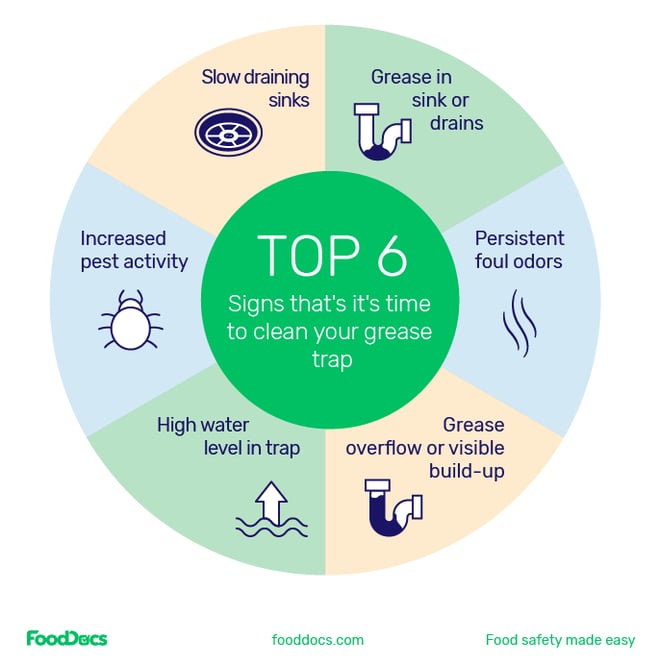
Credit: www.fooddocs.com
Frequently Asked Questions
What Is A Grease Management System?
A grease management system captures and separates fats, oils, and grease from wastewater. It prevents clogging and plumbing issues. Regular maintenance keeps it efficient and compliant with regulations. Proper cleaning helps avoid foul odors and costly repairs.
How Often Should I Clean My Grease Management System?
Clean your grease management system every 1 to 3 months. Frequency depends on usage and local regulations. Regular cleaning prevents blockages and system failures. A well-maintained system ensures smooth kitchen operations and environmental compliance.
What Are The Steps To Clean A Grease Management System?
First, remove accumulated grease and solids manually. Then, flush the system with hot water. Use biodegradable degreasers to break down remaining grease. Finally, inspect components for damage or blockages and clean filters thoroughly.
Can I Clean The Grease Management System Myself?
Yes, you can clean the system yourself if you follow safety guidelines. Wear protective gear and use appropriate tools. However, professional servicing is recommended for thorough cleaning and inspections to ensure optimal system performance.
Conclusion
Cleaning your grease management system keeps it working well. Regular care prevents clogs and bad smells. Use the right tools and follow steps carefully. Check parts often to avoid damage or leaks. Clean systems save money and reduce health risks.
Stay consistent with cleaning schedules for best results. A clean system means a safer, smoother kitchen. Keep your grease management system in top shape!

