
Are you struggling to get the perfect spread every time you use your spreader? Whether you’re dealing with fertilizer, seed, or ice melt, adjusting your spreader settings correctly can make a huge difference in results.
Getting it wrong means wasting product, damaging your lawn, or missing spots. But don’t worry—this guide will show you exactly how to adjust your spreader settings for different products, so you get even coverage and save money. Keep reading to unlock simple tips that will make your next spread job easier and more effective.
Choosing The Right Spreader
Adjusting spreader settings is key to applying products evenly. Picking the right spreader helps you control product flow and coverage.
Different products need different spreaders. Using the correct one saves time and reduces waste.
Types Of Spreaders
There are several spreader types for lawn and garden use. Each type fits specific products and tasks.
- Broadcast Spreaders: Spread product widely and evenly.
- Drop Spreaders: Drop product directly below the spreader.
- Handheld Spreaders: Small and portable for spot treatments.
- Spinner Spreaders: Use a spinning plate to throw product.
- Gravity Feed Spreaders: Use gravity to release material.
Matching Spreader To Product
Choose a spreader based on the product’s shape and size. Granules, pellets, and powders need different spreaders.
For example, large pellets work best with drop spreaders. Fine powders spread well with broadcast or spinner spreaders.
| Product Type | Recommended Spreader | Reason |
|---|---|---|
| Granular Fertilizer | Broadcast or Spinner | Spreads evenly over large areas |
| Pellets | Drop Spreader | Places product directly where needed |
| Seed | Handheld or Broadcast | Allows control for small or large areas |
| Powders | Broadcast | Distributes fine particles evenly |
Credit: www.canr.msu.edu
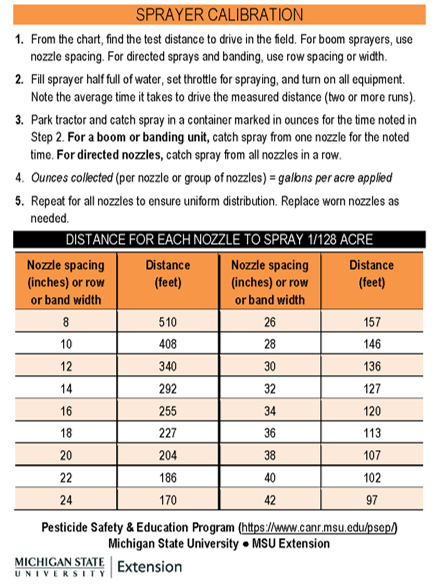
Calibrating Spreader Settings
Adjusting your spreader settings ensures you apply the right amount of product. Proper calibration saves money and protects your plants and soil.
Different products need different spreader settings. You must measure and adjust carefully to get the best results.
Measuring Application Rates
Measuring how much product your spreader applies helps you know if the settings are correct. Use a catch tray or paper to collect the spread material.
- Place the catch tray on a flat surface.
- Run the spreader over the tray for a set distance.
- Weigh or measure the material collected.
- Calculate the rate by dividing the amount by the area covered.
- Compare this to the recommended application rate for your product.
Adjusting Flow Controls
Flow controls regulate how much material leaves the spreader. Adjusting these controls changes the application rate.
| Flow Setting | Material Spread (lbs/1000 sq ft) |
| Low | 1.0 – 1.5 |
| Medium | 1.6 – 2.5 |
| High | 2.6 – 4.0 |
| Maximum | 4.1 and above |
Adjustments For Granular Fertilizers
Granular fertilizers need specific spreader settings to work well. Adjusting your spreader helps apply the right amount evenly.
Correct settings reduce waste and help plants grow better. Learn how to set your spreader for different fertilizer types.
Setting For Particle Size
Granular fertilizers come in different particle sizes. Adjust your spreader to match the size for even spreading.
Large particles need wider openings. Small particles need smaller openings to avoid over application.
- Check fertilizer particle size on the package
- Set spreader gate wider for larger granules
- Use smaller gate settings for fine granules
- Test spread on a small area before full use
Ensuring Even Distribution
Even distribution stops fertilizer clumps and bare spots. Adjust spreader speed and overlap for best results.
Keep a steady walking pace. Overlap passes slightly to cover all areas evenly.
- Walk at a consistent speed during spreading
- Overlap each pass by 10 to 20 percent
- Check spread pattern visually or with test trays
- Adjust spreader settings if distribution is uneven

Credit: www.fitfitgarden.co.uk
Adjustments For Seeds
Adjusting spreader settings helps place seeds correctly in the soil. Proper settings improve seed growth and yield.
Different seeds need different spacing and depth. Making the right adjustments protects seeds and ensures better results.
Spacing And Depth Control
Set the spreader to drop seeds at the correct distance apart. This avoids overcrowding and helps plants grow well.
Control how deep seeds are placed in the soil. Too deep or too shallow can stop seeds from sprouting.
- Adjust the spreader opening to match seed size
- Use recommended spacing for the seed type
- Set depth based on seed variety and soil type
- Test settings on a small area before full use
Avoiding Seed Damage
Handle seeds gently to avoid cracking or crushing them. Damaged seeds may not grow properly.
Adjust the spreader speed and settings to reduce seed impact during spreading. Slower speeds help protect seeds.
- Use spreader settings that match seed fragility
- Lower the spreader speed for delicate seeds
- Check for blockages that can crush seeds
- Clean the spreader after use to prevent seed damage
Adjustments For Lime And Soil Amendments
Spreader settings must change based on the product you use. Lime and soil amendments need special care to spread evenly.
Adjusting the spreader helps apply the right amount and avoids waste or damage to plants.
Handling Coarser Materials
Lime and some soil amendments can be coarse or clumpy. These materials flow differently than fine fertilizers.
To handle coarse materials, increase the spreader opening slightly. This allows larger particles to pass through smoothly.
- Check the spreader setting on a small test area first
- Adjust the spreader gate wider for thicker materials
- Use a slower walking speed for better coverage
- Shake or stir the material often to prevent clumps
Preventing Clogging
Clogs happen when materials stick or block the spreader. This causes uneven spreading and stops work.
To avoid clogs, keep the spreader clean and dry. Wet lime or amendments tend to clump and block the flow.
- Use dry materials or let damp materials dry before spreading
- Clean the spreader after each use to remove residues
- Check and clear the spreader gate often during use
- Consider using spreaders with agitators for better flow
Credit: www.haytalk.com
Testing And Fine-tuning
Adjusting spreader settings is important for spreading different products. Testing helps find the right settings for each product.
Fine-tuning ensures even distribution of seeds or fertilizers. It improves plant growth and saves resources.
Conducting Field Tests
Field tests show how the spreader works in real conditions. Use the spreader on a small area first.
Check the spread pattern and coverage. Adjust the spreader settings based on your observations.
- Start with the manufacturer’s recommended settings
- Test with a single type of product
- Observe the distribution pattern closely
Recording And Adjusting Settings
Keep a record of the settings used during tests. Note any changes made and their effects.
Adjust settings to improve distribution. Try different settings until you find the best one.
- Write down the spreader settings for each test
- Make small adjustments and test again
- Keep testing until you achieve uniform coverage
Maintenance Tips For Consistent Performance
Keeping your spreader in good condition is important. Proper maintenance ensures accurate spreader settings for different products.
Regular checks and cleaning help the spreader work well. Follow these tips for consistent performance every time you use your spreader.
Cleaning And Inspection
Clean your spreader after each use. Remove any leftover material to prevent clogging and rust. Use water and a brush to clean it properly.
Inspect your spreader for any damage. Check the wheels, gears, and handles. Look for signs of wear or broken parts.
- Wash with water and mild soap
- Dry all parts to prevent rust
- Check for loose or broken parts
Replacing Worn Parts
Replace worn parts to keep the spreader working well. Worn parts can affect performance and accuracy. Regular checks help find parts that need replacing.
Order replacement parts from the manufacturer. Ensure parts fit your model for the best results.
- Identify worn parts during inspection
- Order correct parts for your spreader model
- Follow instructions to replace parts
Frequently Asked Questions
How Do I Set Spreader Rate For Different Products?
Adjust the spreader rate by consulting the product’s label for recommended coverage. Calibrate your spreader accordingly to ensure even application and avoid waste.
What Factors Affect Spreader Settings Accuracy?
Product weight, granule size, and moisture content impact spreader settings. Always calibrate your spreader when switching products for consistent distribution.
How Often Should I Recalibrate My Spreader?
Recalibrate your spreader before each use and when changing products. Regular checks maintain accuracy and prevent under or over-application.
Can I Use The Same Spreader Setting For All Products?
No, different products require unique settings. Adjust spreader rate based on product type and manufacturer instructions for optimal results.
Conclusion
Adjusting spreader settings helps apply products evenly and save money. Each product needs a different setting for best results. Start with the recommended setting and test a small area. Watch how the material spreads and adjust as needed. Regular checks keep your spreader working well.
This simple step improves your lawn or garden care. Keep notes to remember what works for each product. Small changes can make a big difference in results. Stay patient and practice for better spreading every time.

