
Are you tired of patchy grass and bare spots ruining your lawn’s look? A lawn seeder could be the game-changer you need.
But how does a lawn seeder work, and why should you consider using one? Understanding this simple tool can save you time, effort, and money while giving your lawn the lush, green appearance you’ve always wanted. Keep reading to discover how a lawn seeder works and how it can transform your outdoor space with ease.
Types Of Lawn Seeders
Lawn seeders help spread grass seeds evenly across your yard. They make planting grass easier and faster.
There are different types of lawn seeders. Each type works in a unique way for different lawn sizes.
Manual Seeders
Manual seeders are small tools you push or pull by hand. They are good for small lawns or patch repairs.
These seeders drop seeds directly on the soil. You control the speed and amount of seed spread.
Push Seeders
Push seeders are wheel-driven tools you push across the lawn. They spread seeds evenly as you move forward.
They are easy to use and cover medium-sized lawns quickly. Some models have adjustable settings for seed flow.
Tow-behind Seeders
Tow-behind seeders attach to a lawn tractor or ATV. They cover large areas faster than manual or push seeders.
These seeders have bigger seed hoppers. They often include features to control seed depth and spread width.
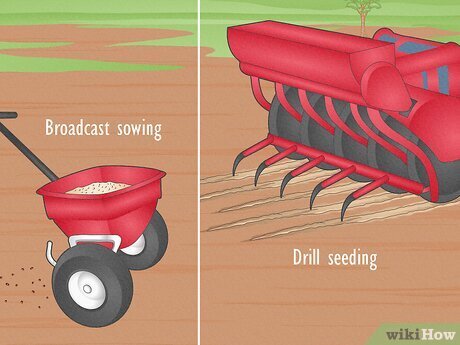
Drop Vs. Broadcast Seeders
Drop seeders drop seeds straight down in rows. They give precise seed placement and less seed waste.
Broadcast seeders spread seeds over a wide area. They cover ground quickly but with less accuracy.
- Drop seeders are best for small or uneven lawns
- Broadcast seeders work well for large, flat lawns
- Broadcast seeders need careful speed control to avoid uneven spreading
Credit: www.lawnstarter.com
Key Components
A lawn seeder plants grass seeds evenly across your yard. It has several key parts. Each part plays a role in planting seeds properly.
Understanding these parts helps you use the seeder better and keep it in good shape.
Seed Hopper
The seed hopper is a container that holds the grass seeds. It keeps seeds dry and ready for planting. The size of the hopper varies by model.
Seed Metering System
This system controls how many seeds come out of the hopper. It helps spread seeds evenly. You can adjust it to plant more or fewer seeds.
- Adjust seed flow rate
- Ensure even seed distribution
- Prevent seed clumping
Seed Delivery Mechanism
The delivery mechanism moves seeds from the hopper to the soil. It can be a drop system or a spinning disc. This part places seeds in rows or spreads them widely.
| Delivery Type | Description |
| Drop System | Seeds fall straight down into furrows |
| Spinning Disc | Seeds spread out over a wide area |
Ground Contact Wheels
These wheels roll over the soil. They help create furrows for seeds. Some wheels also push seeds into the soil to improve contact.
Functions of ground contact wheels:
- Create seed furrows
- Control seeder movement
- Press seeds into soil
How Lawn Seeders Operate
Lawn seeders help plant grass seeds quickly and evenly. They make lawn care easier by spreading seeds without much effort.
These machines work by dropping seeds into the soil at a controlled rate. This helps grass grow healthy and thick.
Seed Dispersion Process
Lawn seeders release seeds from a hopper or container. The seeds fall through a mechanism that controls how many come out.
The seeds then drop onto the soil or into small grooves made by the seeder. This helps the seeds stay in place and grow better.
- Seeds stored in a hopper
- Seeds flow through a metering system
- Seeds drop onto soil or into grooves
Adjusting Seed Rate
Users can change how many seeds drop per square foot. This is called adjusting the seed rate.
Adjusting the seed rate helps match the type of grass and lawn size. It also saves seeds from being wasted.
- Use a dial or lever to set seed flow
- Choose a rate based on seed type
- Test settings to avoid over or under seeding
Ensuring Even Coverage
Lawn seeders spread seeds evenly to avoid bare spots. Even coverage helps grass grow uniformly across the lawn.
Many seeders have wheels or tines that move seeds at a steady pace. This keeps the seed spread consistent as you push or drive the seeder.
- Move the seeder at a steady speed
- Overlap passes slightly for full coverage
- Check seed distribution regularly
Credit: www.terra-lawn-care.com
Preparing Your Lawn For Seeding
Preparing your lawn properly helps seeds grow strong and healthy. Good preparation makes sure the soil and environment support new grass.
Before using a lawn seeder, take time to prepare the area well. This guide covers soil testing, clearing debris, and timing for the best results.
Soil Testing And Preparation
Testing your soil shows what nutrients it needs. This helps you add the right fertilizers and adjust soil pH.
- Collect soil samples from different spots in your lawn
- Use a soil test kit or send samples to a lab
- Add lime to raise pH if soil is too acidic
- Apply sulfur to lower pH if soil is too alkaline
- Spread fertilizer based on test results
- Loosen soil with a rake or tiller to help seeds settle
Clearing Debris
Remove leaves, sticks, and old grass before seeding. Debris blocks seeds from touching soil and stops them from growing well.
Use these tools to clear your lawn:
- Lawn rake to gather leaves and small debris
- Leaf blower for light debris and dust
- Grass catcher on your mower to remove cuttings
- Hand tools for stubborn weeds or roots
Timing And Weather Considerations
Choose the right time and weather for seeding. Seeds need warm soil and consistent moisture to sprout.
| Season | Ideal Soil Temperature | Weather Conditions |
| Spring | 50°F to 65°F (10°C to 18°C) | Cool days, moist soil |
| Fall | 50°F to 70°F (10°C to 21°C) | Cool nights, warm days, regular rain |
Using A Lawn Seeder Step-by-step
A lawn seeder helps spread grass seeds evenly across your yard. It saves time and gives better results than hand seeding.
Follow these simple steps to use a lawn seeder correctly for a healthy, green lawn.
Filling The Seeder
Start by filling the seeder’s hopper with the right type of grass seed. Make sure the seeds are clean and dry to avoid clogging.
Do not overfill the hopper. Fill it only to the recommended level to keep the seeder balanced and easy to push.
Setting The Seed Rate
Adjust the seed rate to control how much seed the machine drops. This depends on your lawn size and seed type.
- Check the seed package for recommended seeding rates.
- Locate the seed rate control on your lawn seeder.
- Set the control to match the recommended rate.
- Test on a small area to see if the seed spread looks even.
Operating Techniques
Push the seeder at a steady pace across your lawn. Avoid stopping or speeding up suddenly to keep seed distribution even.
| Technique | Reason |
|---|---|
| Walk in straight lines | Ensures full coverage |
| Overlap passes slightly | Prevents bare spots |
| Keep wheels clean | Maintains smooth operation |
Post-seeding Care
After seeding, water the area lightly but often. Keep the soil moist to help seeds germinate well.
- Water daily, especially in dry weather.
- Avoid heavy foot traffic on the seeded area.
- Do not mow until grass reaches 3 inches tall.
- Apply fertilizer if needed, following product instructions.

Credit: www.youtube.com
Common Issues And Solutions
A lawn seeder helps spread seeds evenly across your lawn. Sometimes, issues can arise that affect its performance. Understanding common problems and their solutions can improve results.
Below, we explore frequent issues like seed clumping, uneven distribution, and how to maintain your seeder for optimal use.
Seed Clumping
Seed clumping happens when seeds stick together. This can cause patches in your lawn. A common cause is moisture in the seeder.
To prevent clumping, ensure your seeds are dry before use. Store them in a cool, dry place. Check the seeder for any blockages that might cause clumps.
- Keep seeds dry
- Store in a cool place
- Check for blockages
Uneven Distribution
Uneven seed distribution leads to patchy growth. It occurs when the seeder is not adjusted correctly or is moving too quickly.
To fix this, adjust the seeder settings according to the seed type. Walk at a steady pace to ensure even spreading. Regularly check the seeder for any wear or damage.
- Adjust seeder settings
- Walk at a steady pace
- Check for wear and damage
Seeder Maintenance Tips
Regular maintenance keeps your seeder working well. Clean it after each use to remove any leftover seeds or debris.
Lubricate moving parts to prevent rust and ensure smooth operation. Store the seeder in a dry place to protect it from weather damage.
- Clean after each use
- Lubricate moving parts
- Store in a dry place
Benefits Of Using A Lawn Seeder
A lawn seeder helps spread grass seeds evenly across your yard. It makes planting grass easier and faster. Using a lawn seeder improves the chances that seeds will grow well.
This tool saves time and effort compared to spreading seeds by hand. It also helps your lawn look thicker and healthier. Here are some key benefits of using a lawn seeder.
Improved Seed Germination
A lawn seeder places seeds evenly into the soil. This ensures each seed gets enough soil contact and moisture. Good soil contact helps seeds sprout faster and stronger.
It also prevents seeds from clumping together or blowing away in the wind. This leads to a better start for your new grass.
Time And Effort Savings
Using a lawn seeder reduces the time it takes to plant grass seeds. It spreads seeds quickly and evenly over large areas. This saves energy and reduces physical work.
It is easier to cover your entire lawn without missing spots. Lawn seeders also help avoid wasting seeds, which saves money and effort.
Enhanced Lawn Appearance
A lawn seeder creates a uniform and dense grass cover. Even seed distribution helps your lawn grow thick and green. This improves the overall look of your yard.
Healthy grass reduces bare patches and weeds. A well-seeded lawn looks neat and feels soft underfoot.
Choosing The Right Seeder For Your Lawn
A lawn seeder helps you spread seeds evenly over your lawn. Choosing the right one is important for a healthy lawn. Consider these factors to make the best choice.
Different seeders suit different lawns. Let’s look at what you need to know before buying.
Lawn Size And Seeder Capacity
Think about the size of your lawn. A small seeder is fine for small lawns. Larger lawns need seeders with more capacity.
Some seeders hold more seeds than others. Make sure the seeder can cover your whole lawn without needing many refills.
- Small lawns: Handheld seeders
- Medium lawns: Push seeders
- Large lawns: Tow-behind seeders
Budget Considerations
Seeders come in different price ranges. Set a budget before you shop. Basic models cost less, while advanced models are more expensive.
Spending more can get you a seeder with extra features. Decide what’s important to you before buying.
- Basic seeders: Affordable, few features
- Mid-range seeders: Balanced price and features
- High-end seeders: Many features, higher cost
Features To Look For
Different seeders have different features. Some have adjustable settings for different seed types. Others have ergonomic designs for comfort.
Look for features that make seeding easier. A sturdy frame and easy cleaning are good features to consider.
- Adjustable seed settings
- Comfortable handles
- Easy to clean
- Durable materials
Frequently Asked Questions
What Is The Primary Function Of A Lawn Seeder?
A lawn seeder plants grass seeds evenly across soil. It ensures uniform seed distribution and better grass growth. This tool saves time and improves lawn appearance efficiently.
How Does A Lawn Seeder Improve Seed Germination?
A lawn seeder places seeds at the right soil depth. It protects seeds from birds and wind. This increases seed-to-soil contact, boosting germination rates and healthier lawns.
Can I Use A Lawn Seeder On Any Lawn Type?
Yes, lawn seeders work on most soil types. Adjust settings based on soil texture for best results. They are versatile for new lawns or overseeding existing grass.
What Maintenance Does A Lawn Seeder Require?
Regular cleaning and blade sharpening keep a lawn seeder effective. Check seed hopper for blockages. Proper maintenance ensures smooth operation and longer equipment life.
Conclusion
A lawn seeder plants grass seeds evenly and quickly. It makes lawn care easier and saves time. You just need to prepare the soil well first. Push or pull the seeder across your yard slowly. Seeds drop into the ground at the right depth.
This helps grass grow strong and healthy. Using a lawn seeder means fewer bare spots. It also reduces the chance of weeds. A good lawn looks neat and green. Try a lawn seeder for a simple, better lawn.

