
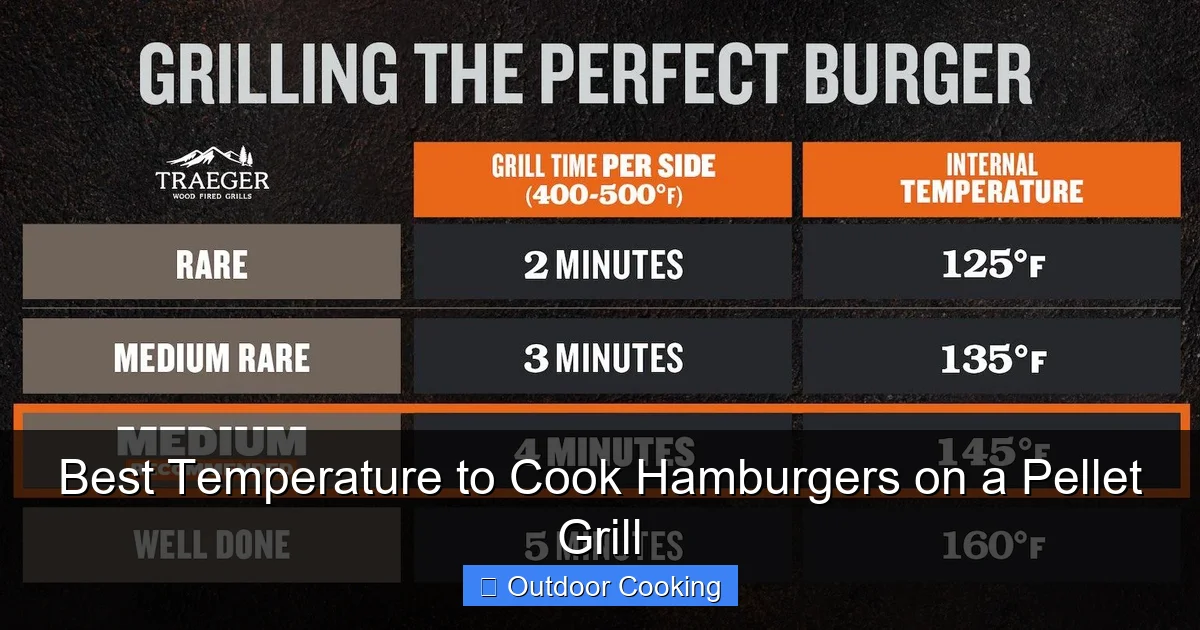
The best temperature to cook hamburgers on a pellet grill is between 375°F and 400°F. This range delivers a perfect sear, juicy interior, and rich smoky flavor without overcooking. With the right technique, you’ll get restaurant-quality burgers every time.
Key Takeaways
- Optimal cooking temperature: 375°F to 400°F ensures a great sear and juicy interior while absorbing smoky flavor.
- Use a meat thermometer: Cook to an internal temperature of 160°F for safe, well-done burgers or 150°F for medium, then rest.
- Pellet choice matters: Use mild woods like apple or cherry for burgers to avoid overpowering the meat.
- Preheat your grill: Always preheat for 10–15 minutes to ensure even cooking and proper searing.
- Don’t press the patties: Avoid pressing down on burgers—it squeezes out juices and dries them out.
- Rest before serving: Let burgers rest 3–5 minutes after cooking to lock in moisture.
- Grill grate maintenance: Clean and oil the grates before cooking to prevent sticking and improve sear marks.
📑 Table of Contents
Why Temperature Matters When Cooking Hamburgers on a Pellet Grill
Cooking hamburgers on a pellet grill is one of the easiest ways to add smoky flavor and juicy tenderness to your backyard meals. But getting that perfect burger isn’t just about throwing patties on the grill and hoping for the best. The secret lies in mastering the best temperature to cook hamburgers on a pellet grill.
Unlike gas or charcoal grills, pellet grills use wood pellets and convection heat, giving you consistent temperatures and rich smokiness. But because they cook differently, you need to adjust your approach. Too low, and your burgers will dry out or lack a good sear. Too high, and you risk charring the outside while the inside stays undercooked. That’s why finding the sweet spot—usually between 375°F and 400°F—makes all the difference.
Think of your pellet grill like a hybrid between an oven and a smoker. It circulates hot air, infuses flavor, and gives you precise control. When you dial in the right temperature, you get burgers that are caramelized on the outside, juicy in the middle, and packed with that signature wood-fired taste.
The Ideal Temperature Range: 375°F to 400°F
So, what’s the magic number? Most pitmasters and grill experts agree: 375°F to 400°F is the best temperature to cook hamburgers on a pellet grill. This range strikes the perfect balance between searing power and gentle cooking.
At 375°F, your grill heats up enough to create a nice crust on the outside of the patty without burning it. The lower end of the range is great if you like your burgers medium or if you’re cooking thicker patties. The heat penetrates slowly, keeping the inside moist while the outside develops that golden-brown sear.
Bump it up to 400°F, and you’ll get a faster sear—ideal for thinner patties or when you want a crisper exterior. This higher temp also helps render fat more efficiently, which adds flavor and prevents flare-ups. Just keep an eye on the burgers, as they’ll cook quicker at this temperature.
For example, a standard ¼-pound patty (about ¾ inch thick) will take about 4–5 minutes per side at 375°F. At 400°F, you might only need 3–4 minutes per side. Always use a meat thermometer to check doneness—this is the only way to know for sure.
Why Not Go Higher?
You might be tempted to crank the heat to 450°F or higher for a faster cook. But here’s the catch: pellet grills aren’t designed for high-heat searing like a flat-top or cast-iron skillet. At very high temps, the pellets can struggle to keep up, leading to temperature swings. Plus, the intense heat can cause the outside to burn before the inside reaches a safe temperature.
Also, remember that pellet grills rely on convection. That means the heat surrounds the food, cooking it evenly. High heat can overwhelm this system, reducing the smoky flavor and increasing the risk of dry, tough burgers.
Why Not Go Lower?
Cooking below 350°F might seem like a good idea for slow, even cooking—but it’s not ideal for burgers. At lower temps, you lose the ability to sear properly. The patties will cook through, but they’ll lack that crispy, caramelized crust that makes a burger so satisfying. Plus, lower temps mean longer cook times, which can dry out the meat.
Pellet grills shine when they’re hot enough to sear but controlled enough to infuse flavor. That’s why 375°F to 400°F is the gold standard.
Choosing the Right Pellets for Flavor
The temperature isn’t the only factor—your choice of wood pellets plays a big role in the final flavor of your burgers. Since beef has a bold taste, you don’t need overpowering smoke. In fact, mild, sweet woods work best.
Best Pellet Choices for Hamburgers
- Apple: Sweet and fruity, apple pellets add a subtle smokiness that complements beef without dominating it. Great for everyday burgers.
- Cherry: Similar to apple but with a slightly deeper flavor. Cherry gives burgers a beautiful reddish hue and a touch of sweetness.
- Pecan: A milder version of hickory, pecan offers a nutty, slightly sweet smoke that pairs well with beef.
- Maple: Adds a delicate sweetness and clean smoke. Perfect if you like a hint of caramelization.
Avoid strong woods like mesquite or hickory unless you’re making a bold, smoky burger on purpose. These can easily overpower the meat, especially at higher temps.
Blending Pellets for Custom Flavor
Want to get creative? Try blending pellets. A mix of 70% apple and 30% cherry gives you a balanced, slightly sweet smoke. Or go for 50/50 pecan and maple for a rich, nutty flavor. Experimenting with blends is one of the fun parts of pellet grilling—just make sure the dominant flavor doesn’t clash with your burger toppings.
Prepping Your Pellet Grill and Patties
Even the best temperature won’t save a burger if your grill or patties aren’t prepped properly. A few simple steps can make a huge difference.
Preheat the Grill
Always preheat your pellet grill for at least 10–15 minutes before cooking. This ensures the grates are hot and ready to sear. A cold grill will cause sticking and uneven cooking. Set your grill to 375°F or 400°F and let it come to temperature with the lid closed.
Clean and Oil the Grates
A clean grill grate is essential for good sear marks and easy flipping. Use a grill brush to remove any leftover debris from the last cook. Then, lightly oil the grates with a paper towel dipped in vegetable or canola oil. This prevents sticking and helps create those perfect grill lines.
Shape the Patties Right
Don’t overwork the meat when forming patties. Gently shape them into ¾-inch thick rounds, slightly larger than your buns (they’ll shrink as they cook). Make a small dimple in the center of each patty—this prevents bulging in the middle as it cooks.
Use freshly ground beef with a fat content of 15–20% (like 80/20 or 85/15). The fat keeps the burgers juicy and flavorful. Season generously with salt and pepper just before cooking—don’t mix it into the meat, as it can make the texture tough.
Cooking Techniques for Perfect Hamburgers
Now that your grill is hot and your patties are ready, it’s time to cook. Follow these tips for flawless results.
Use a Meat Thermometer
The only way to know if your burgers are done is to check the internal temperature. Insert a digital meat thermometer into the side of the patty, avoiding the bone if using a bone-in cut.
- Rare: 120–125°F (not recommended for ground beef due to safety)
- Medium-rare: 130–135°F
- Medium: 140–145°F
- Medium-well: 150–155°F
- Well-done: 160°F
For food safety, the USDA recommends cooking ground beef to at least 160°F. But if you prefer medium, pull the burgers at 150°F and let them rest—they’ll rise a few degrees and stay juicy.
Don’t Press the Patties
It’s tempting to press down on burgers with a spatula, especially when you see juices pooling on top. But resist the urge! Pressing squeezes out the flavorful juices, leaving you with a dry burger. Let the heat do the work.
Flip Once for Best Results
Flip your burgers only once—after about half the cooking time. Constant flipping can prevent a good sear and lead to uneven cooking. Use a wide spatula to lift the patty gently, making sure it releases cleanly from the grate.
Add Cheese (If Desired)
If you’re making cheeseburgers, add the cheese during the last minute of cooking. Close the lid to let it melt evenly. American, cheddar, or pepper jack all work great.
Resting and Serving Your Burgers
Once your burgers reach the desired temperature, remove them from the grill and let them rest for 3–5 minutes. This allows the juices to redistribute throughout the meat, ensuring every bite is moist and flavorful.
While the burgers rest, you can toast your buns on the grill for 30–60 seconds. Lightly brush the cut sides with butter or oil for extra flavor and a golden crunch.
Assemble your burgers with your favorite toppings—lettuce, tomato, onion, pickles, ketchup, mustard, or mayo. Serve immediately for the best taste and texture.
Common Mistakes to Avoid
Even experienced grillers make mistakes. Here are a few to watch out for:
- Cooking at too high or too low a temperature: Stick to 375°F–400°F for balanced cooking.
- Not preheating the grill: Always preheat to ensure even heat and proper searing.
- Using the wrong pellets: Strong woods can overpower the beef. Stick to mild, sweet options.
- Overhandling the meat: Keep patty formation gentle to maintain tenderness.
- Skipping the thermometer: Guesswork leads to overcooked or undercooked burgers.
Conclusion
Mastering the best temperature to cook hamburgers on a pellet grill is the key to juicy, flavorful, restaurant-quality burgers at home. By cooking at 375°F to 400°F, using the right pellets, and following simple techniques, you’ll impress your family and friends every time.
Pellet grills offer unmatched convenience and flavor, and with a little practice, you’ll be turning out perfect burgers on a regular basis. So fire up your grill, dial in that temperature, and get ready to enjoy the smoky, savory taste of pellet-grilled perfection.
Frequently Asked Questions
What is the best temperature to cook hamburgers on a pellet grill?
The best temperature is between 375°F and 400°F. This range provides a great sear, juicy interior, and rich smoky flavor without burning or drying out the meat.
How long do you cook hamburgers on a pellet grill?
At 375°F, cook for about 4–5 minutes per side. At 400°F, reduce to 3–4 minutes per side. Always use a meat thermometer to check for doneness.
Can you get a good sear on a pellet grill?
Yes! While pellet grills aren’t as hot as flat-tops, 375°F to 400°F is hot enough to create a nice crust and grill marks on your burgers.
What wood pellets are best for hamburgers?
Apple, cherry, pecan, and maple are ideal. They add mild, sweet smoke that enhances beef without overpowering it.
Should I flip hamburgers more than once on a pellet grill?
No. Flip only once, halfway through cooking, to ensure a good sear and even doneness.
Do I need to rest hamburgers after grilling?
Yes. Let them rest for 3–5 minutes after cooking. This helps retain moisture and improves flavor and texture.

