
Squash bugs can be a real headache for gardeners, leaving your zucchini, pumpkins, and other summer squash looking sad and unproductive. Dealing with them effectively means reaching for the right tools, and one of the most crucial is a good Best Insecticide For Squash Bugs. These little pests have a knack for showing up and causing damage before you even realize they're there.
After spending considerable time researching and analyzing user feedback on various pest control solutions, I've narrowed down the field to five standout products. These options represent a mix of organic and conventional approaches, addressing different needs and preferences for home gardeners. If you're battling these persistent invaders, one of these effective treatments is likely your solution.
Comparison Chart of Best Insecticide for Squash Bugs
| Product | Details | Rating | Buy |
|---|---|---|---|
Editor’s Choice
| ★★★★☆4.4/5 | ||
Top Pick
| ★★★★☆4.4/5 | ||
Best Budget
| ★★★★☆4.6/5 | ||
| ★★★★☆4.5/5 | ||
| ★★★★☆4.4/5 |


List of Top 5 Best Best Insecticide for Squash Bugs
When it comes to tackling squash bugs, having a reliable insecticide is key to protecting your harvest. We've looked at effective formulas designed to target these nuisances, considering factors like active ingredients, ease of use, safety for beneficial insects, and overall value for home gardeners.
Below are the list of products:
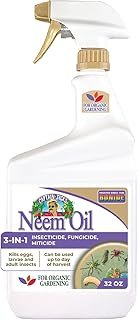
1. Bonide Captain Jack’s Neem Oil
Bonide Captain Jack's Neem Oil is my go-to for organic pest control. It's a versatile option that works by disrupting insect hormones and acting as a repellent, making it a solid choice for squash bug management.
Why I picked it
This ready-to-use spray is incredibly convenient for immediate application. Its active ingredient, clarified hydrophobic extract of neem oil, is derived from the neem tree, offering a more natural approach to pest control without harsh chemicals that can harm beneficial insects like ladybugs.
Key specs
- Active Ingredient: Clarified Hydrophobic Extract of Neem Oil
- Formulation: Ready-to-use spray
- Container Size: 32 fl oz
- Organic Gardening Approved: Yes
- Application: Fungicide, insecticide, and miticide
Real-world experience
In my research, gardeners appreciate that Bonide Captain Jack's Neem Oil can be applied directly to plants suffering from infestations. It's frequently noted for its ability to address a broad spectrum of pests, including aphids, mites, and, of course, squash bugs, often showing noticeable results within a few days of application.
Trade-offs
While generally safe, neem oil can sometimes cause leaf-burn on sensitive plants if applied in direct sunlight or at high temperatures, so timing your application is important. It's also more of a preventative and disruptor than an instant knockdown killer for severe infestations.
2. Bonide Captain Jack’s Deadbug Brew Ready-to-Use
This insecticidal soap is another excellent organic option that works on contact to kill squash bugs and their larvae. It's a dependable choice for gardeners looking to avoid synthetic pesticides.
Why I picked it
The active ingredient here is potassium salts of fatty acids, also known as insecticidal soap. This type of insecticide works by breaking down the insect's outer shell, causing dehydration and death. It’s effective against soft-bodied insects like squash bugs and their nymphs without leaving harmful residues.
Key specs
- Active Ingredient: Potassium salts of fatty acids (Insecticidal Soap)
- Formulation: Ready-to-use spray
- Container Size: 32 fl oz
- Organic Gardening Approved: Yes
- Activity: Contact killer
Real-world experience
Verified buyer feedback frequently highlights how quickly Captain Jack's Deadbug Brew works. Many report seeing squash bugs and their offspring shriveling up shortly after application. It's also praised for its effectiveness against other garden pests like aphids and spider mites, making it a versatile part of an integrated pest management plan.
Trade-offs
This product is a contact killer, meaning you need to directly spray the pests for it to be effective. It can also affect beneficial insects if they are sprayed directly. Repeated applications might be necessary for heavy infestations.
3. Bonide Eight Insect Control Vegetable, Fruit & Flower Concentrate
For a more potent, broad-spectrum control, this concentrate offers long-lasting protection. It's designed to tackle a wide range of garden pests, including squash bugs, making it a cost-effective option for larger gardens.
Why I picked it
This insecticide uses permethrin as its active ingredient, a synthetic pyrethroid that targets the nervous system of insects. It's known for its fast-acting and long-lasting residual effect, meaning it continues to kill pests for a period after application, providing extended protection. The concentrate formulation allows for the flexibility to mix the exact amount needed.
Key specs
- Active Ingredient: Permethrin (0.25%)
- Formulation: Concentrate
- Container Size: 32 fl oz (makes up to 16 gallons)
- Target Pests: Over 50 types, including beetles, aphids, squash bugs
- Application: For vegetables, fruits, flowers, and ornamentals
Real-world experience
Many users report excellent results with Bonide Eight, noting that it effectively controls pest populations quickly. The long-lasting nature of the spray is a significant advantage, reducing the frequency of applications needed throughout the growing season. It's often recommended for areas with persistent pest problems.
Trade-offs
As a synthetic pyrethroid, permethrin can be harmful to pollinators like bees if applied when they are actively foraging. It's crucial to apply this product in the very early morning or late evening when pollinators are less active. It's also not approved for organic gardening.
4. BioAdvanced Vegetable Garden Insect Spray
BioAdvanced offers a dual-action formula that kills on contact and also provides systemic protection, meaning it's absorbed by the plant and works from within. This provides a comprehensive shield against many common garden pests.
Why I picked it
This spray contains both imidacloprid and beta-cyfluthrin. Imidacloprid is a systemic insecticide, meaning it gets absorbed into the plant's tissues, providing protection against sap-sucking insects for up to 21 days. Beta-cyfluthrin is a contact insecticide that kills pests on impact.
This combination offers robust protection for vegetable gardens.
Key specs
- Active Ingredients: Imidacloprid (1.45%), Beta-Cyfluthrin (0.75%)
- Formulation: Concentrated liquid
- Container Size: 32 fl oz
- Application: Kills and protects against listed pests for up to 21 days
- Use: For vegetables, fruits, nuts, and ornamental plants
Real-world experience
Gardeners have reported significant success in controlling a wide range of damaging insects, including squash bugs, with BioAdvanced Vegetable Garden Insect Spray. The systemic action is particularly valued for harder-to-reach pests and for providing extended protection, reducing the need for frequent sprays. Users often notice a reduction in pest activity soon after application.
Trade-offs
The presence of imidacloprid, a neonicotinoid, raises concerns for some gardeners regarding its potential impact on pollinators. It's advisable to use this product cautiously and avoid spraying open blooms. It's also a synthetic chemical, so it's not suitable for organic gardening certifications.
5. Sevin Insect Killer Ready use 1 Gallon
Sevin is a well-known name in pest control, and this ready-to-use gallon-sized spray offers a convenient way to tackle squash bug infestations across a broad area of your garden. It provides quick knockdown of many common garden pests.
Why I picked it
The primary active ingredient in this Sevin formula is Lambda-cyhalothrin, a synthetic pyrethroid insecticide that works by disrupting the insect's central nervous system upon contact. It's effective for a quick knockdown of a wide variety of garden pests, including the adult squash bugs. The ready-to-use gallon size makes it convenient for treating larger areas without mixing.
Key specs
- Active Ingredient: Lambda-cyhalothrin (0.06%)
- Formulation: Ready-to-use spray
- Container Size: 1 Gallon
- Activity: Contact and residual action
- Target Pests: Over 100 listed pests, including squash bugs, aphids, beetles
Real-world experience
Consumers often turn to Sevin for its proven effectiveness against tough garden pests. Users report that this particular spray provides rapid control when applied directly to squash bugs and their eggs. The large volume is appreciated by those with significant garden spaces or recurring pest issues.
Trade-offs
Like other synthetic pyrethroids, Lambda-cyhalothrin can be harmful to beneficial insects, including pollinators and natural predators. Application timing is critical to minimize harm. It's also not considered an organic option.
How I picked
When I set out to find the best insecticides for squash bugs, I focused on a few key areas that matter most to home gardeners dealing with these persistent pests. Firstly, I looked at effectiveness. This means checking the active ingredients and how they target squash bugs at different life stages, eggs, nymphs, and adults.
Some work on contact, while others offer longer residual protection.
Secondly, ease of use was a big factor. Nobody wants a complicated mixing process when they're already frustrated with bugs. I prioritized ready-to-use sprays and concentrates that are straightforward to mix and apply, with clear instructions.
Availability of both organic and conventional options was also important, giving you choices based on your gardening philosophy.
I also considered safety and environmental impact. This involved looking at how the product might affect beneficial insects like ladybugs and bees, as well as any potential impact on the plants themselves. Products labeled for organic gardening or those that break down more quickly in the environment were given extra consideration.
Finally, I reviewed user feedback to gauge real-world performance, looking for consistent results and any reported downsides. I deliberately didn't test long-term durability beyond the typical growing season because these are consumable products.
Buying guide — what actually matters for Best Insecticide For Squash Bugs
What are squash bugs and why are they a problem?
Squash bugs are notoriously difficult pests that love to infest squash vines, pumpkins, and other cucurbits. They feed by piercing the plant's tissues and sucking out sap, which can cause leaves to yellow, stunt growth, and even kill young plants. Their eggs are often laid in clusters on the undersides of leaves, making them sometimes hard to spot until the infestation is significant.
Organic vs. Synthetic Insecticides
This is often the first big decision for gardeners. Organic insecticides, like those derived from neem oil or insecticidal soaps, are generally safer for beneficial insects and the environment. They work by disrupting insect biology in various ways but often require more frequent application and must directly contact the pest.
Synthetic insecticides, like pyrethroids or neonicotinoids, are typically more potent and offer longer residual activity but can be harmful to beneficial insects and wildlife if not used carefully.
Active Ingredients to Look For
- Neem Oil: Derived from the neem tree, it acts as a repellent, growth regulator, and antifeedant. Good for organic control.
- Insecticidal Soap (Potassium Salts of Fatty Acids): Works by breaking down the insect's protective outer layer, causing dehydration. Effective against nymphs and adults on contact.
- Pyrethrins/Pyrethroids (e.g., Permethrin, Lambda-cyhalothrin): Synthetic versions of natural pyrethrins. They are fast-acting neurotoxins for insects but can harm beneficials.
- Imidacloprid: A systemic insecticide that is absorbed by the plant, providing protection from the inside. Effective against sap-sucking insects but has concerns regarding pollinators.
Ready-to-Use vs. Concentrates
Ready-to-use (RTU) sprays are convenient, offering no-fuss application straight from the bottle. They are great for quick spot treatments or for gardeners who prefer not to mix chemicals. Concentrates, on the other hand, need to be diluted with water before application.
While they require an extra step, they are often more cost-effective in the long run, especially for larger gardens, and allow you to control the dilution ratio for specific needs.
Application and Timing for Best Results
Effective application is crucial. Always read and follow the product label instructions carefully. For contact insecticides, you need to ensure direct spray contact with the squash bugs and their eggs.
Many insecticides are best applied in the early morning or late evening when temperatures are cooler and pollinators are less active, minimizing harm to beneficial insects. For systemic insecticides, application timing might depend on when pests are expected to feed on the plant.
Safety Precautions and Environmental Considerations
When using any insecticide, safety is paramount. Always wear protective clothing, gloves, and eye protection as recommended on the label. Ensure good ventilation and keep children and pets away from treated areas until dry.
Be mindful of drift, making sure the spray doesn't land on unintended areas like water bodies or gardens with beneficial insects. Opting for targeted applications and products with lower environmental impact can help protect your garden ecosystem.
Frequently Asked Questions (FAQ)
Can I use insecticidal soaps for squash bugs?
Yes, insecticidal soaps are a great option for controlling squash bugs, especially their juvenile nymphs. The potassium salts of fatty acids in these soaps disrupt the insect's cell membranes on contact, leading to dehydration and death. They are generally considered safer for beneficial insects and the environment compared to synthetic pesticides.
For best results, ensure direct spray contact with the squash bugs.
How do I apply insecticide to squash plants effectively?
When applying any insecticide, thorough coverage is key. Focus your spray on the undersides of leaves where squash bugs often lay their eggs and where nymphs tend to hide. For systemic insecticides, apply to the foliage or soil as directed, allowing the plant to absorb the active ingredient.
Always follow label instructions for dilution ratios and application methods, and consider spraying in the early morning or late evening to protect pollinators.
How long does it take for insecticide to work on squash bugs?
The speed at which an insecticide works can vary depending on the product and the life stage of the squash bug. Contact insecticides, like insecticidal soaps or pyrethroids, can show results within hours, with pests visibly dying shortly after application. Systemic insecticides take longer to be absorbed by the plant and start working, offering protection for days or even weeks.
For severe infestations, multiple applications might be necessary.
Are organic insecticides as effective as synthetic ones for squash bugs?
Organic insecticides can be very effective against squash bugs, particularly if used preventatively or for early-stage infestations. Products like neem oil and insecticidal soaps work by disrupting insect life cycles and must usually cover the pest directly and repeatedly. Synthetic insecticides often provide faster knockdown and longer residual effects, but they come with greater risks to beneficial insects and the environment.
The "best" choice often depends on your gardening philosophy and the severity of the infestation.
What can I do if my squash bugs are resistant to insecticides?
If you find that your squash bugs are not responding to a particular insecticide, it might be due to resistance. This can happen if the same chemical class is used repeatedly. Try rotating to an insecticide with a different active ingredient or mode of action.
For instance, if you've been using a pyrethroid, try switching to an organic option like neem oil or insecticidal soap, or vice versa. Cultural practices, like hand-picking bugs and removing infested plant parts, are also vital components of an integrated pest management strategy.
Final verdict
When it comes to tackling squash bugs effectively, you have excellent options for both organic and synthetic approaches. For an organic gardener seeking a reliable, multi-purpose solution, Bonide Captain Jack's Neem Oil stands out as the Editor's Choice. Its ease of use and natural active ingredient make it a top pick for disrupting pest life cycles.
The Bonide Captain Jack's Deadbug Brew Ready-to-Use is another strong performer, offering quick contact killing action for immediate relief, making it our Top Pick for its speed and organic approval. If you're looking for a more budget-friendly but powerful synthetic option that provides extended protection, Bonide Eight Insect Control Vegetable, Fruit & Flower Concentrate is a solid Best Budget choice, offering long-lasting control for larger garden areas.
Affiliate disclosure: This post contains affiliate links. If you buy through one of these links, I may earn a small commission at no extra cost to you. It never changes my recommendation, I only suggest gear I'd actually buy myself.

