
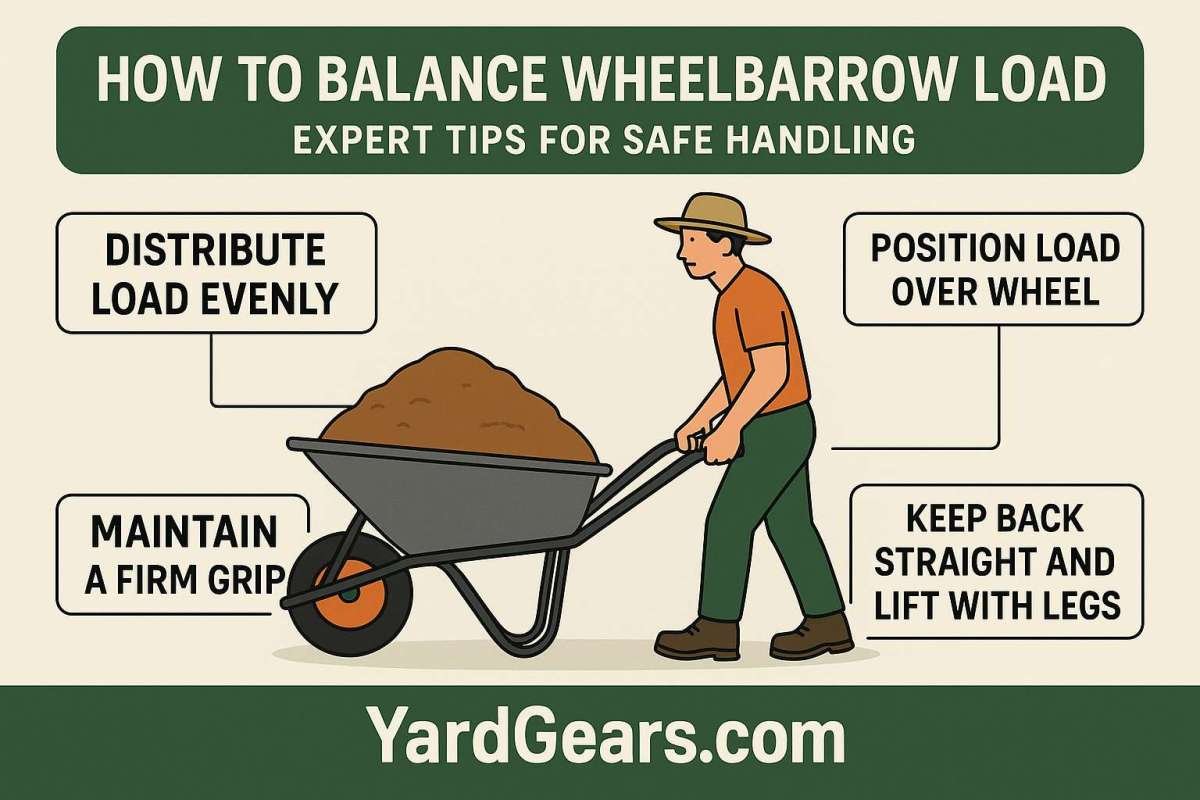
Carrying a heavy load in a wheelbarrow can be tough, especially if it’s unbalanced. You might feel the strain, risk tipping over, or even slow down your work.
But what if you could make every trip easier and safer? Learning how to balance your wheelbarrow load properly will save you time and effort. You’ll discover simple tricks that anyone can use to keep your wheelbarrow steady and your work flowing smoothly.
Ready to lift smarter, not harder? Let’s get started.
Choosing The Right Wheelbarrow
Choosing the right wheelbarrow helps you balance loads better. It makes your work easier and safer.
This guide explains the types, materials, and wheels you should consider.
Types Of Wheelbarrows
There are different wheelbarrows for different tasks. You can pick one that fits your needs.
- Contractor Wheelbarrows:Heavy and strong for tough jobs.
- Tractor Wheelbarrows:Large wheels for rough ground.
- Residential Wheelbarrows:Lightweight and easy for small jobs.
- Two-Wheel Wheelbarrows:More stable but less maneuverable.
Material And Build Quality
Material affects the wheelbarrow’s weight and durability. Good build quality improves load balance.
| Material | Pros | Cons |
|---|---|---|
| Steel | Strong and durable | Heavy and may rust |
| Plastic | Light and rustproof | Less strong, can crack |
| Aluminum | Light and strong | More expensive |
Wheel Types And Their Impact
The type of wheel affects how the wheelbarrow moves and balances the load.
- Pneumatic Wheels:Inflate with air for smooth rides on rough ground.
- Semi-Pneumatic Wheels:Filled with foam, less chance of flats.
- Solid Wheels:No air, very durable but less shock absorption.

Preparing The Load
Balancing a wheelbarrow load makes pushing easier and safer. Proper preparation prevents tipping and strain.
Focus on choosing the right materials, avoiding too much weight, and spreading the load evenly.
Selecting Suitable Materials
Pick materials that fit well inside the wheelbarrow. Large, heavy items can cause imbalance.
- Use smaller rocks instead of big boulders.
- Choose dry soil rather than wet soil to reduce weight.
- Cut long branches into shorter pieces.
- Pack loose materials in bags to keep them contained.
Avoiding Overloading
Do not fill the wheelbarrow beyond its capacity. Overloading makes it hard to control.
| Load Type | Maximum Weight (lbs) | Reason |
| Soil | 100 | Prevents strain and tipping |
| Rocks | 80 | Heavy and uneven |
| Mulch or Leaves | 120 | Lighter and bulky |
| Tools or Equipment | 50 | Balance is key |
Distributing Weight Evenly
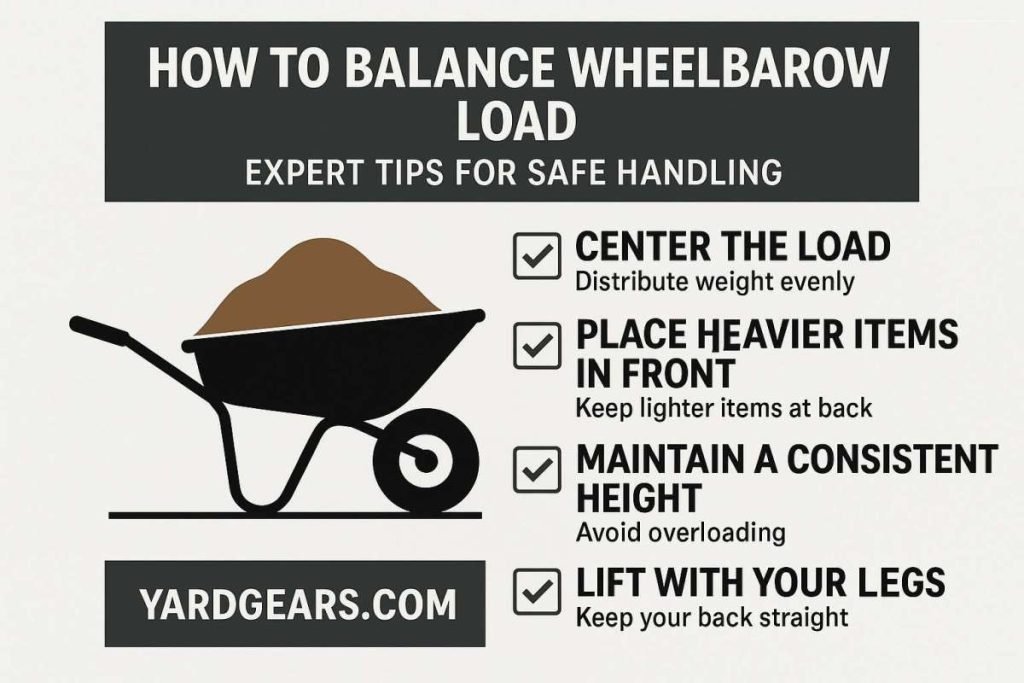
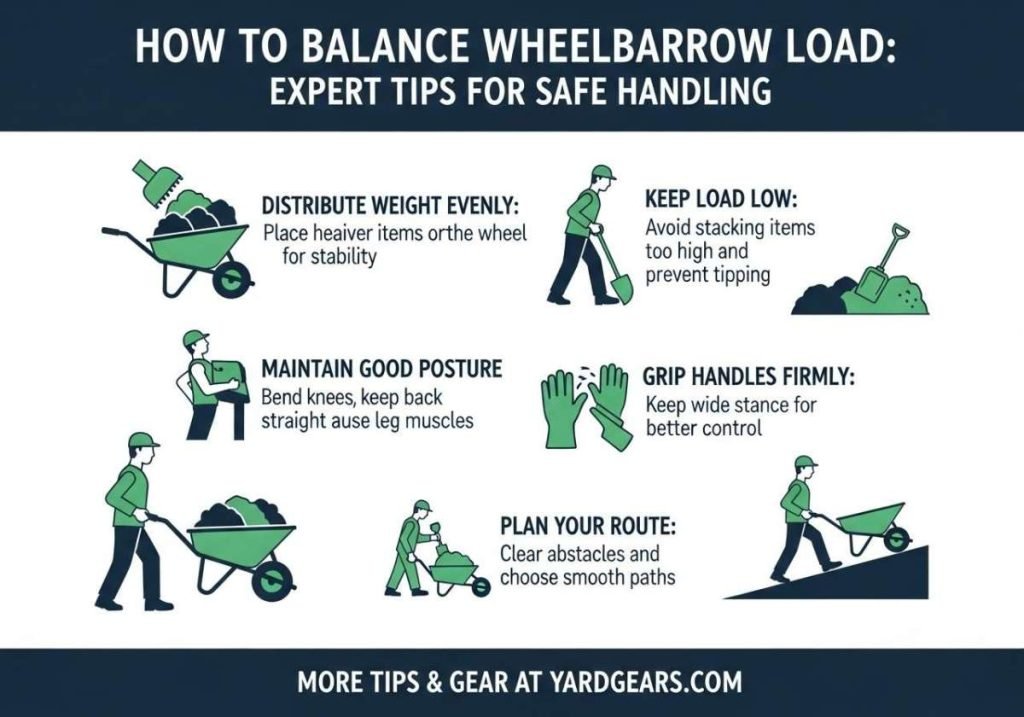
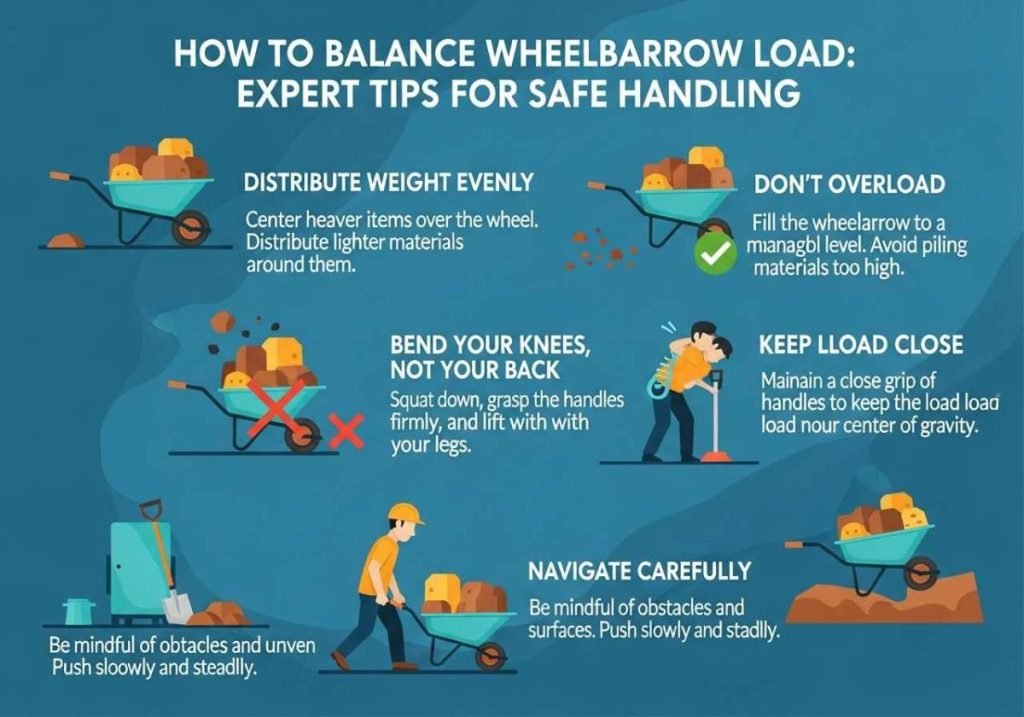
Place heavy items in the center over the wheel. Balance the rest on each side.
- Put the heaviest items at the bottom.
- Keep the load close to the wheel for better support.
- Fill gaps with lighter materials to prevent shifting.
- Check that the load does not lean to one side.
Loading Techniques
Balancing a wheelbarrow load improves safety and ease of use. Proper loading helps avoid tipping and reduces strain.
Use smart techniques to place items so the wheelbarrow stays steady. This makes moving heavy loads easier.
Positioning Heavy Items
Put the heaviest items closest to the wheel. This keeps the center of gravity low and near the wheel.
Place heavy objects at the bottom of the load to stop the wheelbarrow from tipping forward or sideways.
Layering For Stability
Arrange items in layers to make the load stable. Start with heavy, flat items on the bottom.
- Place heavy, solid items first
- Add medium-weight items next
- Put light, loose items on top
- Keep the load level on all sides
Securing Loose Items
Loose items can shift and cause imbalance. Secure them to keep the load safe.
| Method | Description |
|---|---|
| Tying with ropes | Wrap ropes around loose items and the wheelbarrow frame |
| Using nets | Cover loose materials with a net to hold them in place |
| Wrapping with tarps | Wrap and secure loose items using a tarp and bungee cords |
Adjusting For Balance
Balancing a wheelbarrow load makes it easier to move and safer to use. You must place the load correctly to keep the wheelbarrow steady.
Adjust the load so the weight spreads evenly. This helps avoid tipping and reduces the effort needed to push.
Center Of Gravity Tips
The center of gravity is where the weight feels balanced. Keep the load close to the wheel to improve control.
Place heavier items at the bottom and near the wheel. Lighter items can go on top or farther away.
- Load heavy materials near the wheel
- Keep the load low and close to the wheelbarrow bed
- Spread weight evenly from side to side
- Avoid piling items too high
Using Support Tools
Support tools help keep the load stable. Use straps or bungee cords to hold loose items together.
A flat board or tarp can help spread the load evenly. This stops materials from shifting while you move.
- Use straps to secure loose items
- Place a tarp to keep small parts from falling
- Use a flat board to balance uneven loads
Testing Before Moving
Check the balance before pushing the wheelbarrow. Lift the handles slightly to feel if the load shifts.
If the load feels uneven, adjust the materials or support tools. Test again until the wheelbarrow feels steady.
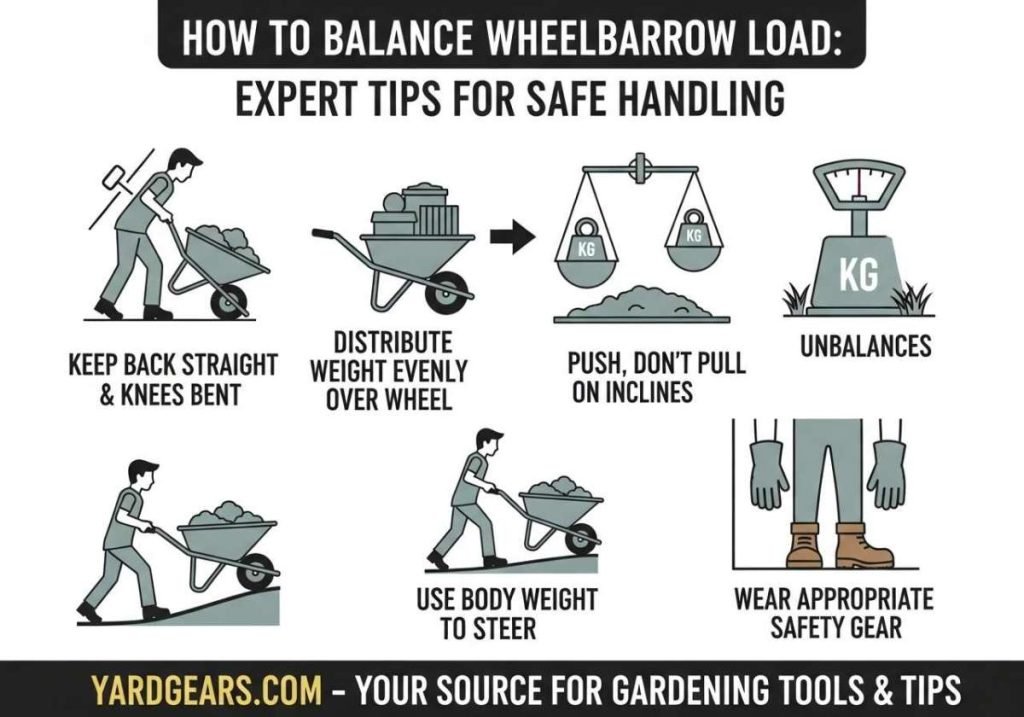
- Lift handles and check load stability
- Look for signs of tilting or slipping
- Readjust load if it feels off-balance
- Start moving slowly to confirm balance
Safe Handling Practices
Balancing a wheelbarrow load is important for safety. It helps prevent accidents and injuries.
Using safe handling practices makes moving heavy loads easier and safer.
Proper Lifting Methods
Bend your knees and keep your back straight when lifting the wheelbarrow handles. Avoid bending at the waist.
Lift with your legs to reduce strain on your back. Hold the handles firmly before you lift.
- Stand close to the wheelbarrow
- Bend knees, keep back straight
- Grip handles tightly
- Lift slowly using leg muscles
Maintaining Control While Moving
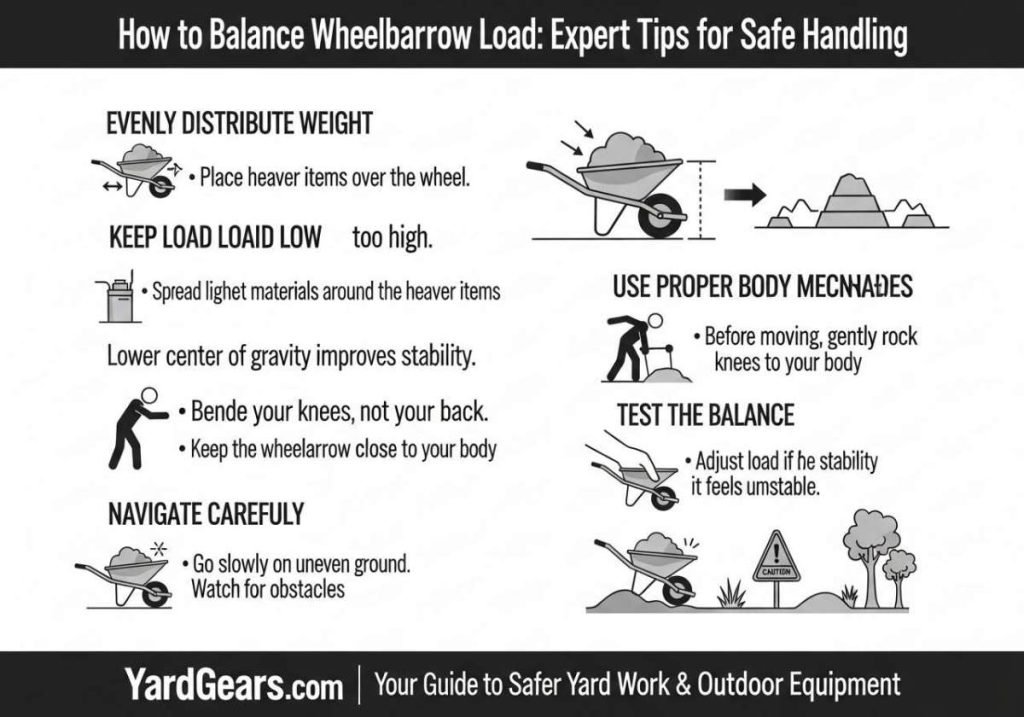
Keep the load balanced over the wheel to avoid tipping. Move slowly and steadily to keep control.
Watch the path ahead and avoid sudden turns or stops. Use your body to guide the wheelbarrow smoothly.
- Keep load centered over the wheel
- Move at a steady pace
- Look ahead for obstacles
- Use your body to steer gently
Navigating Slopes And Uneven Terrain
Go slowly on slopes and rough ground. Keep the wheelbarrow close to your body for better balance.
Use your legs to control the wheelbarrow’s movement. Avoid pushing too hard downhill to prevent losing control.
- Slow down on slopes
- Hold wheelbarrow close to body
- Use legs to steady the load
- Push gently downhill
Maintenance For Stability
Keeping your wheelbarrow stable is important for safe transport. Regular maintenance checks help prevent accidents and make your tasks easier.
Here are some key areas to focus on to ensure your wheelbarrow remains balanced and in good condition.
Regular Wheel Checks
Wheel checks are crucial for stability. Make sure the wheel is not wobbly and turns smoothly. Look for any signs of wear or damage.
- Check tire pressure regularly.
- Inspect for punctures or cracks.
- Ensure the axle is secure and tight.
Frame And Handle Inspection
The frame and handles support the load. Inspect these parts to make sure they are strong and not bent. A sturdy frame helps in carrying heavy loads safely.
Lubrication And Repairs
Proper lubrication reduces friction and wear. It is also important to repair any parts that show signs of damage.
| Part | Lubricant Type | Frequency |
| Wheel Bearings | Grease | Monthly |
| Axle | Oil | Every 3 months |
| Handle Joints | Silicone Spray | Monthly |
Common Mistakes To Avoid
Balancing a wheelbarrow load properly is important. It helps you avoid accidents and injuries. Learn about common mistakes people make and how to avoid them.
Ignoring Load Limits
Every wheelbarrow has a load limit. Ignoring this limit can lead to damage or accidents. Keep your load within the recommended weight to stay safe.
- Check the wheelbarrow’s weight limit before loading.
- Avoid overloading even if the space seems available.
- Use multiple trips for heavy loads to prevent strain.
Uneven Weight Distribution
Placing weight unevenly can tip the wheelbarrow over. Balance your load to make pushing easier and safer. Keep the center of gravity low and centered.
- Place heavier items at the bottom.
- Center the weight over the wheel for balance.
- Adjust load as needed while moving.
Neglecting Safety Gear
Wearing safety gear can prevent injuries. Even if the task seems easy, using the right gear is important. It protects you from slips, falls, and other hazards.
- Wear gloves to protect your hands.
- Use sturdy shoes with good grip.
- Consider wearing a back support belt for heavy loads.
Frequently Asked Questions
How Do I Properly Balance A Wheelbarrow Load?
To balance a wheelbarrow load, place heavy items near the wheel. Distribute weight evenly on both sides. This reduces strain and improves control while moving.
Why Is Balancing A Wheelbarrow Load Important?
Balancing prevents tipping and reduces physical strain. It ensures safer and efficient transport of materials. Proper balance extends the wheelbarrow’s lifespan.
What Common Mistakes Affect Wheelbarrow Balance?
Overloading one side or placing weight too far from the wheel causes imbalance. Uneven distribution makes handling difficult and increases accident risk.
How Can I Adjust A Heavy Wheelbarrow Load?
Shift materials closer to the wheel and spread them evenly side-to-side. Remove excess weight if needed. This improves stability and eases pushing.
Conclusion
Balancing a wheelbarrow load makes work easier and safer. Place heavy items close to the wheel for better control. Distribute weight evenly on both sides to avoid tipping. Adjust the load before moving to keep steady balance. Practice these steps to reduce strain and save energy.
A well-balanced wheelbarrow helps complete tasks faster. Keep these tips in mind for your next project. Simple changes can improve your work every day.

